
IoT & Predictive Maintenance
ADVANTECH WISE vibration sensors, gateways, and UNO and MIC series edge computers are used to wirelessly collect vibration and temperature data from rotating equipment, transfer it to SCADA or cloud via LoRaWAN gateways and edge computers, and monitor degradation trends using artificial intelligence. OMRON and PANASONIC non-contact temperature sensors and HIKROBOT thermal cameras for switchboard/panel, bearing, and transformer temperature; as well as OMRON, PANASONIC, and TELEMECANIQUE products for IO-Link and self-monitoring sensors that notify in advance of contaminated sensors, broken cables, and end-of-life devices are also explained on this page through the manufacturers’ own examples.
What does predictive maintenance solve?
In calendar-based maintenance, a part is replaced at specific intervals regardless of its condition or remains unnoticed until a failure occurs; in condition monitoring, however, the vibration and temperature of rotating equipment such as motors, pumps, compressors, and fans, along with the light level and diagnostic information from field sensors, are continuously collected to determine maintenance timing based on this data. In ADVANTECH’s petrochemical case study, it is stated that after collecting data with wireless sensors for one to two weeks, an AI health model can be established without stopping production to monitor the degradation level according to the healthy state of the equipment and offer a seven-day degradation trend forecast. On the sensor side, OMRON explains that dust and dirt accumulating on the sensing surface can reduce the incident light level, causing false detections and machine downtime, and that monitoring the light level via IO-Link prevents this; PANASONIC, on the other hand, defines this approach—which leaves sensor diagnostics to the sensor itself—as a transition from preventive maintenance to predictive maintenance.
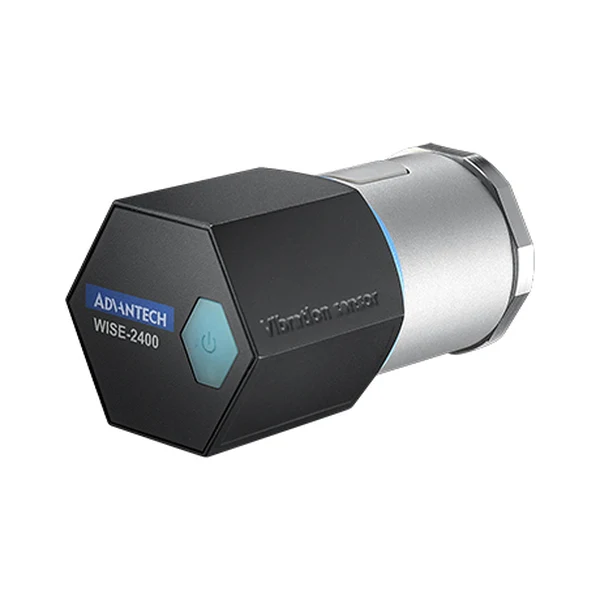
1. Wireless vibration and temperature monitoring with LoRaWAN
ADVANTECH WISE-2410 is positioned as a LoRaWAN condition monitoring sensor combining an ARM Cortex-M4 processor, LoRa transceiver, three-axis accelerometer, and temperature sensor in a single housing for pump, HVAC system, motor, and facility monitoring applications, and is compliant with ISO 10816/20816. Processing field data, the sensor directly calculates VRMS, ARMS, peak, displacement, kurtosis, crest factor, skewness, and standard deviation values onboard and transmits them to the application. The IP66-enclosed device provides up to 2 years of battery life with two batteries under an hourly data transmission scenario.
WISE-2410SK, on the other hand, is a LoRaWAN wireless condition monitoring starter kit based on the same WISE-2410 sensor. According to ADVANTECH data, a global manufacturer expanded its pilot study from an initial installation of 50 sensors to a large-scale monitoring network of over 2,000 sensors across sites in Australia, Asia-Pacific, and the USA.
2. Wired, high-frequency vibration monitoring in compressors and motors
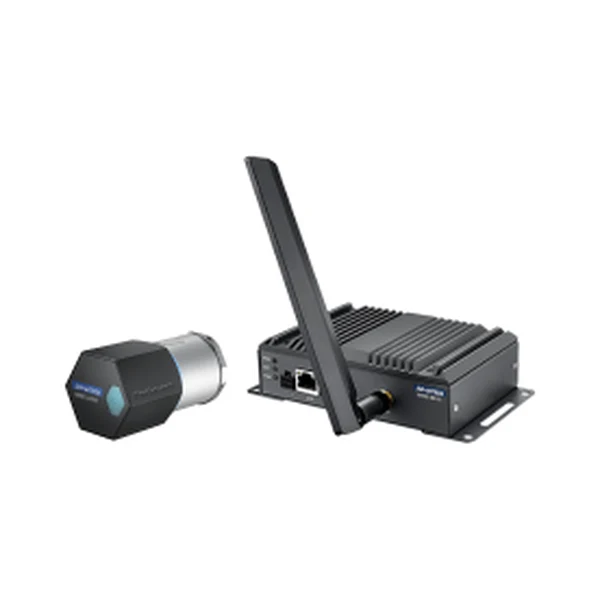
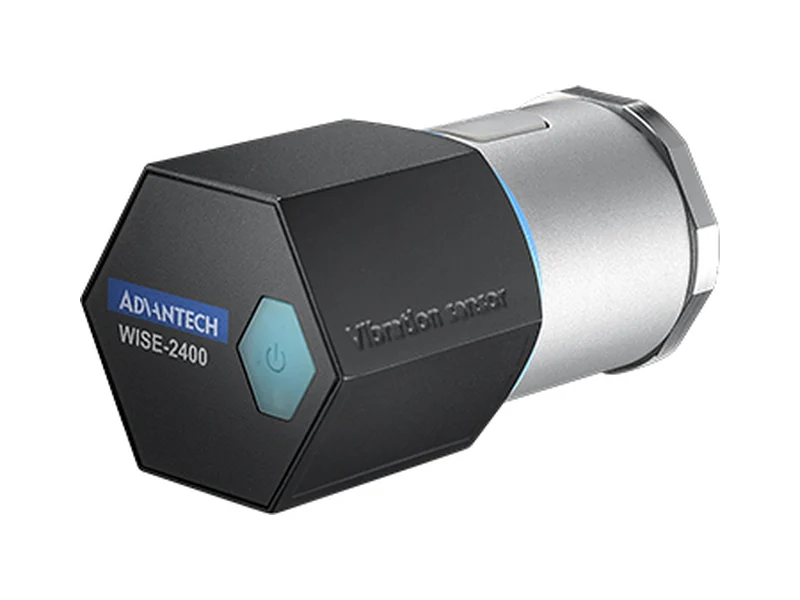
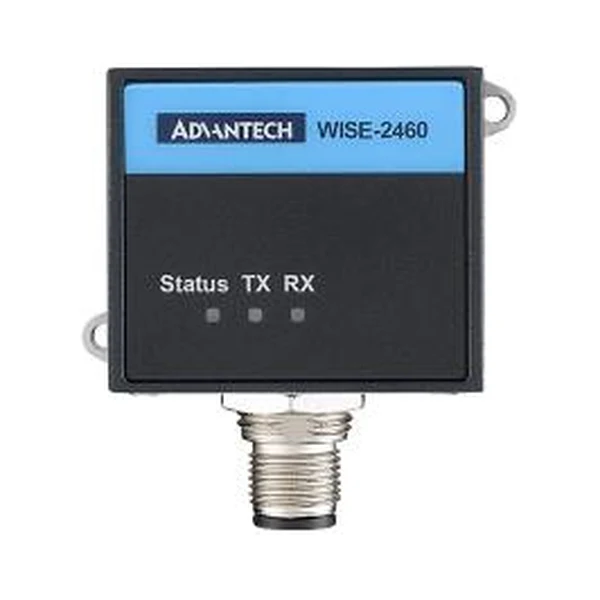
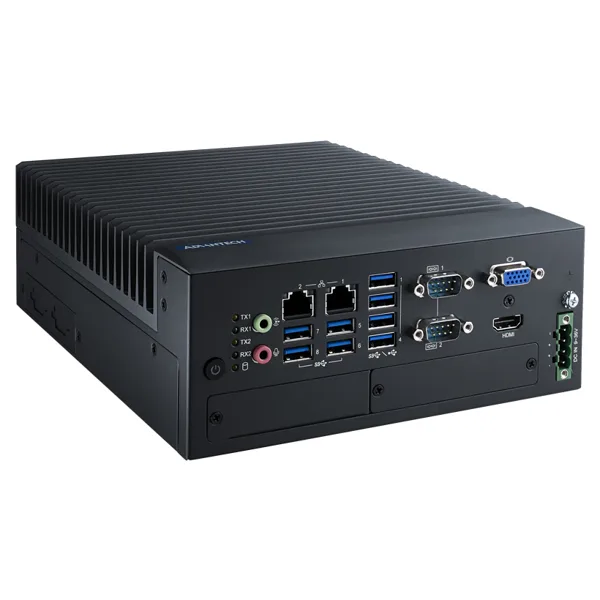
ADVANTECH WISE-2460 communicates via the Modbus/RTU protocol over an RS-485 line to perform vibration measurements on the Z axis; for this ISO 10816-1 compliant wired sensor, the manufacturer lists equipment such as pumps, air compressors, gearboxes, motors, fans, and spindles as monitoring targets. While time domain waveform data can be directly retrieved from the device, which allows up to 10 detection bands to be defined via WISE Studio software, in ADVANTECH’s plastic injection case study, sensors are mounted at the compressor’s motor, screw, and piston points, transferring the collected data to a MIC-770 V3 fanless system for analysis. In this field application example, a baseline is established from the normal vibration pattern, and ISO 10816 alarm thresholds are set via WISE Studio to ensure the system generates alarms during abnormal vibration conditions.
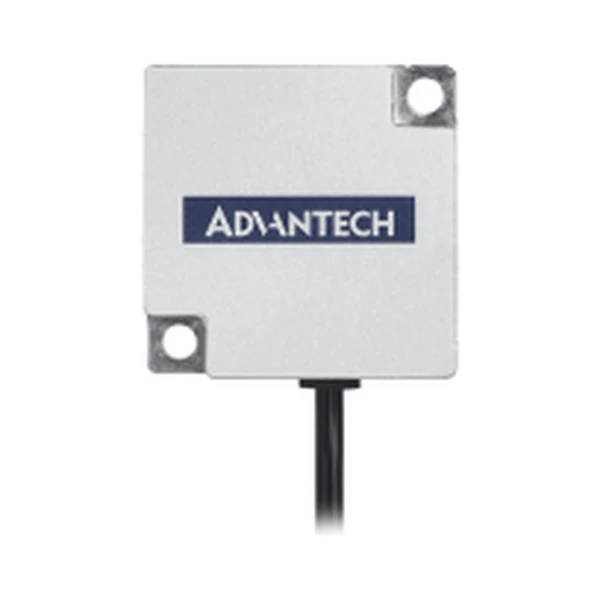
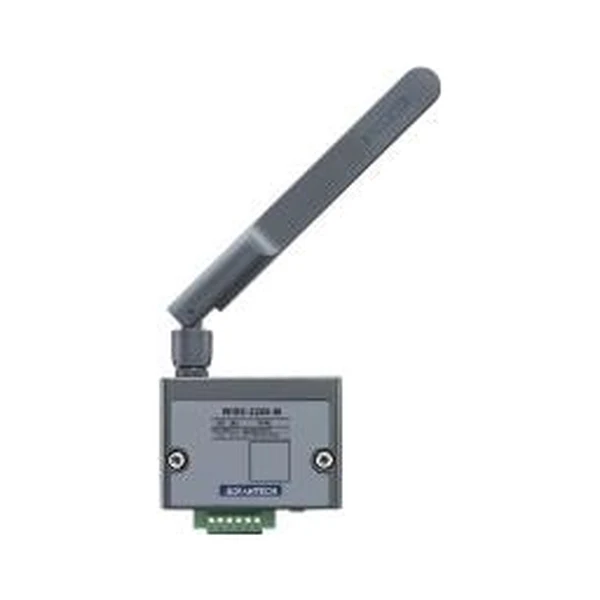
The WISE-2461 smart vibration sensor, featuring an ARM Cortex-M33 processor, performs measurements across three axes using an RS-485 Modbus RTU communication infrastructure and allows up to 6 customizable frequency bands to be defined for each axis. While the device offers a 16,384-point waveform and 6,400-line FFT resolution, it operates between −40…85 °C with its resin-filled body made of stainless steel with IP68 protection class. For points where cabling is difficult, the datasheet lists the WISE-2200-M module, which carries Modbus RTU data to LoRaWAN, as a wireless option.
| ADVANTECH sensor | Measurement | Connection | Housing |
|---|---|---|---|
| WISE-2410 | 3-axis, 10–1000 Hz, ±16 g; temperature −20…120 °C | LoRaWAN, battery (up to 2 years, hourly transmission) | IP66 |
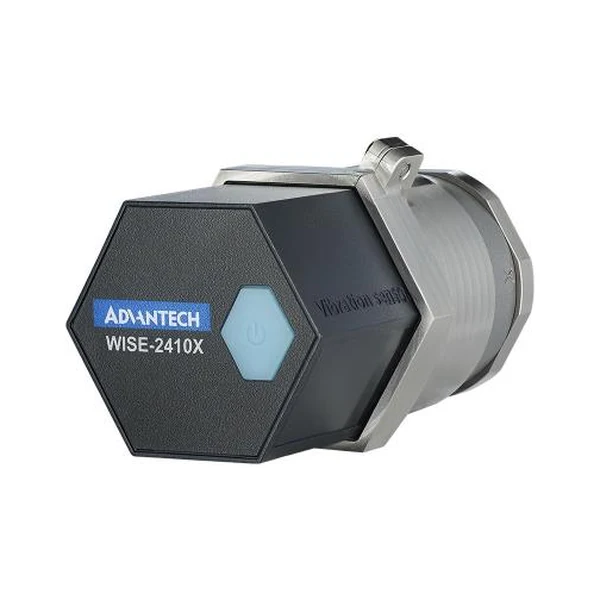
| WISE-2410X | 3-axis, 5–1000 Hz, ±2/±4/±8/±16 g | LoRaWAN, battery; IECEx/ATEX | IP65 |
| WISE-2460 | Z-axis, 5–10,000 Hz, ±50 g | RS-485, Modbus/RTU | IP68 |
| WISE-2461 | 3-axis, 5–6,000 Hz; 6400 lines FFT | RS-485, Modbus RTU | IP68, stainless steel |
Values are from manufacturers’ datasheets and published case studies; selection for your own equipment is done on a project basis.
3. Vibration monitoring in explosive atmospheres
ADVANTECH’s explosion-proof LoRaWAN smart vibration sensor WISE-2410X is positioned for areas with explosive atmosphere risks, featuring IECEx Zone 2, Zone 21, ATEX2, C1D2, TS, and INMETRO compliances. Housing an integrated three-axis accelerometer and temperature sensor, the battery-powered device calculates VRMS, ARMS, peak value, displacement, kurtosis, crest factor, skewness, and standard deviation parameters in its own processor and requires no cabling. Remotely configurable with its IP65-enclosed body, the sensor operates between 0…70 °C in compliance with ISO 10816 and ISO 20816 standards; zone classification and conformity assessment are performed on a per-project basis at each facility.
4. SCADA and cloud connection via LoRaWAN gateway
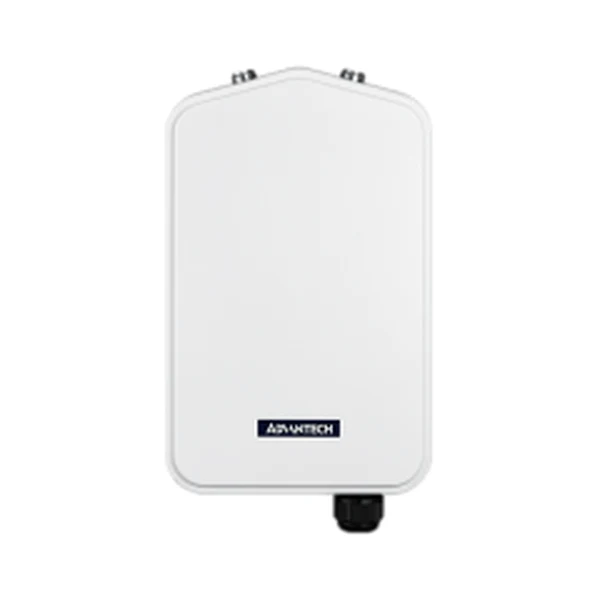
The ADVANTECH WISE-6610 V2 industrial LoRaWAN gateway houses a SEMTECH SX1302 chipset and an embedded LoRaWAN network server supporting up to 500 node connections, transferring field wireless sensor data to centralized software. Supporting Modbus/TCP and MQTT protocols in its standard models, the device offers BACnet and OPC UA options in -EL versions while providing a flexible data processing environment with Node-RED and Edgelink software packages. Operating compatibly with ACTILITY, The Things Network, ChirpStack, and AWS network servers, the system offers 4G backhaul capability with an additional adapter, while the IP67-enclosed, 16-channel WISE-6610P model is pole- or wall-mounted with PoE power supply support.
In a CDA application carried out at a semiconductor factory, the WISE-6610 gateway featured in the case study connects directly to the SCADA infrastructure in the factory control room via the Modbus TCP protocol. Within the scope of this case study, measurement data retrieved from WISE-2410 sensors deployed in the field for compressor monitoring is transferred to the SCADA system through the gateway and integrated into operational monitoring processes.
5. Energy meters and auxiliary facility equipment
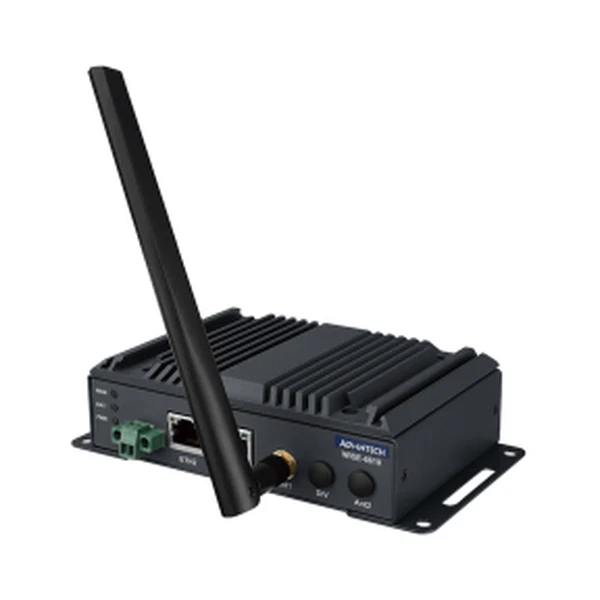
ADVANTECH’s single-channel RS-485 I/O module WISE-2200-M converts field Modbus/RTU-compliant sensor and meter data into the LoRaWAN protocol, supporting up to 128 addresses and 30 rule settings. In a school energy management project by a district administration in Taiwan, data from 10,000 WISE-2200-M modules connected to 10,000 meters is collected using only 500 WISE-6610 gateways in the case study and transmitted to the school administration office. According to ADVANTECH test data, wireless connection remains unaffected between 100 and 500 meters in densely built-up areas, while coverage range exceeded 10 kilometers in open areas.
In an application conducted at a hospital in Taiwan, WISE-2410 sensors are mounted on continuously operating chiller and gas systems using magnetic bases to transmit rotational speed and acceleration parameters via LoRaWAN. In the project, WISE-2200-M modules collect RS-485 data from energy meters, while WISE-6610 gateways in the case study transfer this data over Ethernet to the MIC-770 V3 fanless system in the management office. The MIC-770 V3 visualizes data and connects it to hospital management automation while transferring the collected data to the institution’s private cloud infrastructure for advanced analysis, with the Sub-GHz band preferred to avoid 2.4 GHz frequency interference in the environment.
6. Health management model (PHM) with artificial intelligence in rotating equipment
In ADVANTECH’s PHM application conducted at a petrochemical plant, a predictive maintenance infrastructure comprising WISE-2410 battery-powered LoRa vibration sensors and the WISE-6610 gateway in the case study is deployed for motor, pump, compressor, and blower equipment. After collecting data under field conditions with wireless sensors for a period of one to two weeks, an artificial intelligence model monitoring degradation levels relative to the healthy state of existing equipment is configured without halting production processes. The created health model generates a seven-day degradation trend forecast when an early degradation level is reached in equipment, providing an advance warning notification about the condition to relevant technical teams.
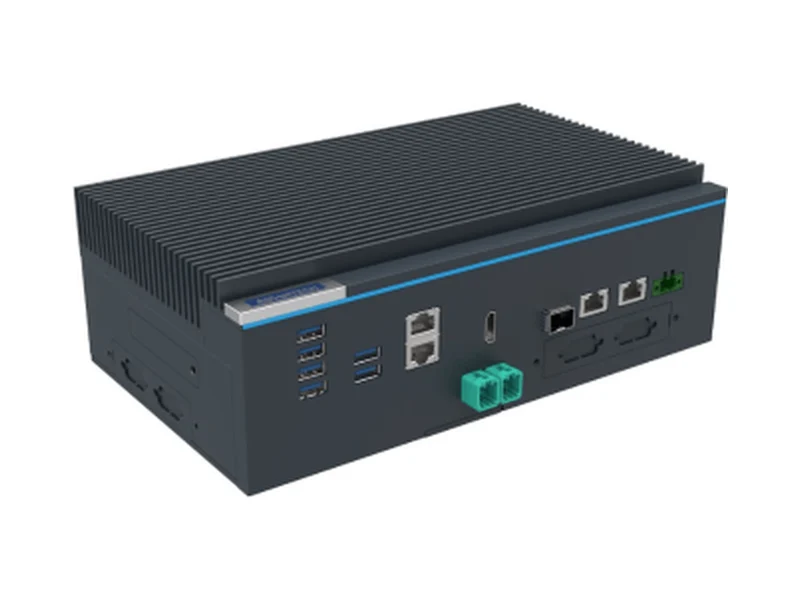
ADVANTECH highlights predictive maintenance applications that predict equipment failures by combining artificial intelligence and IoT technologies among the primary use cases of the MIC-711-ON edge computer system powered by the Jetson Orin Nano processor. Equipped with JetPack 6.2 infrastructure and Super Mode support, MIC-AI systems offer up to 67 TOPS of AI processing power.
7. Machine data with edge IoT gateway
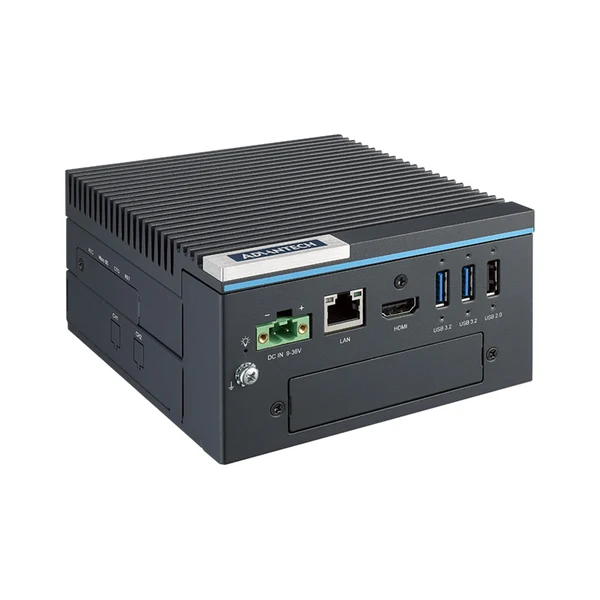
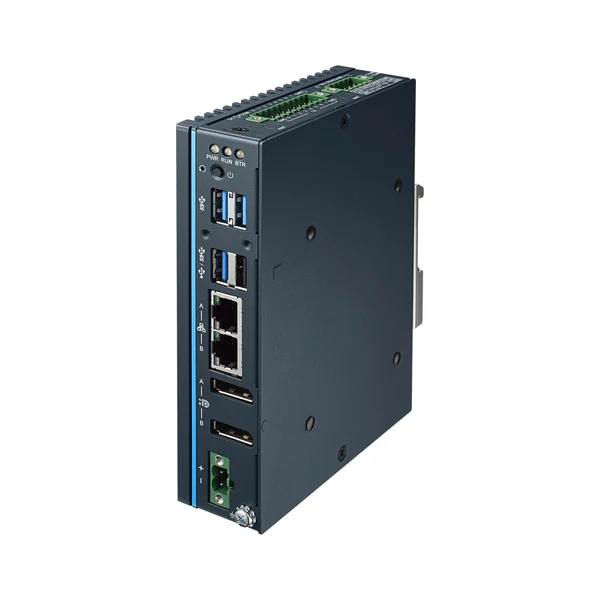
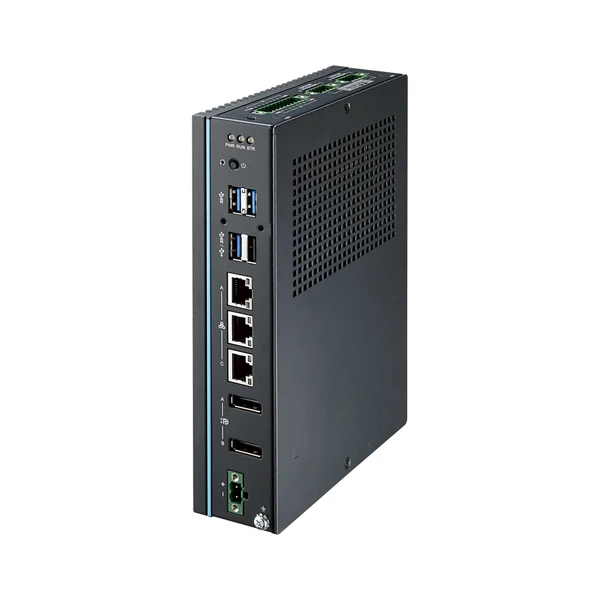
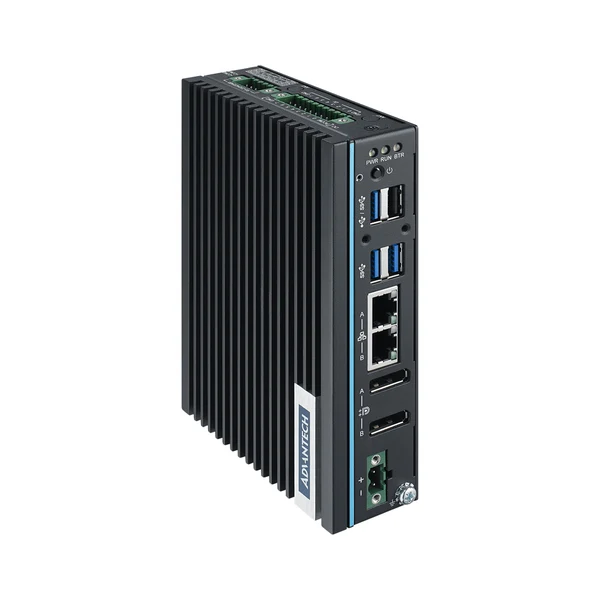
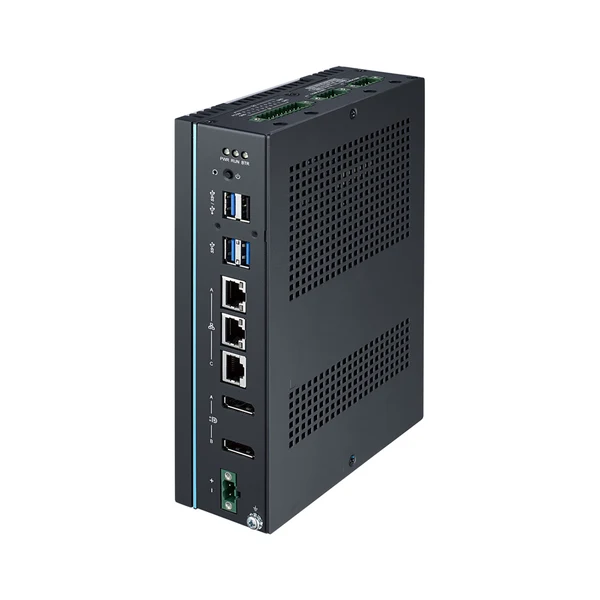
Positioned by ADVANTECH for factory automation, the UNO-137 industrial IoT edge device supports CODESYS, WISE-DeviceOn, and DAQNavi software platforms to ensure the integration of field hardware. In machine monitoring scenarios, built-in digital input/output ports can be used directly or via USB I/O modules, while DAQNavi software supports fault prediction processes and enables remote asset management over Wi-Fi, LTE, and 5G options. Operating between −40…70 °C, and featuring isolated communication ports, a TPM 2.0 hardware security module, and IEC-61010 compliance, this device performs in harsh industrial environments.
ADVANTECH UNO-137 and UNO-148 systems feature AWS IoT Greengrass qualification and manage data collection, visualization, failure prediction, and remote management processes via the WISE-DeviceOn platform. While the two 2500BASE-T Ethernet ports of the UNO-148 model support Time-Sensitive Networking (TSN) technology, the device stands out with both Azure IoT Edge and AWS IoT Greengrass certifications. These edge computing devices allow machine data collected from the production floor to be transmitted to cloud environments or upper-level network infrastructures.
Temperature monitoring, sensor diagnostics, and traceability
Vibration and energy data reveal the health of the equipment; however, the line itself is also composed of sensors, safety devices, and vision systems, and their contamination, broken cables, or reached end-of-life also cause downtime. OMRON examples are drawn from the ES1B datasheet, IO-Link brochure, and E3Z, E3NX-FA, F3SG-SR, and G9SX resources; PANASONIC examples from the Grid-EYE catalog, HG-C and FX-550L self-monitoring documents, and SF4D manual; TELEMECANIQUE examples from the XU catalog, water pumping brochure, and XG RFID manual; and HIKROBOT information from product data.
8. Bearing, panel, and transformer monitoring with non-contact temperature
The OMRON ES1B non-contact thermosensor helps locate faults by detecting excessive heat dissipation in high-voltage distribution switchboards, transformers, and bearings; according to OMRON, further damage and costs can thus be prevented. Unlike conventional thermocouple elements, with this structure that does not degrade over time, the ES1B acts like a K-type thermocouple and can operate with any temperature controller or alarm unit, and can be connected to a panel indicator (e.g., K3MA) to determine the alarm status. Meanwhile, the OMRON ES1C transfers temperature data to PLCs or control devices thanks to its 0–400 °C measurement range, 100 ms/90% response time, and 4–20 mA analog output, while offering IP67-equivalent protection with its stainless steel body.
The PANASONIC Grid-EYE AMG88xx series provides the temperature of a two-dimensional 8 × 8 pixel area as a digital value, and failure prevention in factory automation is among PANASONIC’s recommended applications. The narrow-angle AMG883642 and connectorized AMG8854M01 are also recommended for the same application; PANASONIC notes that thermopile sensors may exhibit partial temperature variations due to nearby heat sources, air currents, or housing contact, and recommends verifying field performance under actual operating conditions.
| Product | Detection | Output |
|---|---|---|
| OMRON ES1B | Spot measurement; ranges 10–70, 60–120, 115–165, 140–260 °C | K-type thermocouple equivalent |
| OMRON ES1C | Spot measurement; 0–400 °C, 100 ms/90% response | 4–20 mA, IP67 equivalent |
| PANASONIC Grid-EYE AMG88 | 8 × 8 (64 pixels) area temperature | Digital temperature value |
| HIKROBOT MV-CI003-GL-T6 | 640 × 512 thermal image; −20…150 / 0…550 °C | Gigabit Ethernet, zone alarm |
Values are from manufacturers’ datasheets and published case studies; selection for your own equipment is done on a project basis.
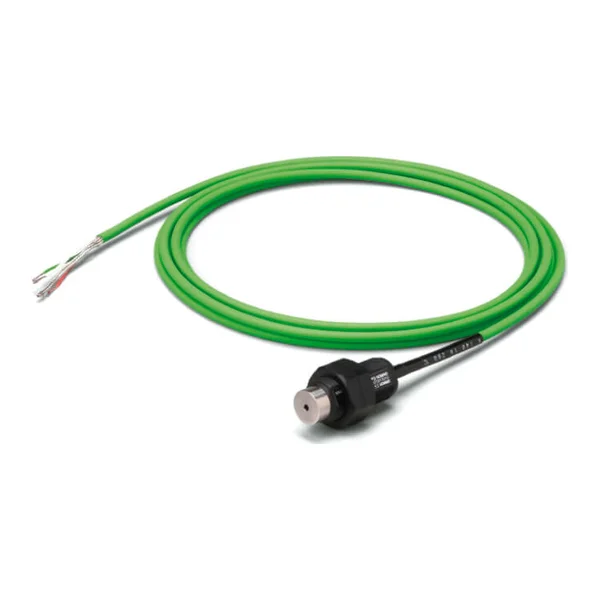 OMRONES1B-60-120CInfrared thermosensor, 60–120 °COMRONES1B-140-260CInfrared thermosensor, 140–260 °C
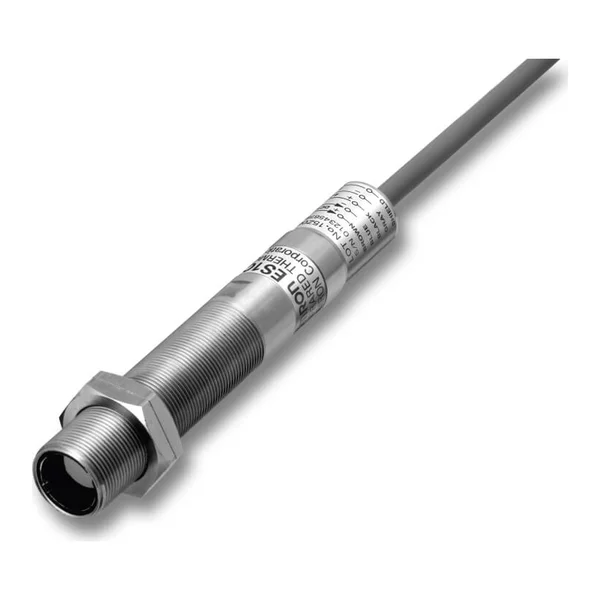 OMRONES1C-A40Infrared thermosensor, 0–400 °C, 4–20 mA
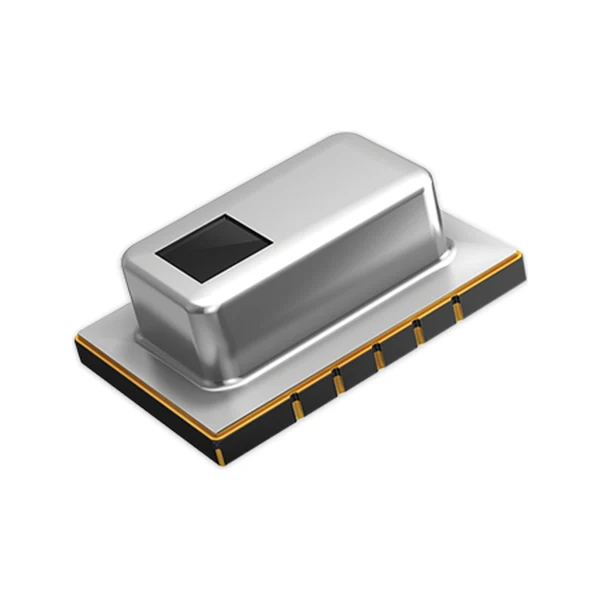 PANASONICAMG8833Grid-EYE thermal array, 8 × 8 pixels
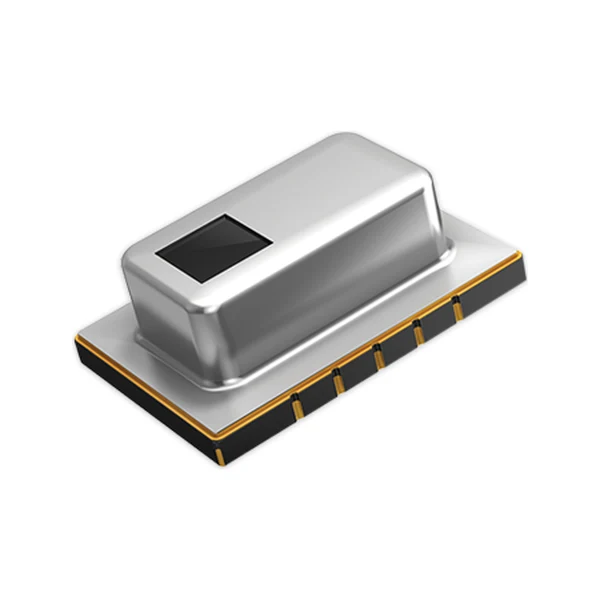 PANASONICAMG883642Grid-EYE narrow-angle, 35.6°
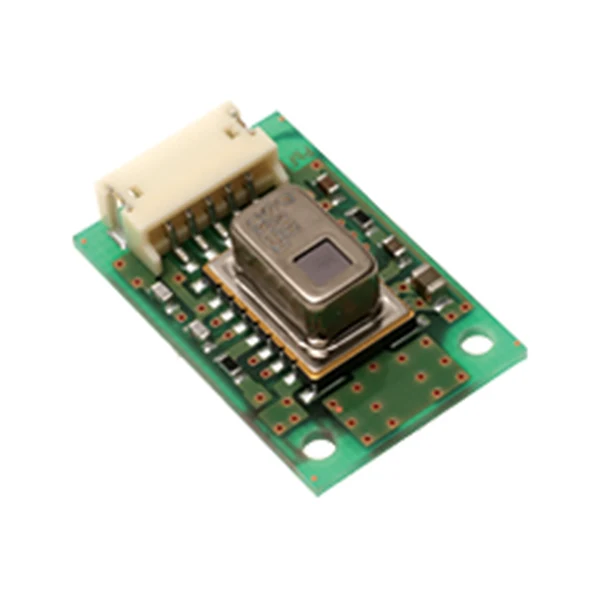 PANASONICAMG8854M01Grid-EYE narrow type, connectorized board
9. Regional temperature alarm with thermal (LWIR) camera
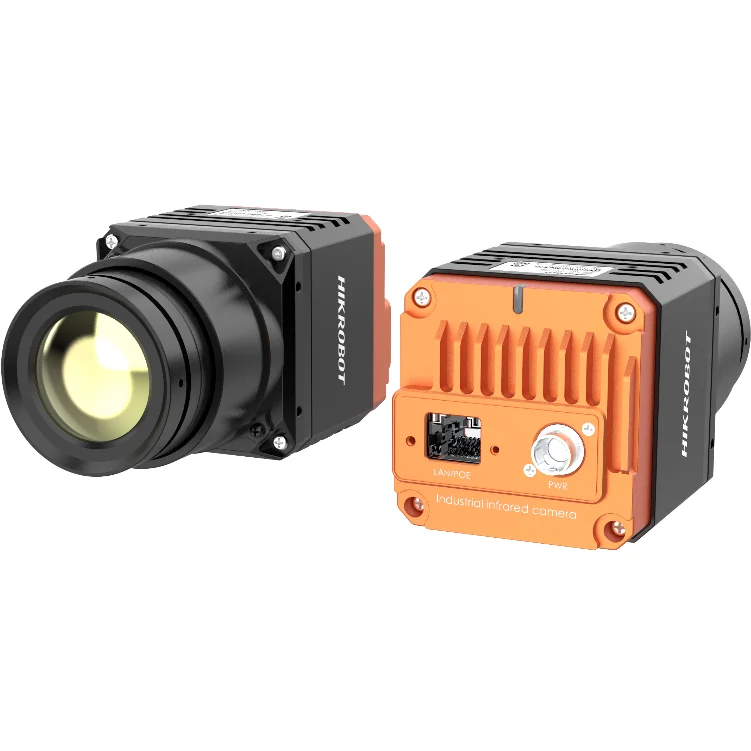
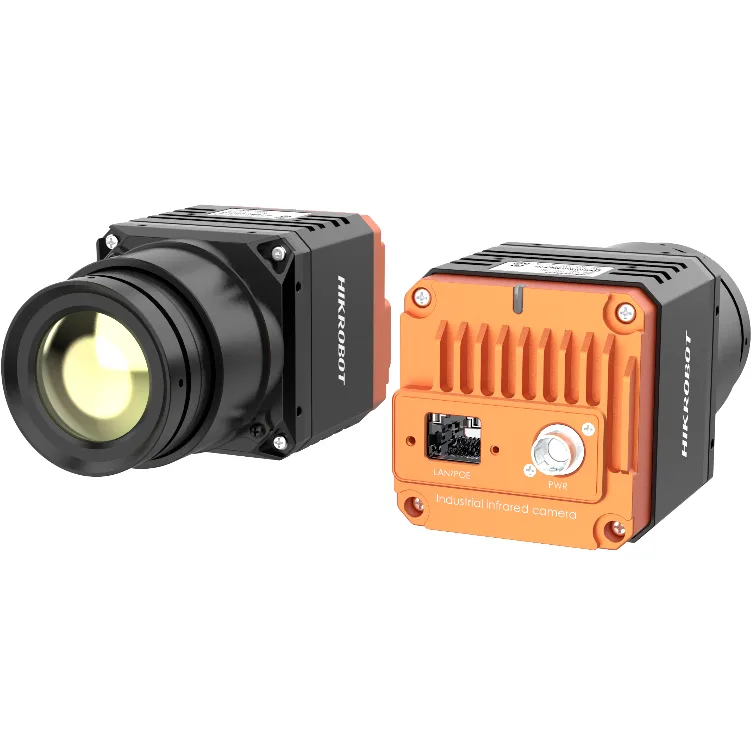
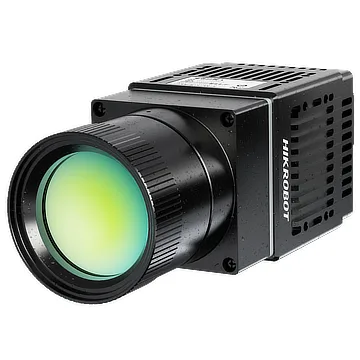
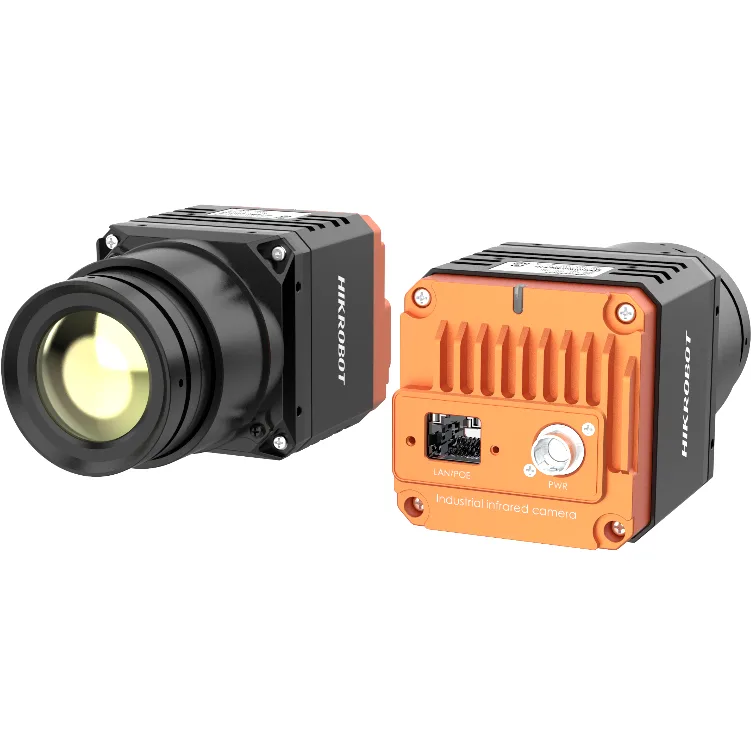
HIKROBOT announced at its launch in 2022 that it expanded its long-wave infrared (LWIR) industrial camera family with an uncooled VOx detector. The HIKROBOT MV-CI003-GL-T6 thermal camera, which is the temperature measurement model of this family, supports flexible measurement rules in the form of points, lines, polygons, and circles with its 640 × 512 resolution detector. The system enables the configuration of temperature measurement alarms for single or multiple zones in designated areas; the camera communicates via Gigabit Ethernet over GigE Vision and GenICam, and the client software is MVS.
Adapting to different operating conditions, the HIKROBOT T6 model collects data with an accuracy of ±2 °C or ±2% of reading across measurement ranges of –20…150 °C or 0…550 °C. Designed for direct visual observation needs in the field, the MV-CI003-GL-N6 and N15 models offer operation over PoE support with response times under 10 ms. In these observation-focused configurations, the N6 model incorporates 15 different color palette options, while the T6 features opto-isolated input and output lines on its 12-pin connector; since no switchboard/panel or bearing monitoring case study has been published in HIKROBOT resources, application suitability is evaluated on a per-project basis.
10. Contamination warning and diagnostics in IO-Link sensors
Since dust or dirt accumulating on the sensing surface in industrial production lines can reduce the incident light level and lead to false detections, OMRON IO-Link photoelectric sensors continuously monitor light intensity data to provide early warnings before false detections occur; OMRON positions this as predictive maintenance. Transmitting not only ON/OFF status but also parameters such as incident light level and operating time over a standard 3-wire cable, the OMRON E3Z-IL3 and E3S-DC series report cable disconnections or faulty parts in real time and prevent installation errors using individual identification codes. On the fiber optic side, the OMRON E3NX-FA smart fiber amplifier model automatically compensates for light losses caused by dust or vibration using its Dynamic Power Control (DPC) feature, while outputting an alarm for predictive maintenance via the Smart Verification system when the compensation limit is reached.
Expanding field-level diagnostic capabilities, TELEMECANIQUE XU application series photoelectric sensors provide real-time data to maintenance processes through automatic reading of IODD files and remote configuration of sensing parameters. In the architectural structure specified in the TELEMECANIQUE catalog, signal quality and sensor status are continuously monitored, while the field IO-Link master unit transmits collected data to upper-layer gateway or edge server systems via MQTT and OPC UA protocols. TELEMECANIQUE XUMR contrast mark sensors at FST (e.g., XUMRAGAYM8) offer sensitivity adjustment via teach mode or IO-Link, providing IP67 and IP69K protection.
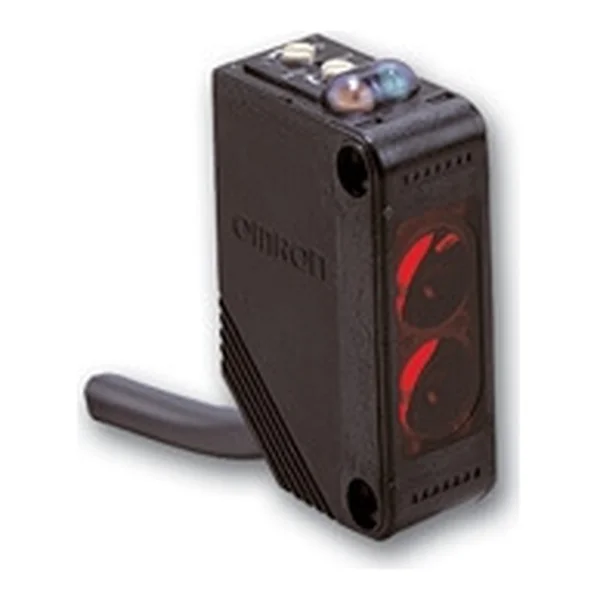 OMRONE3Z-T81-IL3-2MThrough-beam photoelectric, IO-LinkOMRONE3Z-R81-IL3-2MRetro-reflective photoelectric, IO-LinkOMRONE3Z-D82-IL3-2MDiffuse-reflective, IO-Link
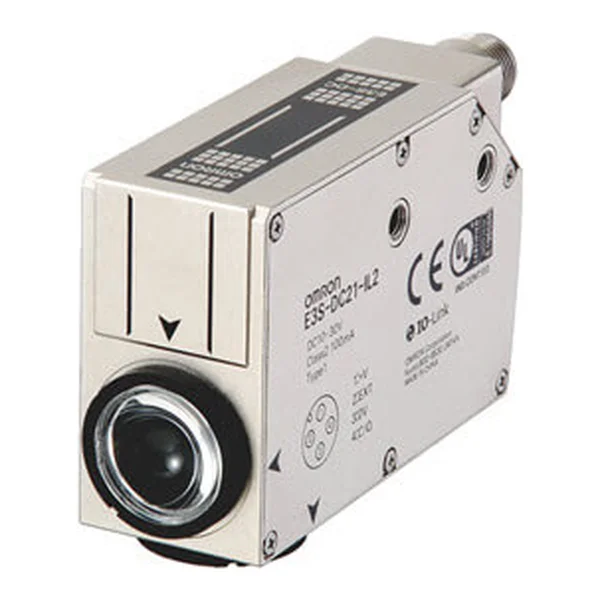 OMRONE3S-DCColor mark sensor, IO-Link models
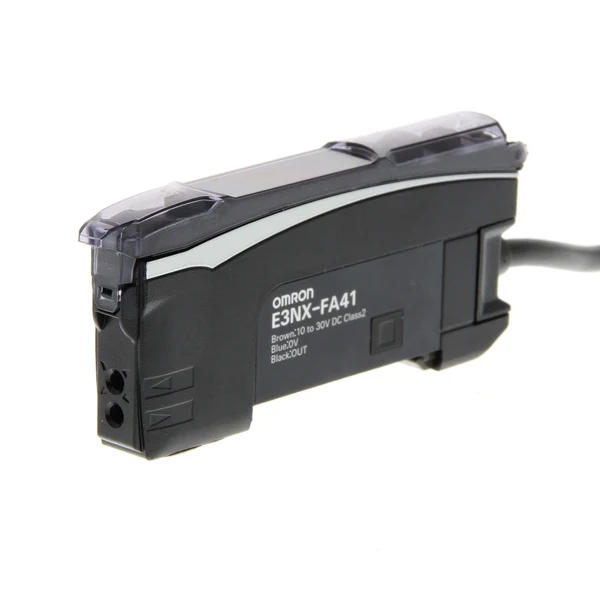 OMRONE3NX-FASmart fiber amplifier, DPC alarm
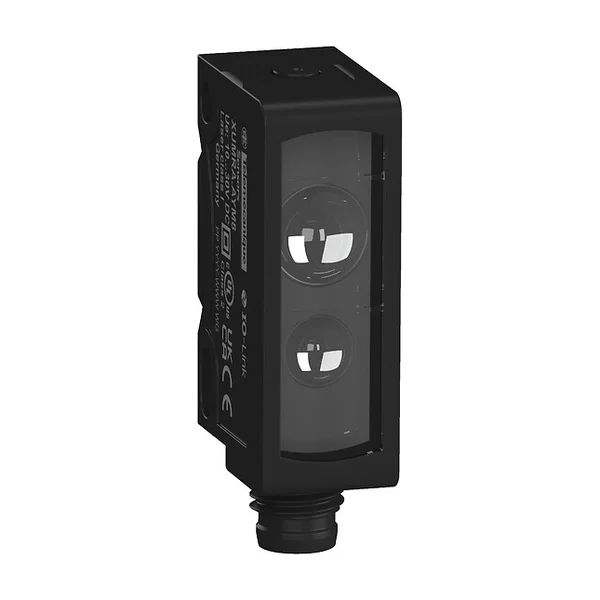 TELEMECANIQUEXUMRAGAYM8RGB contrast sensor, IO-Link
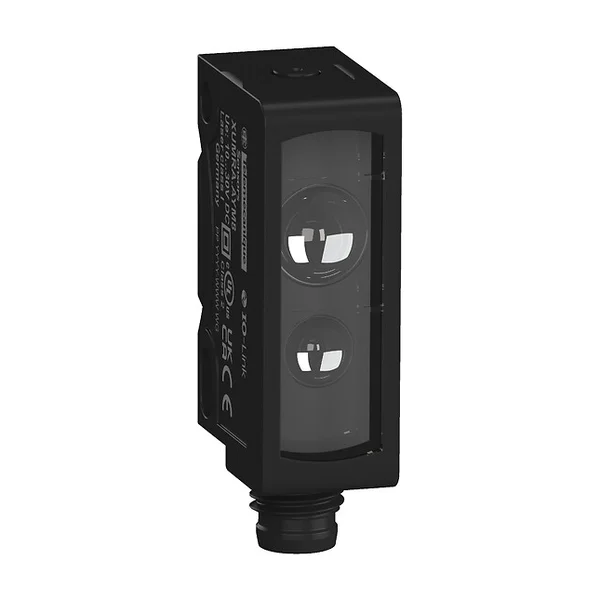 TELEMECANIQUEXUMRAWAYM8White light contrast sensor, IO-Link
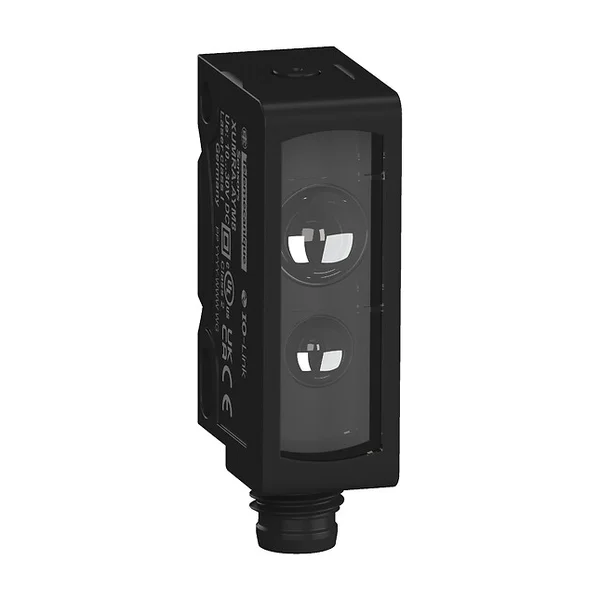 TELEMECANIQUEXUMRACAYM8Color contrast sensor, IO-Link
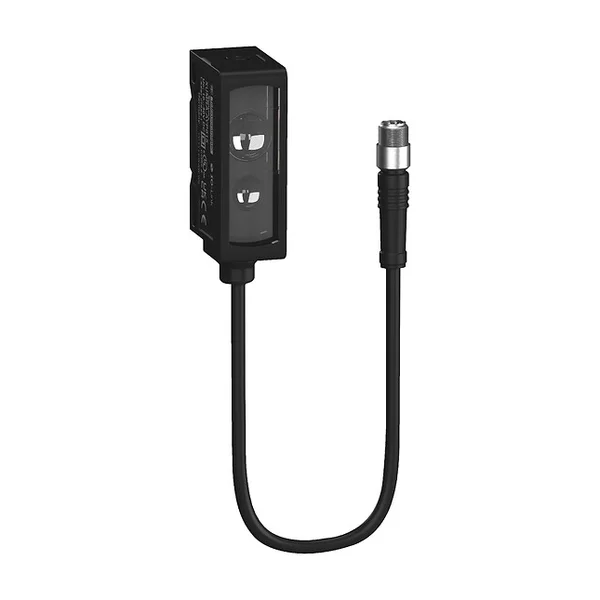 TELEMECANIQUEXUMRAWAYP015Contrast sensor, IO-Link, M12 pigtail
11. Self-monitoring sensors reporting their own status
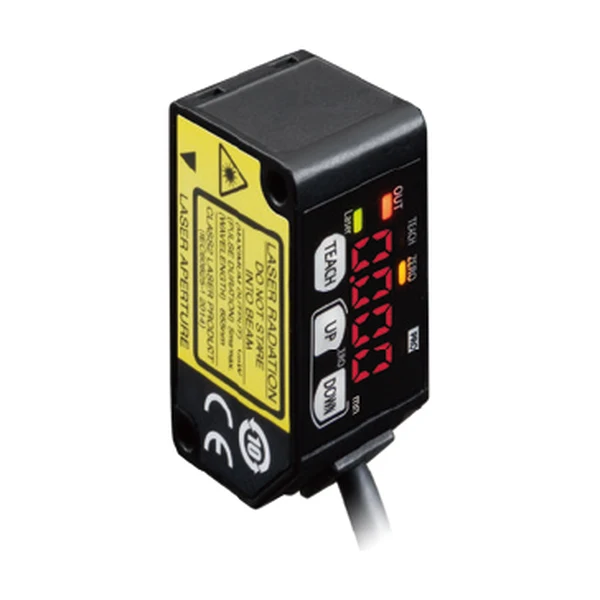
The PANASONIC HG-C1000L self-monitoring sensor transfers its own hardware status along with measurement data to the upper system via the IO-Link master, enabling rapid identification of fault causes in the field. Evaluating its own health condition in four distinct levels—Normal, Notification, Caution, and Failure—the device reports a decrease in incident light intensity as a notification, approaching operating hour limits as a caution, and short circuit or EEPROM damage as a failure. In this architecture, positioned for preventive maintenance and operation monitoring in the PANASONIC packaging industry guide, when a sensor that fails or reaches the end of its service life is replaced, the required parameter settings are automatically uploaded to the new device by the connected IO-Link master.
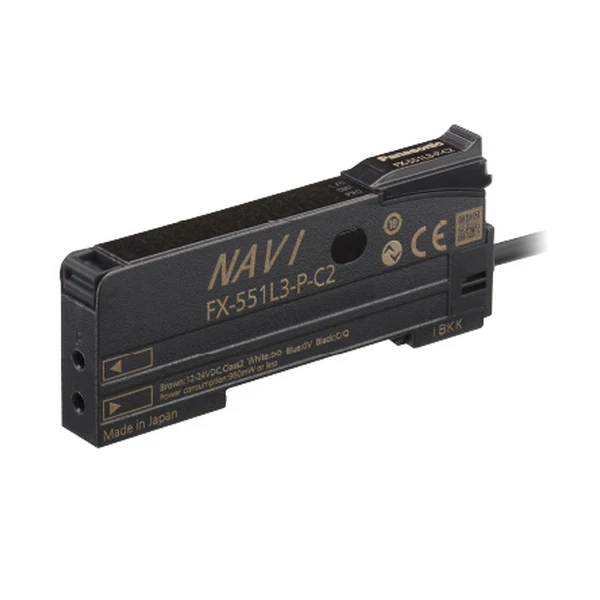
PANASONIC’s IO-Link compatible digital fiber sensor FX-550L also reports its own status via the IO-Link master with the same self-monitoring structure and collects field data for preventive maintenance and operation monitoring. In this approach, which PANASONIC defines as a transition from “preventive maintenance to predictive maintenance”, the sensor diagnostic load is placed directly on the edge device, ensuring that PLC resources focus solely on process control. Supporting IO-Link V1.1 and COM3 communication standards, FX-550L enables parameters to be set in batch from an external interface while providing flexible monitoring capabilities in tracking incident light intensity with display ranges of 0–4,000 in STD mode and 0–9,999 in HYPR mode.
| PANASONIC self-monitoring status | What does it indicate? |
|---|---|
| Normal | Sensor operating normally |
| Notification | Incident light intensity decreased; check setting |
| Caution | Approaching end of service life; must be replaced |
| Failure | Short circuit, wire break, EEPROM damage |
12. Light margin and remote diagnostics in safety devices
Providing protection in safety systems while offering maintenance convenience, the OMRON F3SG-SR safety light curtain enables remote monitoring of process and service data via the IO-Link interface, reporting light losses caused by dirt accumulation through a predictive maintenance approach. By backing up and restoring parameters using the Intelligent Tap configuration accessory (e.g., F39-SGIT-IL3), reductions of up to 90% in maintenance setup times can be achieved. The OMRON G9SX safety controller provides detailed diagnostics through LEDs on the front panel; the two-color LED on each of up to 30 D40A non-contact door switches connected with G9SX-NS indicates door status and cable disconnection, while the OS32C safety laser scanner reports status via its LED display and 8 sector indicators.
The PANASONIC SF4D safety light curtain series displays the light incidence margin as numerical values between 1–3 on the digital display on its front panel, making it easier to notice beam deviations caused by dirt on the sensing surface or mounting looseness prior to operation. Through the SFD-WL3 IO-Link communication accessory added to the system, the 32-level incident light intensity of individual beams, ambient light, and lockout information are transferred to the upper device along with the error code, and according to PANASONIC, this information helps decide whether maintenance is required. In cases where replacement is needed, the configuration data stored on the accessory is transferred to the new light curtain with a single touch; diagnostic data is for maintenance purposes and does not alter the safety function itself.
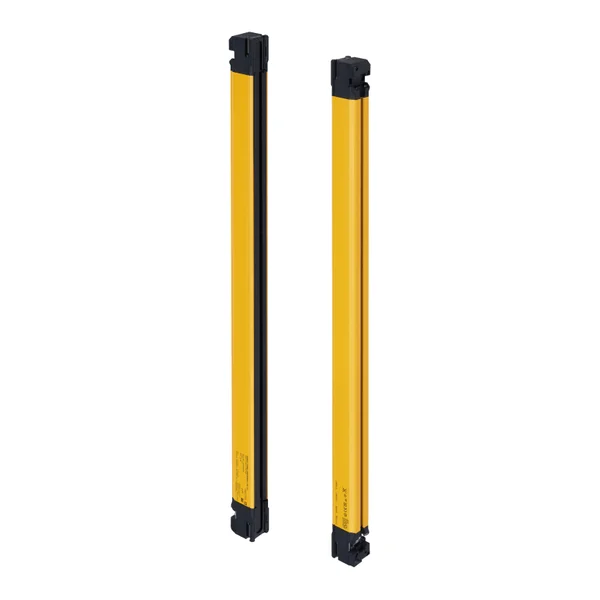 OMRONF3SG-4SRAType 4 light curtain, IO-Link monitoring
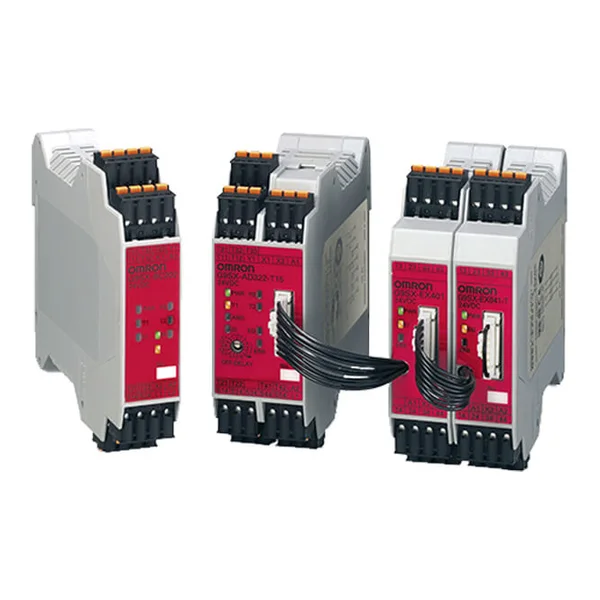 OMRONG9SXSafety controller, LED diagnostics
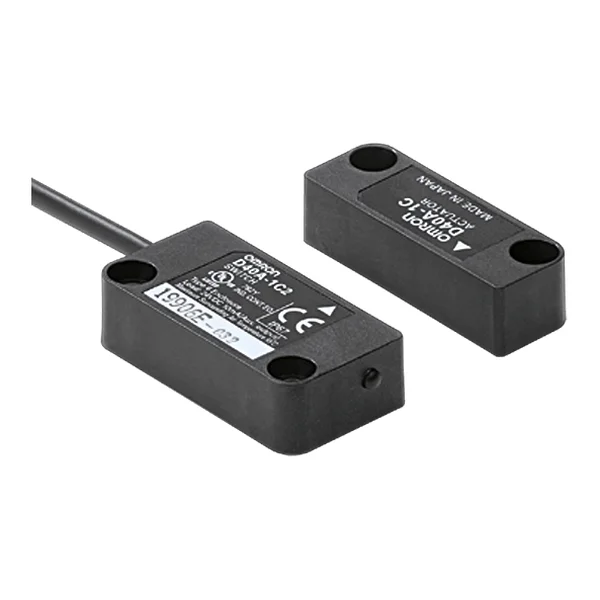 OMROND40ANon-contact door switch, dual-color LED
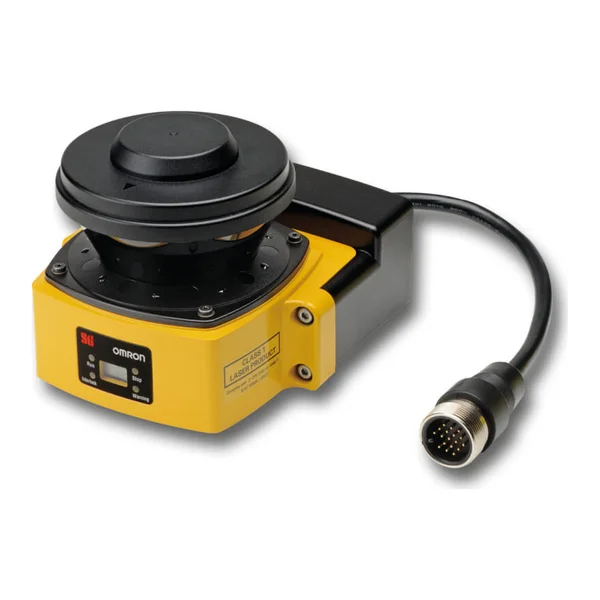 OMRONOS32CSafety laser scanner, LED status
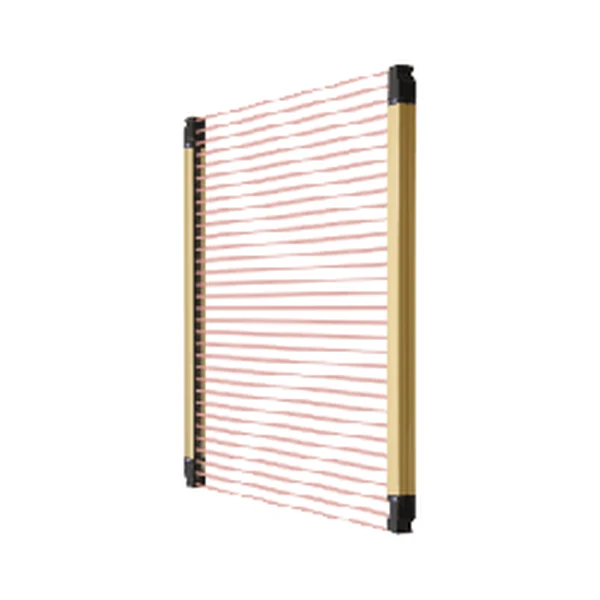 PANASONICSF4D-AType 4 light curtain, light margin indicator
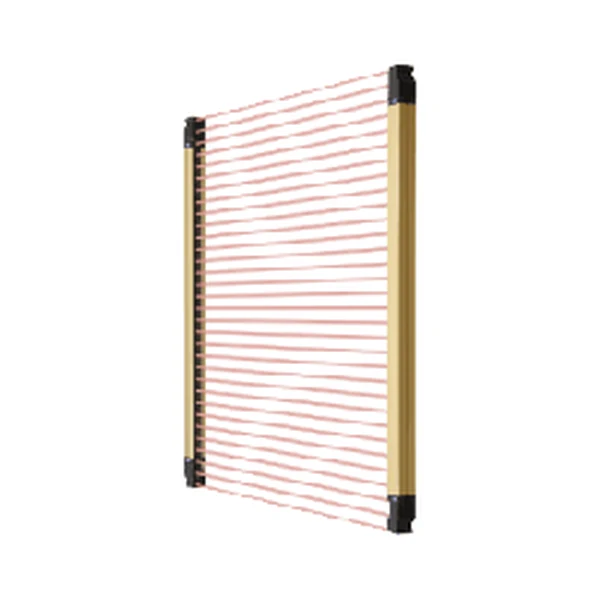 PANASONICSF4D-HType 4 light curtain, light margin indicator
13. Mould shot count and asset monitoring with RFID
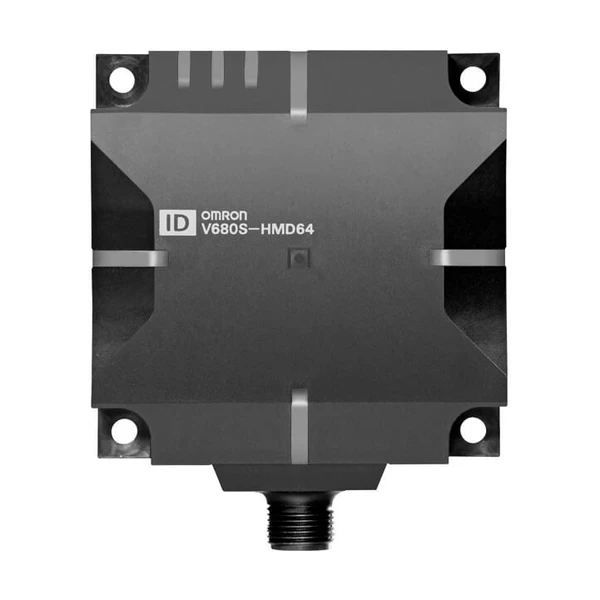
Automating asset tracking in industrial moulding processes, the OMRON V680 RFID system directly reads mould information via RF tags placed on moulds and machine-mounted antennas, enabling the monitoring of total moulding time and mould shot count, which affect quality. Thanks to automatic mould checks performed before the moulding process, defective production is prevented according to OMRON in case an incorrect mould is installed on the line. Integrating antenna, amplifier, and controller units into a single housing, OMRON V680S reader/writer models execute configuration, monitoring, and tag communication functions over the Modbus TCP protocol and an integrated web browser interface.
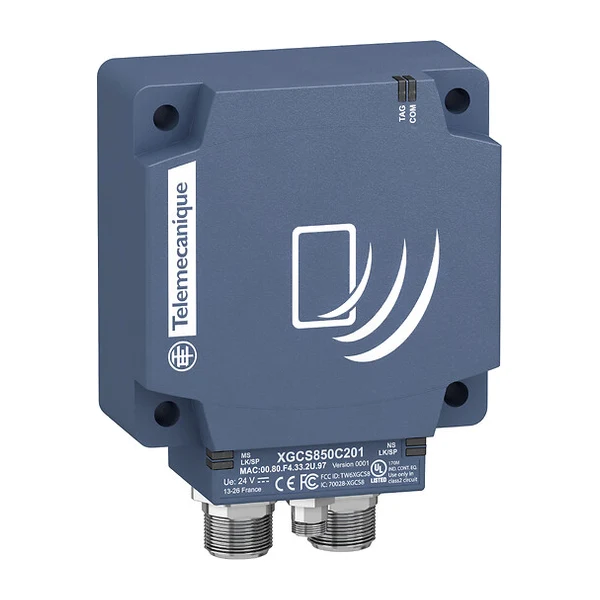
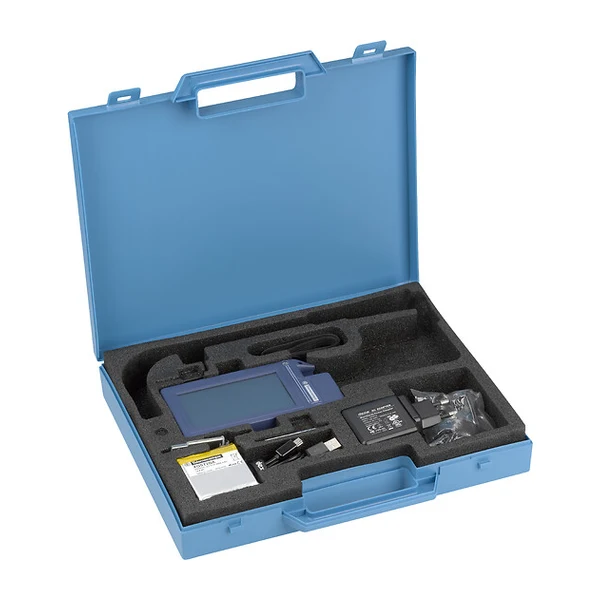
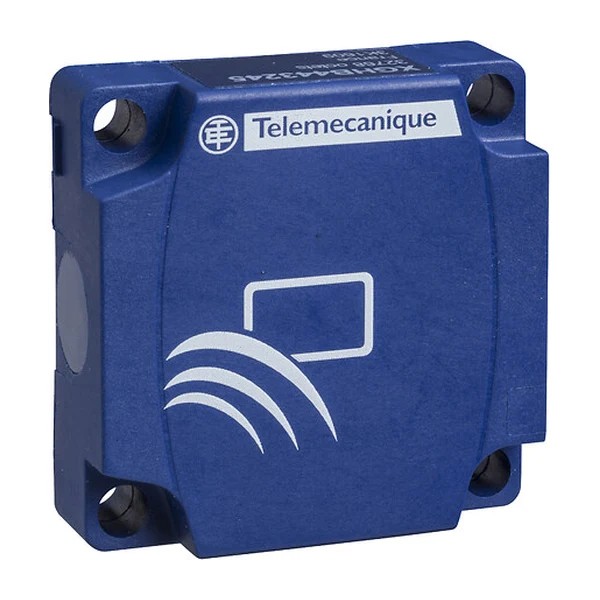
Developed for product traceability and flexible production lines, the TELEMECANIQUE OsiSense XG RFID series supports Modbus TCP/IP and EtherNet/IP industrial communication protocols, offering facility-wide asset and access control. Featuring an integrated two-port switch, the TELEMECANIQUE XGCS850C201 compact smart antenna enables star or daisy-chain topology with two Ethernet ports, allowing up to 32 antennas to be daisy-chained. Used in field maintenance processes, the XG series portable RFID terminal directly reads from and writes data to tags while performing field diagnostics and software updates for smart antennas.
14. Ultrasonic level monitoring in storage and tanks
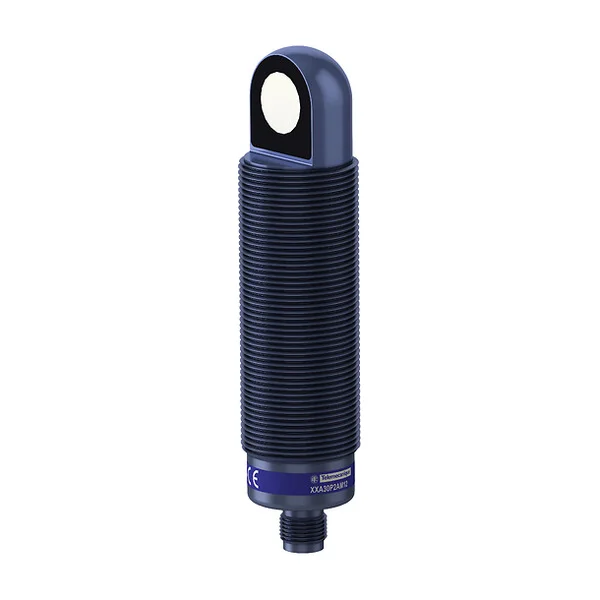
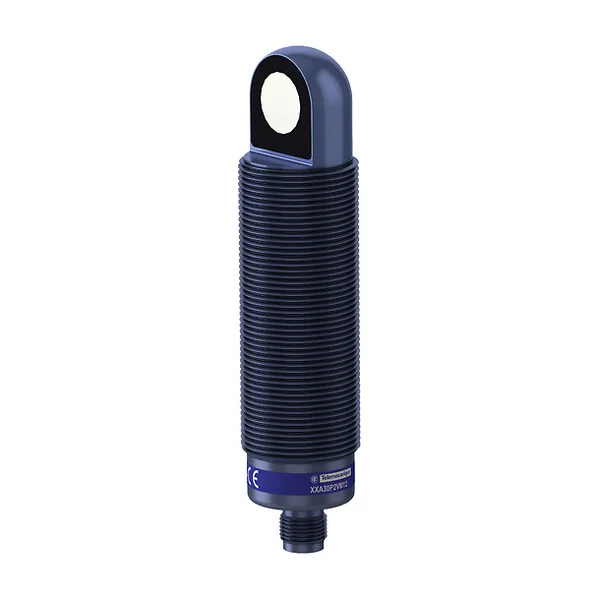
Offered for level tracking in water storage facilities, TELEMECANIQUE XX series ultrasonic sensors perform non-contact sensing unaffected by the target’s shape, color, texture, or transparency. Positioned for long-distance level monitoring in the water pumping brochure, the TELEMECANIQUE XXA30P2AM12 model stands out with its M30 angled structure and 2 m sensing distance to transmit level data. Models with analog output deliver 4…20 mA or 0…10 V signals; at FST, XXA30P2AM12 features current output, and XXA30P2VM12 features voltage output.
15. Status indication and data connection in vision processing devices
Operating in visual inspection applications, the HIKROBOT SC3000X vision sensor simplifies maintenance and debugging steps by presenting the device operating status directly in the field through its 360° visual indicator structure on its body. Featuring an IP67 protection class, the SC3000X and SC2000E models transmit the image data they collect over PROFINET, Modbus, and EtherNet/IP industrial protocols to PLCs and upper control layers. On the code reading side, HIKROBOT ID3000 and ID2000 series devices report reading results through indicator lights on the upper ring and audible warning units, while the ID5000 series evaluates code scores and print quality to transfer line data to higher-level systems.
On the vision software side, HIKROBOT VisionMaster (VM) version 5.0 enables centralized management of cameras, I/O, and light sources with its built-in edge learning tools and over 170 module components. On the hardware infrastructure, while the HIKROBOT VC5000 vision controller featuring 7 GigE interfaces (4 of which are PoE) controls multi-camera networks in the field, GigE cameras such as the MV-CU060-10GM with PoE option can receive both data and power over a single cable.
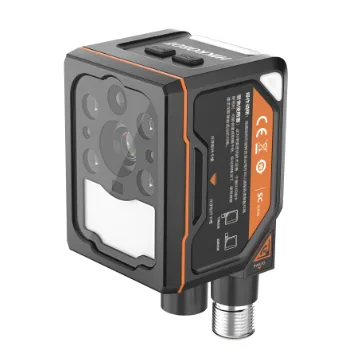 HIKROBOTSC3000 Smart Camera360° status indicator, IP67
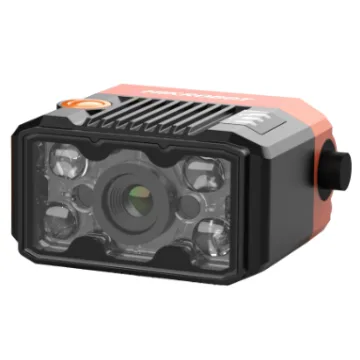 HIKROBOTSC2000E Smart CameraPROFINET, Modbus, EtherNet/IP
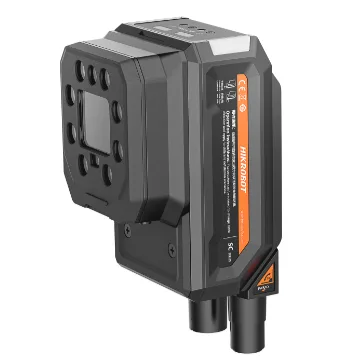 HIKROBOTSC5000X / SC6000 Smart CameraDeep learning, edge learning
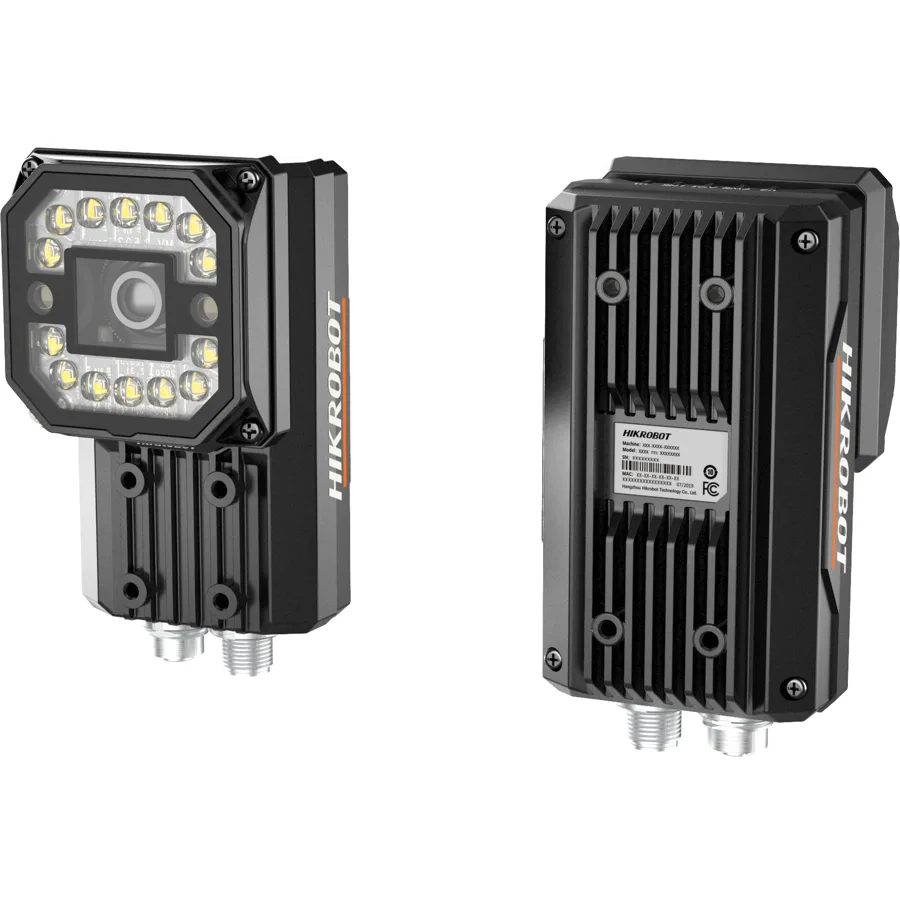 HIKROBOTID5000 Code ReaderCode quality grading
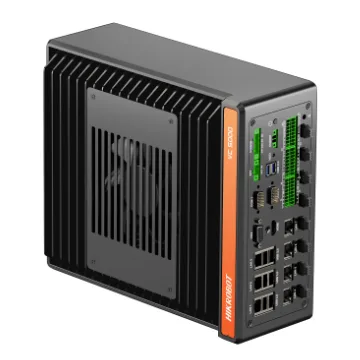 HIKROBOTVC5000 Vision Controller7 GigE interfaces, 4 with PoE
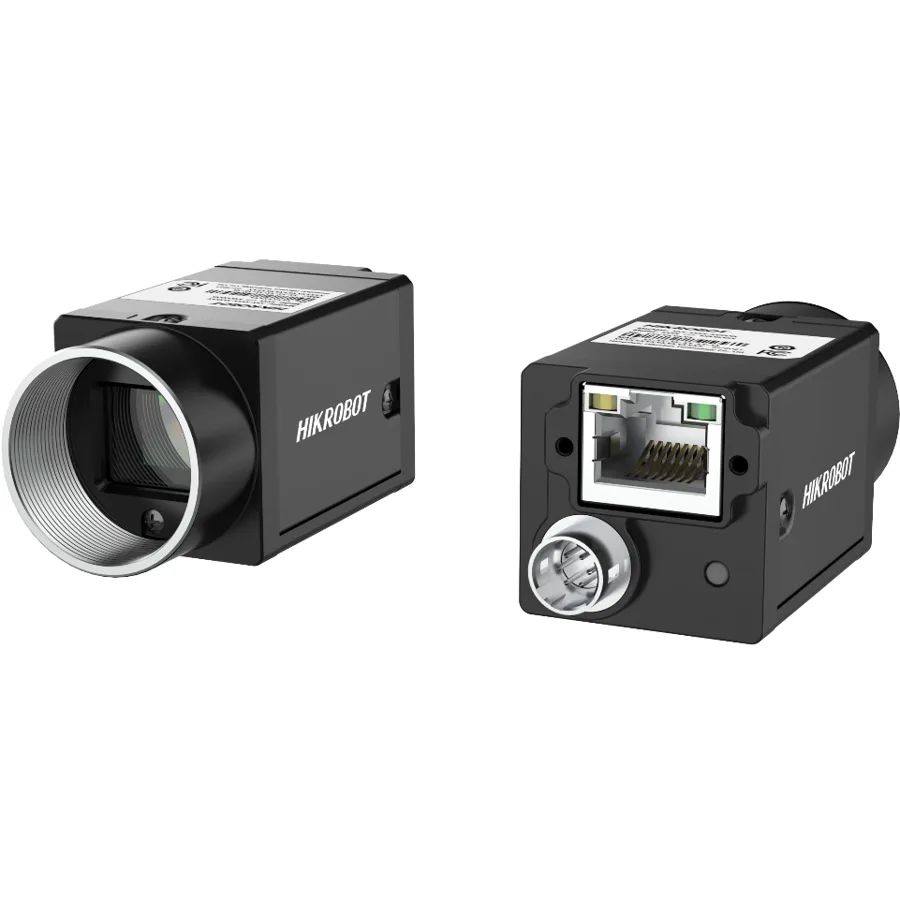 HIKROBOTMV-CU060-10GM6 MP GigE camera, PoE optional
Which product for which need?
| Need | Product group |
|---|---|
| Battery-powered, wireless vibration and temperature monitoring | ADVANTECH WISE-2410, in Ex area WISE-2410X |
| Wired, high-frequency vibration and FFT | ADVANTECH WISE-2460 / WISE-2461 |
| Collecting sensor and meter data, SCADA / cloud | ADVANTECH WISE-6610 V2 / WISE-6610P, WISE-2200-M |
| Edge computing, visualization, and artificial intelligence | ADVANTECH UNO-137 / UNO-148, MIC-770 V3, MIC-711-ON |
| Bearing, panel, and transformer temperature | OMRON ES1B / ES1C, PANASONIC Grid-EYE, HIKROBOT MV-CI003-GL-T6 |
| Sensor contamination, cable break, end of life | OMRON E3Z IO-Link / E3NX-FA, PANASONIC HG-C L3 / FX-550L, TELEMECANIQUE XUMR |
| Safety device diagnostics | OMRON F3SG-SR / G9SX, PANASONIC SF4D |
| Mould and asset monitoring | OMRON V680S, TELEMECANIQUE XG RFID |
| Tank level | TELEMECANIQUE XXA30 |
Source: ADVANTECH WISE and UNO datasheets, product pages, and case studies; OMRON ES1B/ES1C, E3Z, E3NX-FA, F3SG-SR, G9SX, D40A, OS32C, and V680 documents and IO-Link brochure; PANASONIC Grid-EYE catalog, HG-C and FX-550L self-monitoring documents, SF4D manual; TELEMECANIQUE XU catalog, water pumping brochure, and XG RFID manual; HIKROBOT product data. Results in case studies are the manufacturers’ own statements; sensor placement, alarm thresholds, and network structure for your own facility are determined on a project basis.
Tell us about your application
Share the equipment you wish to monitor (motor, pump, compressor, panel), the number of measurement points, cabling feasibility, environmental conditions, and the system where the data will be sent (SCADA, MES, cloud); let’s select the sensor, gateway, and edge computer components together. In projects in this industry, FST Teknoloji delivers turnkey machine vision and system integration solutions with HIKROBOT hardware.