
Logistics & Warehousing
In cargo hubs and warehouses, HIKROBOT code readers, 3D cameras, and smart cameras are used to read parcel codes from all directions, measure volume and weight, separate parcels individually, and track each parcel along the line. Complementing this vision layer on the conveyor, OMRON, PANASONIC, and TELEMECANIQUE sensor, RFID, and safety products, as well as ADVANTECH industrial computers, are also described on this page using the manufacturers’ own logistics and material handling examples.
What does machine vision solve in logistics?
In traditional logistics operations, when code reading relies on a single method, error rates increase, leading to significant fluctuations in processing efficiency for shipments to be routed to destinations and raising operational labor costs. Because these drawbacks can slow down the flow on conveyor lines and lead to accumulation before the sorter, according to HIKROBOT, vision processing solutions that perform automated image capture, code reading, volume measurement, and shipment and document tracking become smart tools in logistics. Since packages must be tracked step-by-step from the point of receipt to the dispatch stage, executing barcode reading and data collection operations without disrupting line flow directly impacts the tracking of operational processes.
The HIKROBOT system layout diagram illustrates the physical route followed by a parcel from its entry into the facility in a modern cargo transfer center, along with the critical control points on this line. Within this layout plan, following the receiving scan phase in the goods receiving section, packages continue on their route through static DWS or dynamic DWS stations based on measurement requirements. In subsequent steps of the process, parcel data is collected via six-sided code reading tunnels and dynamic reading points on the cross-belt sorter to carry out pre-shipment sorting operations.
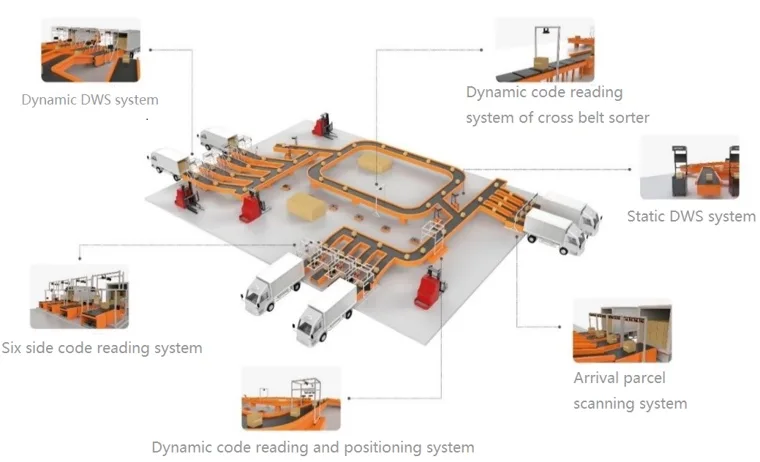
1. Logistics sensing: code reading, OCR, and volume
When reading barcodes on packages, decoding label text, and determining parcel dimensions on logistics lines are performed using separate devices, line complexity increases, potentially causing delays in data matching steps. Using AI-based deep learning and multi-dimensional sensing technology, HIKROBOT performs barcode reading, OCR (optical character recognition), and volume measurement on parcels within the same sensing structure. Thanks to this approach, the identity and dimension information of packages passing along the conveyor are scanned at the same point, consolidating the data flow to be transferred to subsequent sorting and classification stages into a single center.
Since package labels often undergo deformation in field conditions, the deep learning-based code reading architecture is designed to operate under challenging conditions such as large depth of field, wrinkles, dirt, and glare or reflection. Because HIKROBOT cameras use an AI-chip platform, code reading, label selection on the parcel surface, OCR, and single-image enhancement functions can all be performed in a single device.
2. Automatic detection of parcel information (DWS)
Executing receiving and shipping processes in logistics and warehousing facilities relies on accurately collecting the physical parameters and identification information of packages passing along the conveyor belt and transmitting them to host systems. In the DWS system developed by HIKROBOT, the parcel is automatically weighed, its volume measured, and the barcode on it read, with all captured data merged within an AI cloud technology framework and transferred to the system server.
After the collected logistics product data is captured by HIKROBOT systems, it is fed back to the facility’s existing logistics business system via an open API interface, ensuring the data flow operates integrated with enterprise software. The DWS system transmits barcode, weight, and volume data to the logistics business system and communicates with the entire downstream sorting system to perform data collection and subsequent sorting. Thanks to this integration architecture, cargo information is matched with the physical package, defining on the line which package the sorter diverters will transfer to which discharge gate.
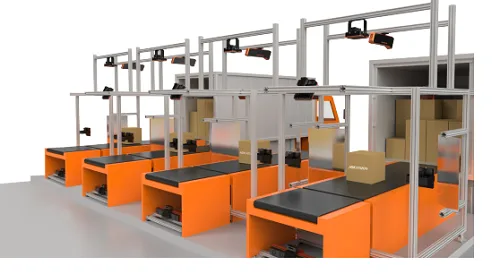
3. Six-sided code reading (tunnel)
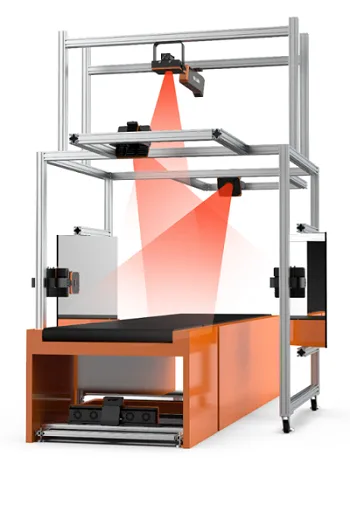
Since the placement orientation of packages on the belt constantly changes on high-speed conveyor lines, code reading tunnels ensure stable reading of codes on the top, bottom, left, right, front, and rear faces of the parcel, reducing the need for manual correction and increasing line efficiency. In this tunnel structure, high-resolution 8.9 MP, 12 MP, and 20 MP area scan cameras are used on the top, left, right, front, and rear faces, while a 4K or 8K line scan camera is preferred on the bottom face to scan the base of the parcel. The area scan cameras used are flexibly combined according to conveyor width and reading distances in the field, with models appropriate for the application structure selected and integrated into the tunnel architecture.
Special mirrors preferred for installation in tight spaces within tunnel setups shorten the working distance of side cameras, keeping the space occupied by the scanning equipment on the conveyor line compact. While the bottom-surface reading module adapts to conveyors of different heights, it reliably reads glossy, reflective, or film-coated barcodes. The code reading platform connected to the tunnel system offers direct connectivity for multiple smart cameras and industrial cameras, while the application solution is designed on a graphical interface using drag-and-drop logic. Furthermore, HIKROBOT emphasizes that its in-house developed code reading algorithm has strong adaptability against adverse field conditions such as barcode distortion, paper wrinkling, and film coating.
| Requirements in the HIKROBOT sample project | |
|---|---|
| Faces to be read | Top, bottom, left, right, front, rear (1D and 2D codes combined) |
| Code reading accuracy | > 98% |
| Minimum barcode module width | 10 mil |
| Barcode length | 60 – 122 mm |
| Parcel size | 160 × 80 × 10 mm – 1,000 × 700 × 700 mm |
| Depth of field | 700 mm (center) |
| Belt width / speed | 1000 mm / 2 m/s |
| Minimum parcel spacing | 400 mm |
The values are the requirements of the sample project published by HIKROBOT; design for your own line is carried out on a project-by-project basis.
4. Single-piece parcel separation
In traditional DWS systems, manually unloading parcels sequentially leads to inefficiency, and since parcel spacing cannot be tightly controlled during manual unloading, the DWS system cannot operate at targeted efficiency. As highlighted by HIKROBOT, in an approach using a separate singulator and DWS operating independently, the output speed of the singulator does not match the DWS sorting throughput, and the systems cannot be directly connected to each other. This mismatch causes packages to overlap on the conveyor or creates unnecessary gaps on the line, resulting in an irregular cargo flow directed to the sorter unit.
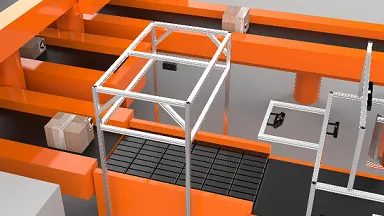
The HIKROBOT single-piece separation system mainly consists of a deep learning smart camera and a 3D camera; parcels are positioned in real time using 3D image processing and deep learning algorithms. The HIKROBOT smart control system controls the modular belt to enable parcels to pass individually and at fixed intervals, thereby combining parcel separation and parcel singulation functions within a single structure. While the implemented vision solution can be flexibly adjusted according to the size of the separator, adapting to various packaging types such as envelopes, polybags, and cardboard boxes is required to accommodate on-line diversity.
| Requirements in the HIKROBOT sample project | |
|---|---|
| Product types | Envelopes, polybags, and cardboard boxes |
| Parcel height | 10 – 700 mm |
| Real-time processing time | ≤ 50 ms |
| Sorting success rate | > 99% |
| System capacity | > 4,000 pcs/hour |
5. Visual parcel tracking
Since a large number of goods and parcels are frequently damaged in logistics centers, negatively affecting normal business operations, even if routine inspections within the facility are increased, quickly identifying the source of an error when a problem arises becomes quite difficult. As stated by HIKROBOT, systematically investigating damage or loss incurs heavy expenditure of manpower, materials, and time, thereby driving up operational costs. Visual tracking management comprehensively monitors critical production and transfer points, tracing the problematic scene backward through video recordings and improving customer complaint processing efficiency.
In the implemented architecture, while the smart code reading system records the arrival time of the parcel at each critical point along with attributes such as label image, weight, volume, and appearance, the video surveillance system provides intra-facility footage. By matching code reading logs with video surveillance footage, the data management system enables scanning and identifying at which point, on which device, and at what time a lost or damaged parcel encountered an issue. In HIKROBOT’s example scenario, the goal is to deliver a parcel stopped on suspicion of containing hazardous materials to the security unit within 30 minutes and subsequently resume normal line operation.
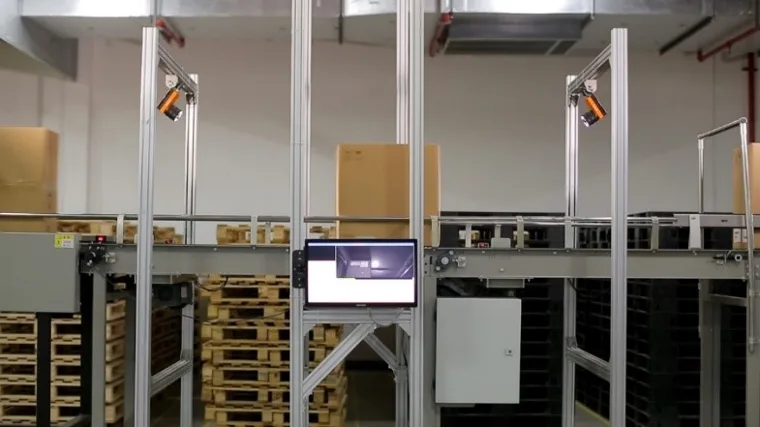
Conveyor, warehouse, and safety components
Because code readers and 3D cameras do not process packaging data alone on high-speed logistics lines, establishing a holistic structure requires photoelectric sensors that detect box presence and trigger the code reader with a hardware trigger, RFID systems that identify totes, and safety layers that ensure area safety. To increase flow accuracy in automated storage and shuttle systems, OMRON recommends using sensors, barcode readers, RFID, and vision processing technologies together, while each stage on material handling lines is supported by a different detection and control mechanism. The solutions discussed in the following sections detail the field architecture ranging from conveyor sensing to in-vehicle computers, based on logistics and material handling application examples from manufacturers OMRON, PANASONIC, TELEMECANIQUE, and ADVANTECH.
6. Parcel detection and code reader triggering on conveyors
In large facilities where ambient light cannot be fully controlled, such as material handling and logistics, OMRON prevents false detections caused by ambient light through pulse synchronization and wavelength filters offered in E3Z series photoelectric sensors; in OMRON’s multi-code reading application guide in logistics, the code reader receives its hardware trigger from a photoelectric sensor on the conveyor. OMRON positions this sensor family to detect luggage and bags in metro access gates and airport baggage handling systems, in addition to material handling, logistics, food packaging, beverage filling, and automotive machinery. In warehouse shuttle systems, photoelectric sensors continuously monitor the presence or absence of totes and boxes on the shuttle path, helping prevent collisions that could occur in the movement area of shuttles. On the TELEMECANIQUE side, in conveyor applications, the XUM miniature photoelectric sensor detects the passage and presence of packages using its background suppression feature, while the XUB cylindrical sensor verifies package presence in retro-reflective (reflex) mode. In TELEMECANIQUE’s material handling brochure, a sensing distance of 8 meters is specified for the XUM9APXBL2 polarized retro-reflective model and 0.3 meters for the XUM8APXBL2 background suppression model, while the XS cylindrical inductive sensor positions the turntable for conveyor transfer, and the XUM sensor confirms that the product is at the correct location prior to the rotation process.
PANASONIC presents field scenarios for the CX-400 series such as verifying object passage on conveyor belts, detecting box tipping on stacker crane rails, and detecting plastic bottles stacked on pallets. The CX-44□ BGS function in the series operates unaffected when the object and background are far apart, even if the background color changes or someone passes behind the conveyor, whereas the FGS function is used in conjunction with a background like a conveyor to detect products with glossy, colored, or rough surfaces. Unaffected by color differences, the CX-441 and CX-444 models detect black and white objects at the same distance, eliminating the need for adjustment during color changes on the production line and offering height difference detection down to 0.4 mm and a hysteresis value of 2% or less. The transparent object detection type CX-48□ stably detects thinner materials compared to previous models using its special optical system and circuitry, and is used in applications such as 10-micron food packaging film, 20-micron cigarette box film, 30-micron plastic bag, and 500 mL PET bottle examples.
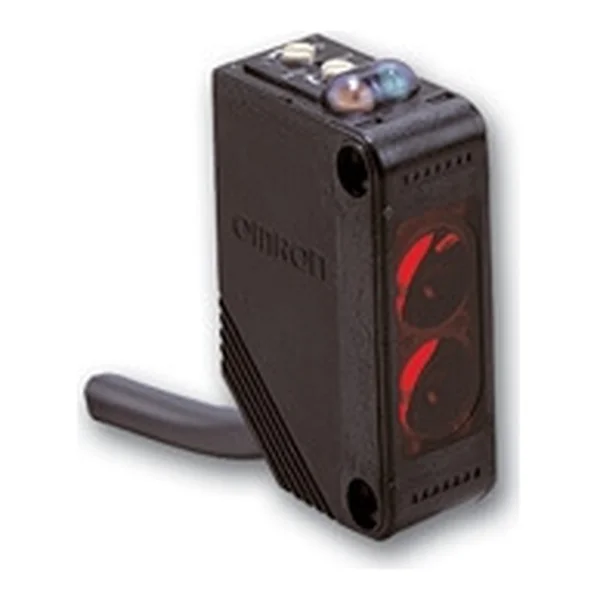 OMRONE3Z Photoelectric SensorBuilt-in amplifier, diffuse-reflective, IP67OMRONE3Z-T81 Through-beam SensorThrough-beam photoelectric sensor with built-in amplifier
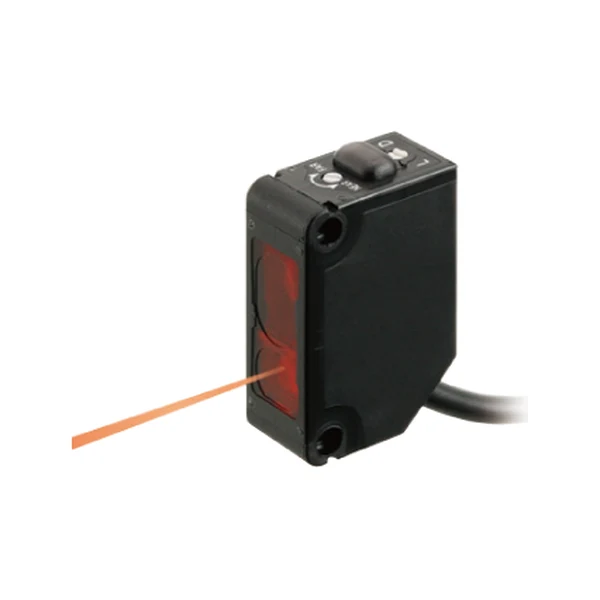 PANASONICCX-441Photoelectric sensor with background suppression (BGS/FGS)
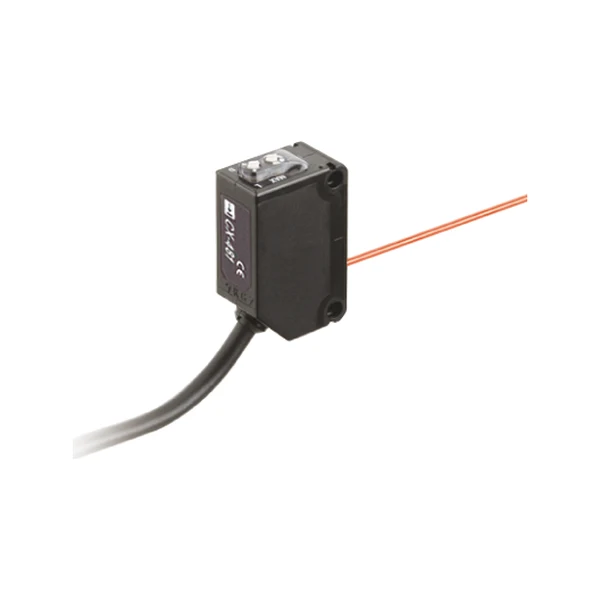 PANASONICCX-481Retro-reflective sensor detecting transparent objects
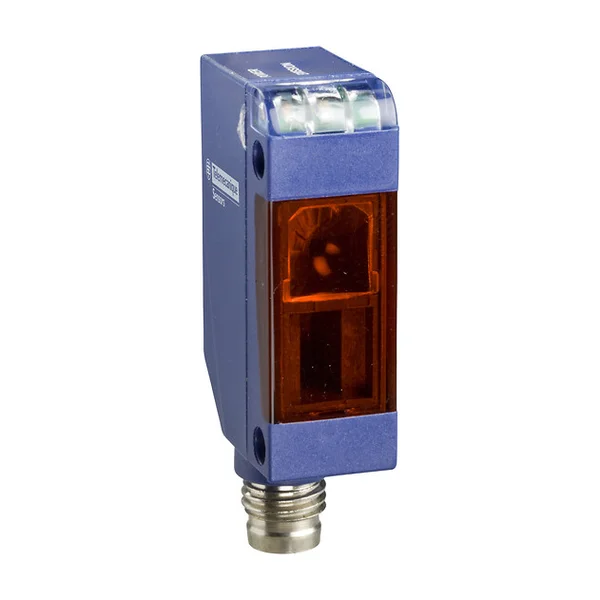 TELEMECANIQUEXUM0APSAM8Multimode miniature photoelectric sensor
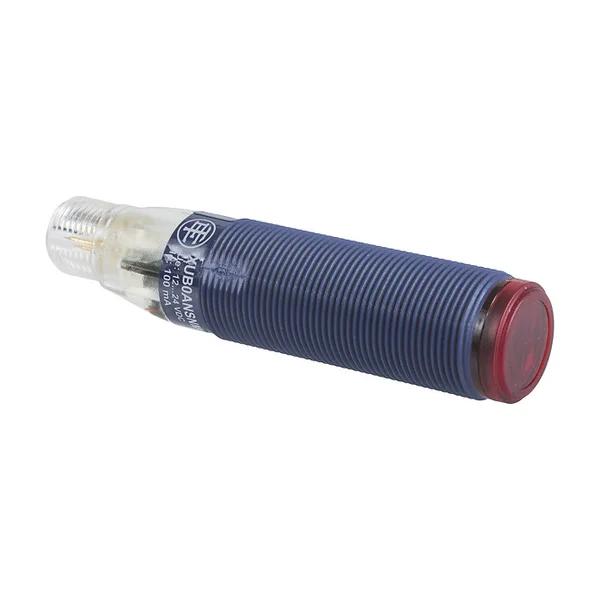 TELEMECANIQUEXUB0APSNM12Multimode cylindrical photoelectric sensor
7. Irregular parcel and pallet level detection with ultrasonic sensors
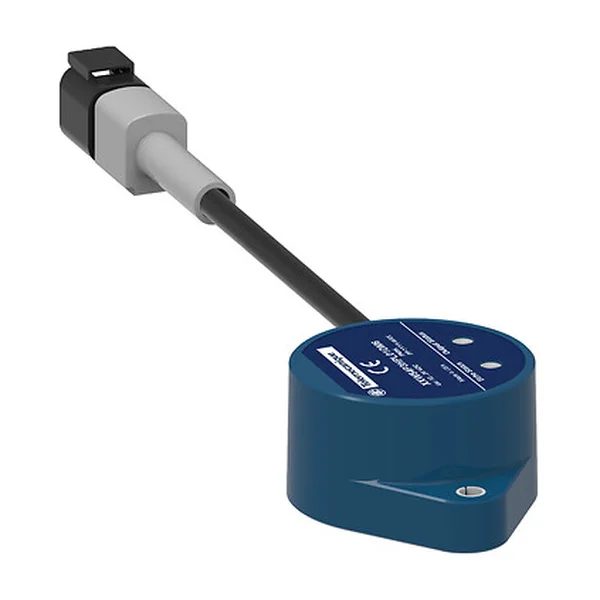
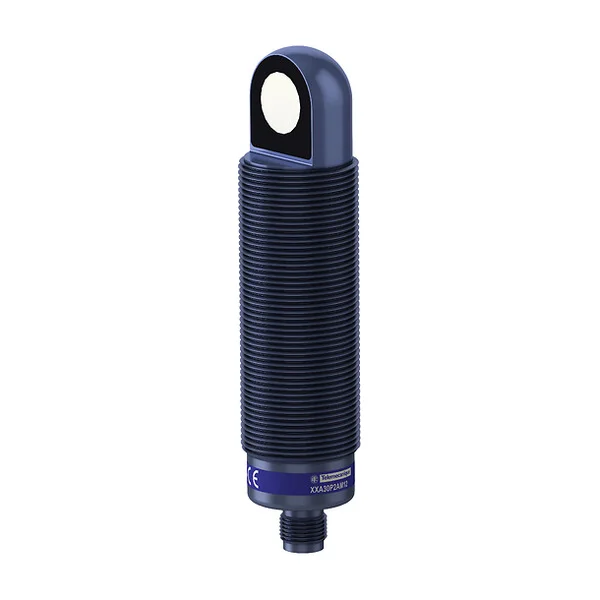
TELEMECANIQUE’s XX series ultrasonic sensors detect the passage and presence of objects in conveyor applications independently of color, shape, and orientation, providing tracking unaffected by roughness or dark tones on the packaging surface. On the cartoning station conveyor, the wide-beam XXW54 model detects randomly positioned cardboard boxes on the line to prevent jams while simultaneously engaging the conveyor drive to regulate material flow. The right-angled XXA ultrasonic sensor used at the buffer station detects containers without being affected by the reflectivity properties of the material, and thanks to its right-angled body structure, it integrates into the line without requiring additional mechanical mounting parts.
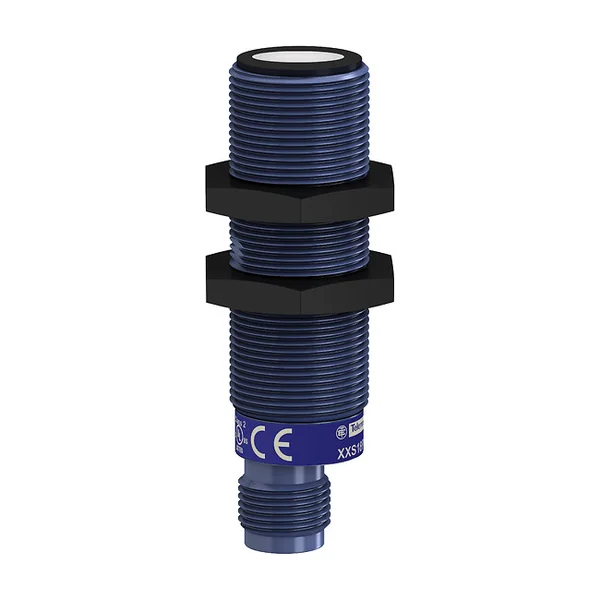
In the palletizing section, a right-angle XX ultrasonic sensor with an 8-meter sensing range is used to predict the emptying of the pallet stacker in advance, while XXS series sensors are preferred for tracking the pallet level. Capable of easily detecting transparent, dark-colored, and curved-surface objects, the XX series reduces cross-talk risk on lines where sensors are mounted close to each other thanks to its built-in synchronization feature. Discrete output XX models in the series perform detection between 5 centimeters and 8 meters, and 4-20 mA or 0-10 V analog output models perform detection between 50 centimeters and 8 meters, while level models with 18 and 30 millimeter diameters operate in the 50-centimeter to 2-meter range.
8. Carrier, tote, and parcel tracking with RFID
To ensure speed and transparency in intra-warehouse processes, OMRON positions compact and flexible RFID technologies alongside barcode systems, contributing to the monitoring of material flow on the line. OMRON defines the V680 system, operating at a frequency of 13.56 MHz and compliant with the ISO15693 standard, for tracking and monitoring internal material flow, while offering the V680S model as a universal RFID system for material handling and assembly processes. RFID is also among the technologies cited by OMRON to achieve high efficiency and operational accuracy in automated warehouse shuttle systems.
On the TELEMECANIQUE side, the XG RFID system ensures the identification and traceability of packages on conveyor lines as well as totes and trays in automated storage (AS/RS) systems. TELEMECANIQUE positions these RFID solutions for logistics operations consisting of goods receipt, goods dispatch, and transit transfer steps, as well as for airport baggage tracking and sorting lines. Compatible with ISO 15693 and ISO 14443 tags, XG smart antennas operating at a frequency of 13.56 MHz offer power consumption of less than 60 mA per antenna while creating a wider sensing zone on conveyor lines using 50×200 mm and 50×400 mm field expander accessories. The product family includes Modbus- and Uni-Telway-supported XGCS4901201 and XGCS8901201 models, as well as XGCS850C201 smart antenna options that connect to Modbus TCP/IP and EtherNet/IP communication lines.
 OMRONV680S-HMD6x-EIP/PNTRFID reader with EtherNet/IP or PROFINET connectivity
 OMRONV680S-D2KF6x/D8KF6xBattery-free FRAM RFID tag, IP68
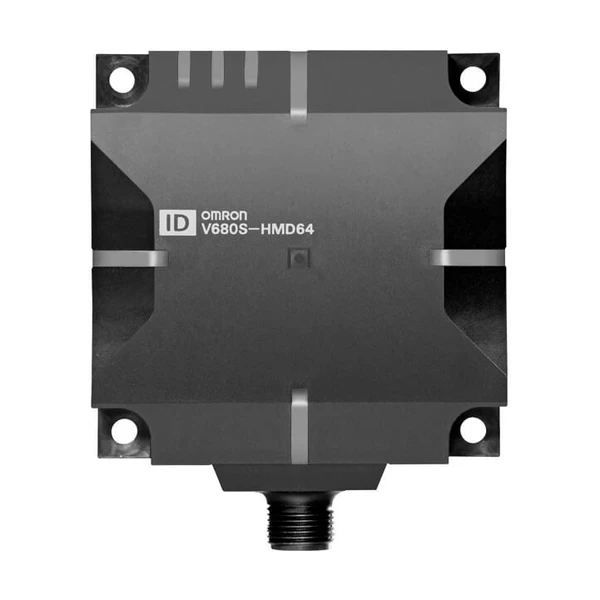 OMRON · TELEMECANIQUERFID SystemsPallet, carrier, and part tracking
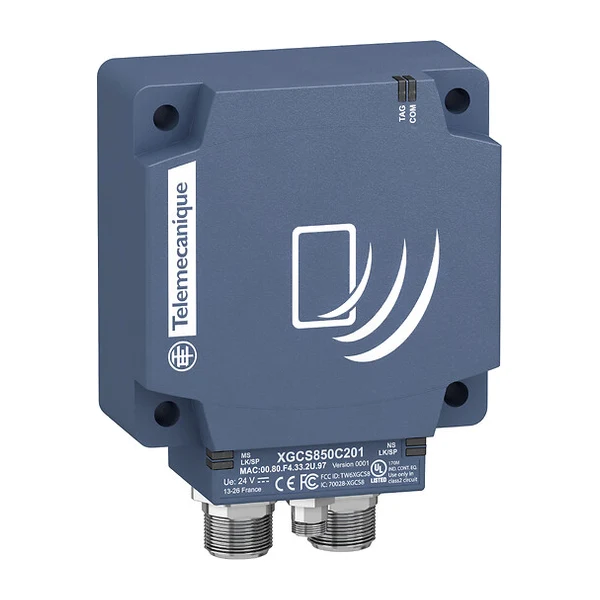 TELEMECANIQUEXGCS850C201Ethernet RFID smart antenna, 13.56 MHz
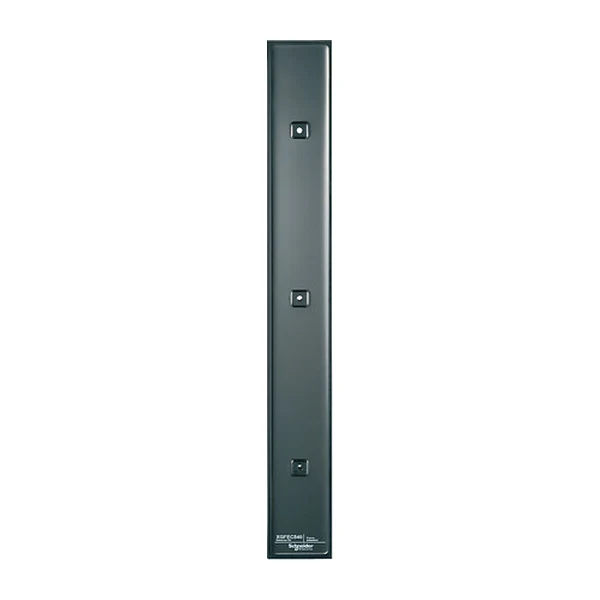 TELEMECANIQUEXGFEC540 / 2525Conveyor-type RFID field extender
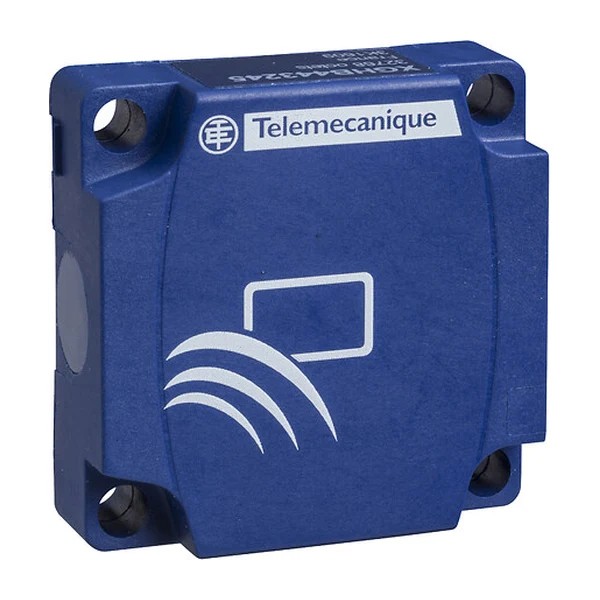 TELEMECANIQUEXGHB44xx4540 × 40 mm RFID tag, IP68
9. Automated storage (AS/RS) and shuttle positioning
In order to achieve high accuracy and efficiency in automated storage and shuttle (AS/RS) systems, OMRON recommends sensors, barcode readers, RFID, and machine vision technologies in combination. Proximity sensors detecting the proximity of the shuttle carriage represent an appropriate choice for positioning to detect when the shuttle carriage reaches the correct point in front of a conveyor or rack. The proximity sensor portfolio offered by OMRON covers capacitive and inductive sensor options resistant to harsh industrial warehouse environments.
On the TELEMECANIQUE side, in AS/RS applications, the XS cylindrical inductive sensor verifies the position of the tray before motion permission is granted, monitoring the moment the load is picked up or deposited by the platform. While the XS618B1PAM12 model with an M18 body and an 8 mm sensing distance in the cylindrical series is used in these position verifications, the XUM photoelectric sensor with background suppression mode checks the presence of the load on the tray and positions the platform in front of the storage cell. To prevent the shuttle or platform from moving beyond specified boundaries, XS rectangular inductive sensors with a 40x40x70 mm body operate in overtravel detection, with the XS7C2A1PCM12 model in this series offering a 15 mm sensing distance and the XS8C2A1PCM12 model offering a 20 mm sensing distance.
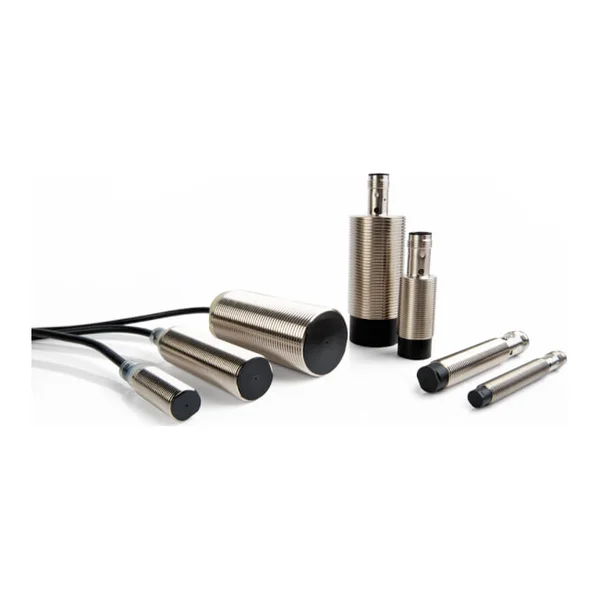 OMRONE2B-M18KS05-M1-B1M18 flush-mountable inductive proximity sensor
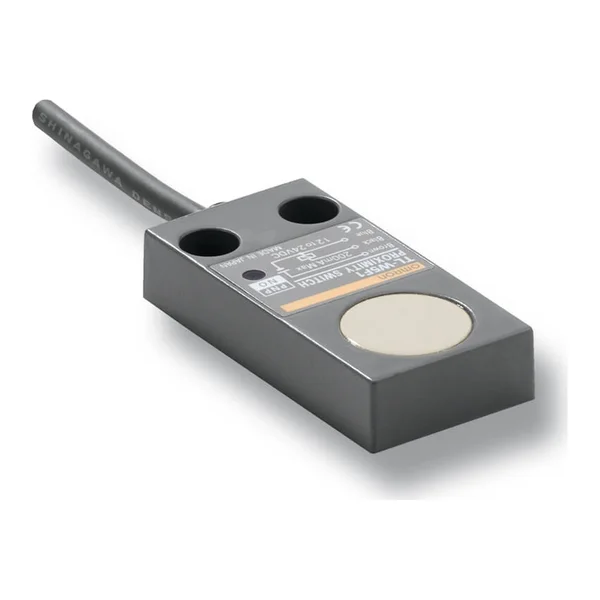 OMRONTL-W3MB1Rectangular inductive proximity sensor
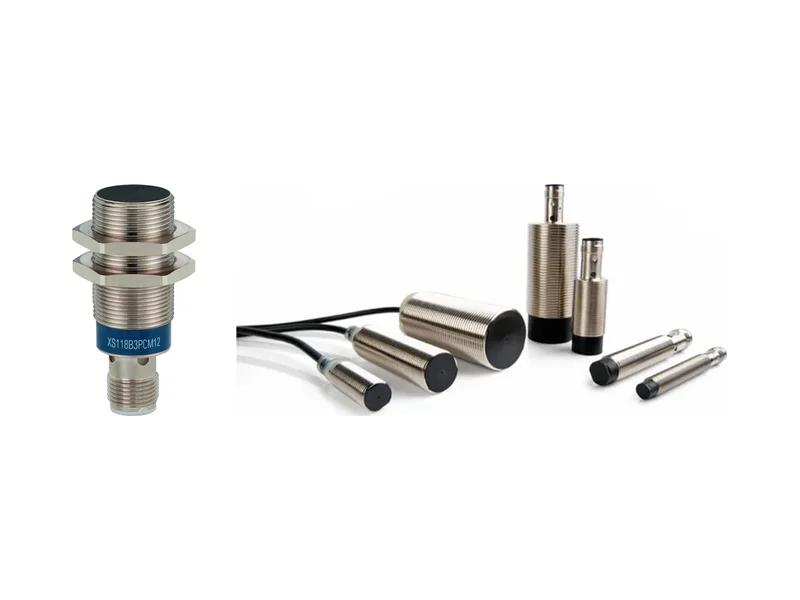 OMRON · TELEMECANIQUEInductive SensorsCylindrical and rectangular proximity sensors
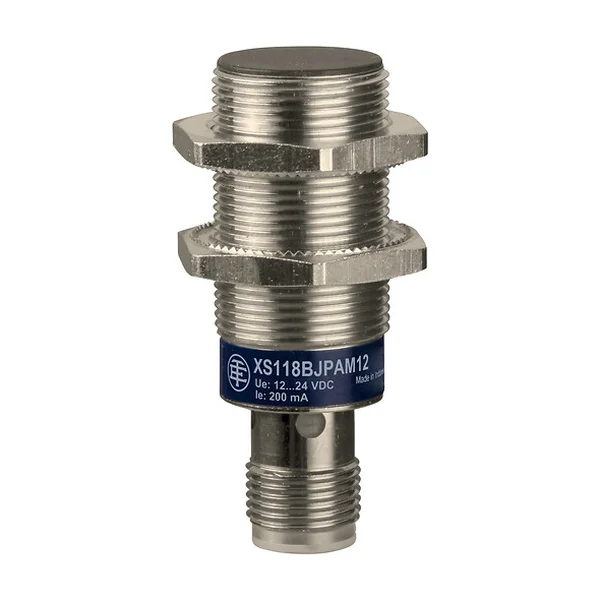 TELEMECANIQUEXS618B1PAM12M18 inductive sensor, Sn 8 mm
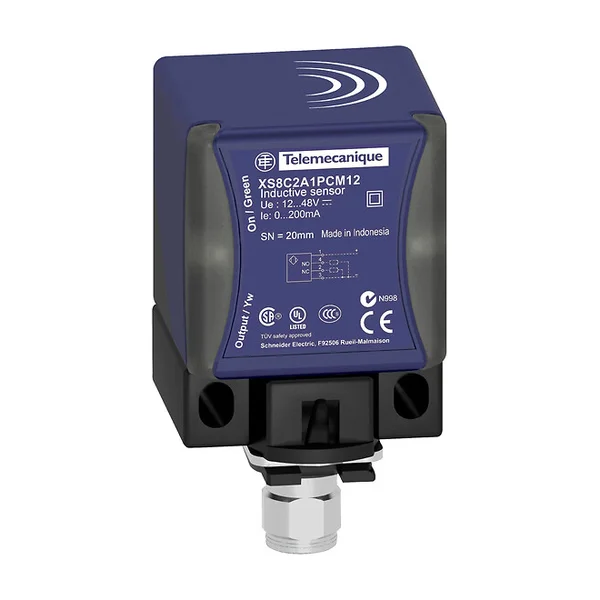 TELEMECANIQUEXS8C2A1NCM1240 × 40 × 70 mm inductive sensor, Sn 20 mm
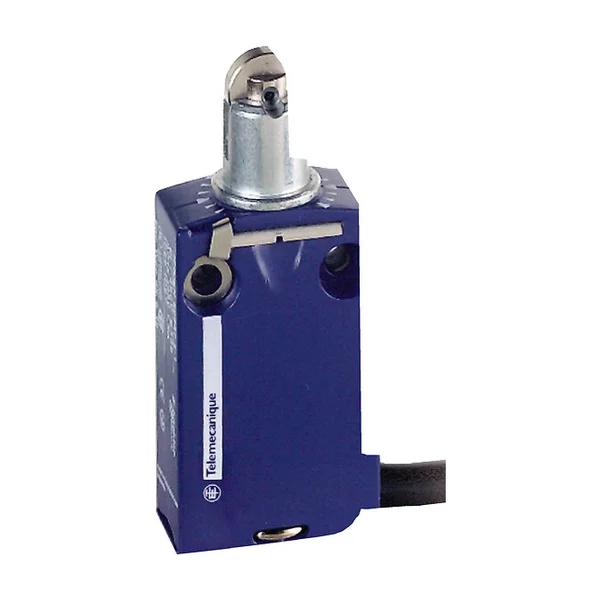 TELEMECANIQUEXCMDMiniature limit switch, positive opening
10. Palletizing, stretch wrapping, and end of line
At pallet wrapping stations, TELEMECANIQUE monitors over-travel at upper and lower limits using the XCKP limit switch featuring high mechanical robustness and vibration resistance, while providing advance notice via an analog-output XX ultrasonic sensor that the stretch film roll is running out. Because areas housing palletizing and wrapping machines contain heavy dust and moisture, it is recommended to use sensors with at least an IP67 protection class compliant with the IEC 60529 standard for equipment in this zone. The wide-beam XXW54 ultrasonic sensor detects forklifts approaching the wrapping or palletizing area, activating a warning light to alert the driver and nearby personnel.
In forklift applications, TELEMECANIQUE positions XCKP limit switches, which allow easy mechanical adaptation with their compact body and modular head structure, or XCMD models offering a wide variety of heads. Meanwhile, XS inductive sensors suitable for mobile vehicle structures are preferred at position sensing points on forklifts due to their compact dimensions and mechanical body robustness. For mobile equipment, the XX ultrasonic series with E2 certification and the E-certified XXW54 model carry out detection around the vehicle by providing a wider beam angle as well as high electromagnetic interference (EMC) immunity.
11. Conveyor, AS/RS aisle, and palletizer safety
In robot cells and conveyor lines within warehouses and fulfillment centers, OMRON ensures human safety with F3SG-SR light curtains that stop the system when someone enters a hazardous area, adapting to AS/RS aisles of any width thanks to 40 mm beam pitch intervals. At points where material enters and exits the hazard zone, the F3SG-RA series offers three different muting modes—standard T and X shape, exit-only L shape, and position detection—engaging a dynamic muting function that automatically adjusts beams based on workpiece height. In cases where the workpiece vibrates back and forth or small gaps exist between products on a pallet, the smart muting actuator expands F3SG-RA capabilities; in OMRON’s pre-reset example, a light curtain at an entry easily accessible by forklift prevents restarting the machine while an unseen worker is inside. In addition to the F3SG-R series with a sensing distance of up to 20 meters and IP67 protection, OMRON offers a combination of OS32C safety scanners, D41L and D41D non-contact switches, D4NS key door switches, and D4SL-N guard lock safety door switches that prevent entrapment inside robotic palletizer cells.
On the PANASONIC side, SF4D series light curtains facilitate muting sensor arrangement and settings thanks to a timing diagram showing actual input timing, while supporting exit-only, simultaneous input, 4-sensor parallel, and 2-sensor cross configurations. The ST4-C12EX high-function controller, offering three distinct muting patterns, allows direct connection of sensor heads, muting sensors, and lamps to itself while generating an alarm in the event of a muting lamp failure. In its published documentation, PANASONIC explicitly states that SF4D, SF4C, SF4B, and ST4 safety products must not be used on mobile equipment such as AGVs.
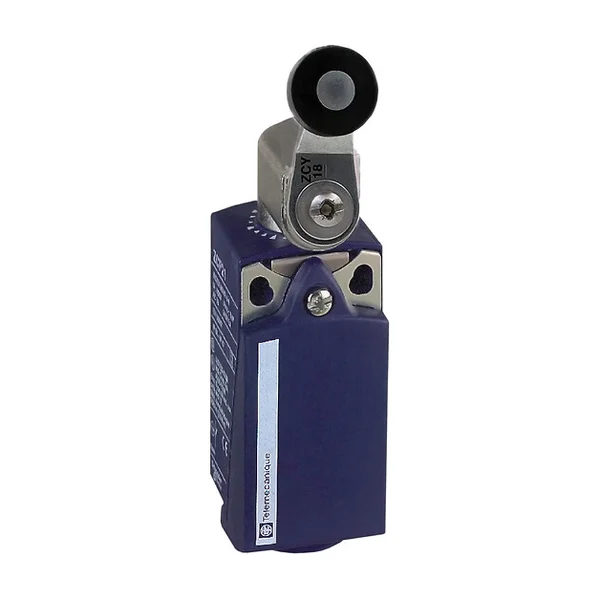
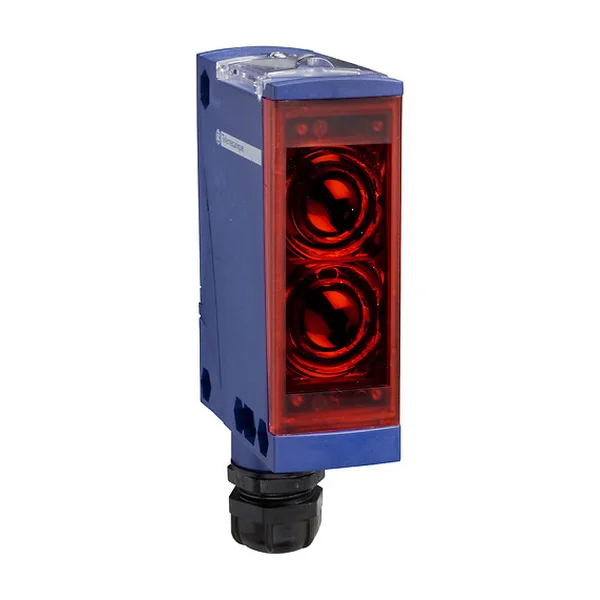
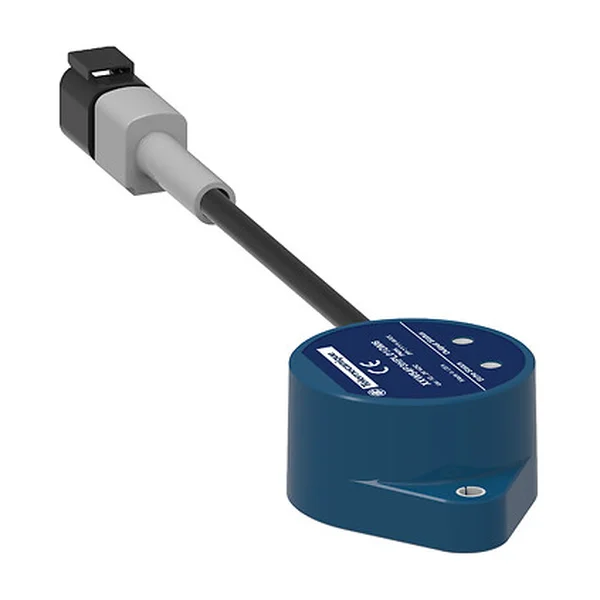
TELEMECANIQUE offers Type 4 PLe/cat4 class XUSL4 and Type 2 PLd/cat2 class XUSL2 light curtains with a sensing range of 0–4 meters or 0–12 meters to monitor personnel access on stretch wrapping machines and in hazardous areas. TELEMECANIQUE XCSRC non-contact RFID safety switches are used to monitor the status of guard doors in compliance with ISO 13849-1 PL e and IEC 62061 SILCL3 certifications. In wide conveyor areas where emergency stop is required along the line, TELEMECANIQUE XY2 rope pull emergency stop switches are included in the safety architecture.
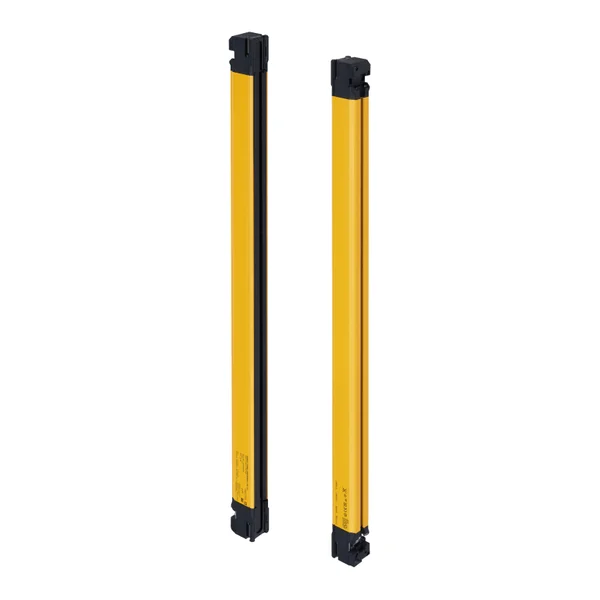 OMRONF3SG-4SRAType 4 safety light curtain, PL e
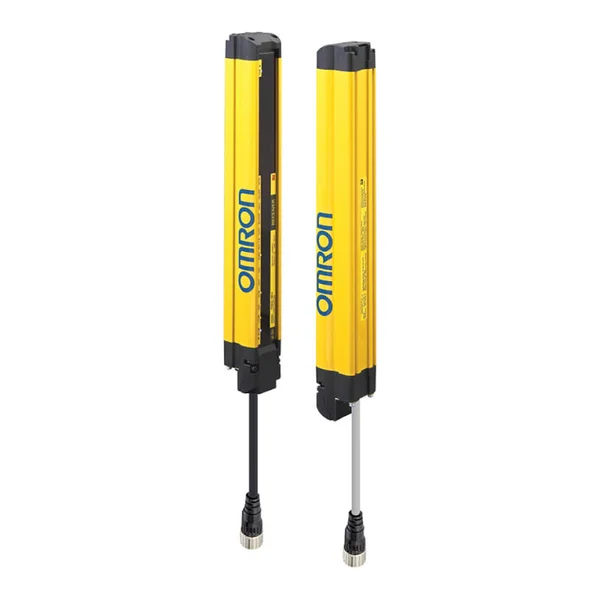 OMRONF3SG-4RAType 4 light curtain with muting mode
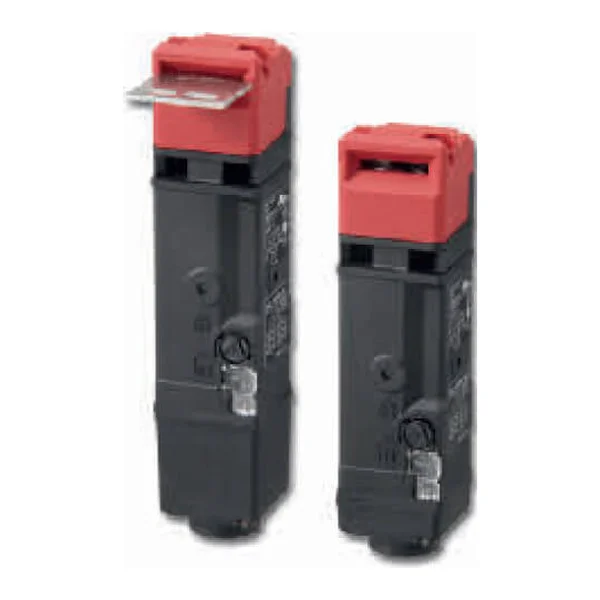 OMROND4SL-NSafety door switch with guard locking
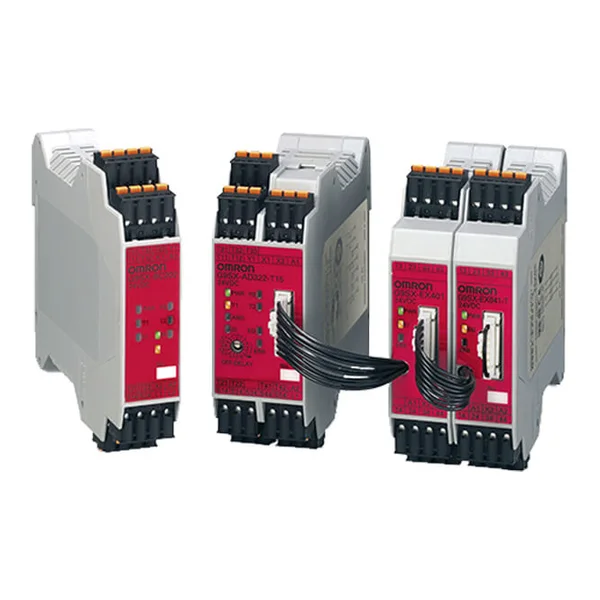 OMRONG9SXWired safety controller
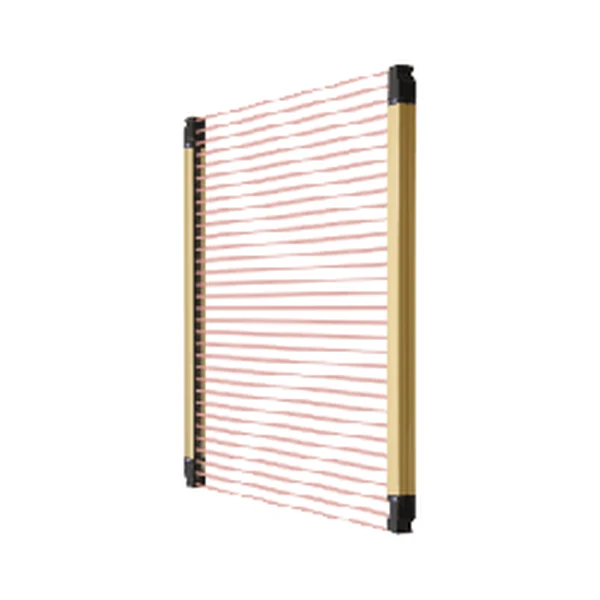 PANASONICSF4D-AType 4 safety light curtain, PL e / SIL 3
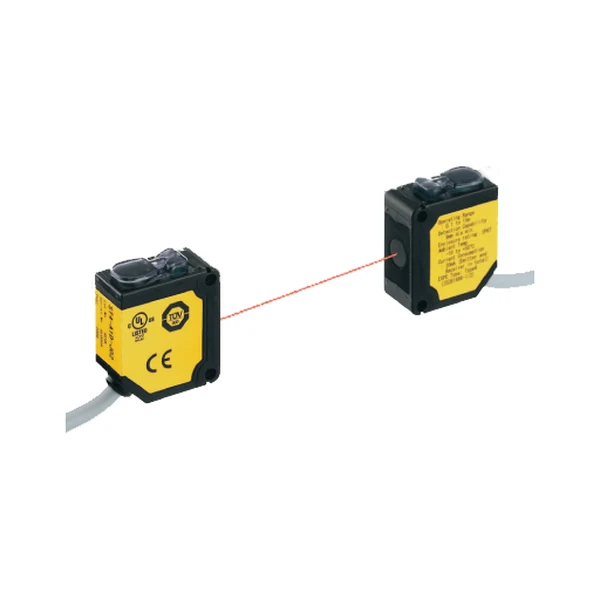 PANASONICST4Single-beam Type 4 safety sensor
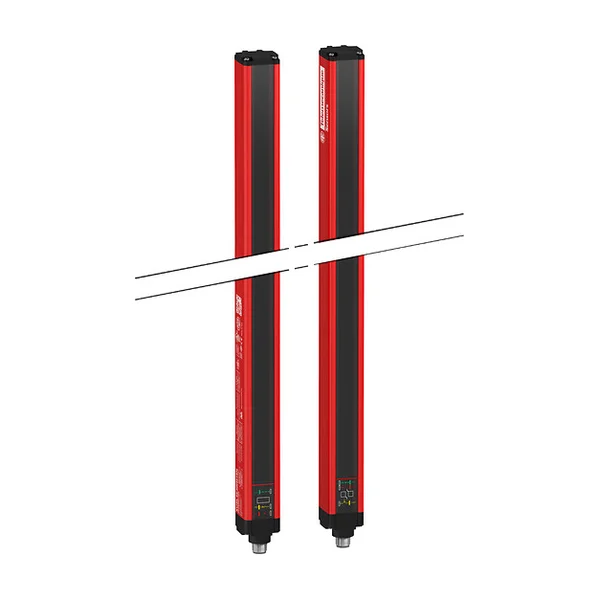 TELEMECANIQUEXUSL4E30HType 4 safety light curtain, 30 mm
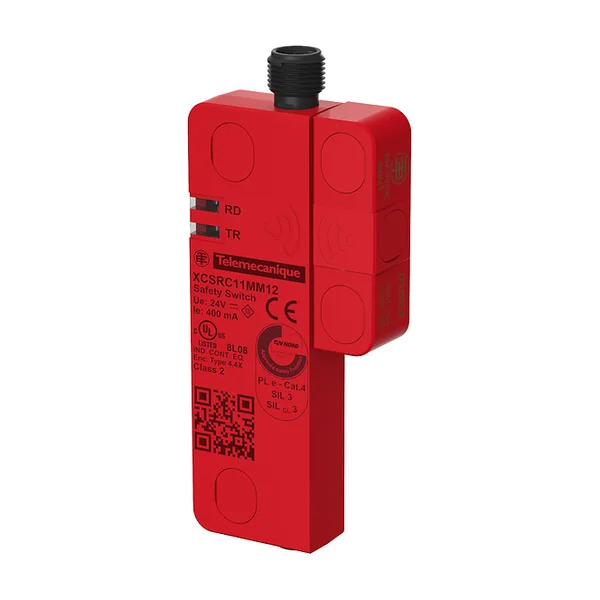 TELEMECANIQUEXCSRCRFID non-contact safety switch, PL e
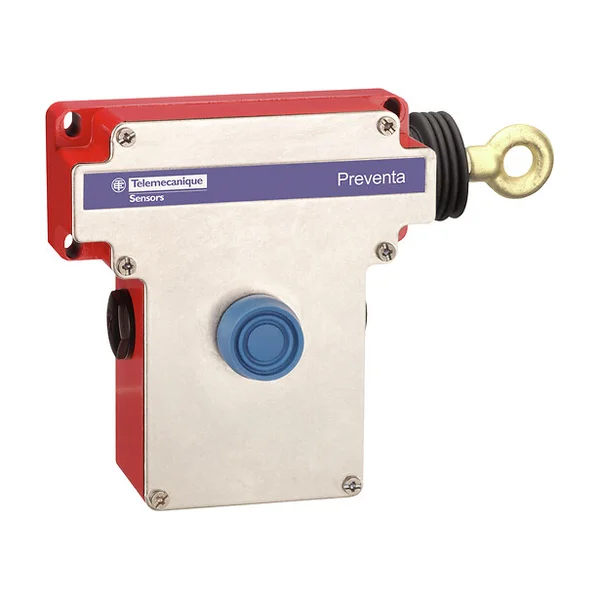 TELEMECANIQUEXY2CELatching rope pull emergency stop switch
12. Safety and control in AGVs, AMRs, and forklifts
Emphasizing that reliable safety measures are essential because AGVs and AMRs used in pallet handling operate in shared spaces with humans, OMRON offers the OS32C safety laser scanner for onboard collision avoidance systems. Weighing 1.3 kg and offering a detection angle of up to 270 degrees, the OS32C covers two sides of the vehicle with a single scanner while supporting 70 different field combinations consisting of a safety zone of up to 4 meters and two separate warning zones of up to 15 meters. While warning zones are evaluated for audible alarms and speed control, its low power consumption of 5 Watts (3.75 W in standby) lightens the AGV battery load; response time can be adjusted between 80 and 680 milliseconds. Compliant with IEC 61496-1 Type 3, ISO 13849-1 PL d, and Category 3 standards, this device is integrated into the safety architecture with adjustable object resolutions of 30, 40, 50, or 70 mm and PNP OSSD outputs.
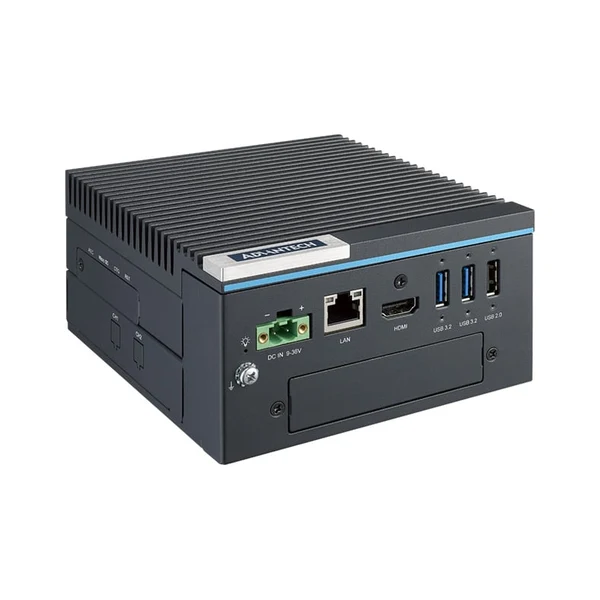
Providing the computing infrastructure for mobile autonomous systems, ADVANTECH introduced its NVIDIA Jetson-based edge platforms developed for AGVs, AMRs, autonomous forklifts, and mobile manipulators at LogiMAT 2026. Among these platforms that process data where it is generated, the AFE-R750 control system manages camera, LiDAR, and IMU connections by offering up to 275 TOPS of processing power with a Jetson Orin NX or AGX Orin processor, AMR-specific 4 GbE, 2 COM, DIO, CAN FD interfaces, and ROS2 support. Aiming for a direct transition from AGV systems to AMR technology, the NVIDIA Nova Orin-based MIC-732-AO model provides a 360-degree field of view with 8 GMSL FAKRA connectors while supporting 2D and 3D LiDAR units. Operating in a temperature range of −10 to 60 °C, the industrial MIC-733-AO edge AI system provides up to 60 Watts of total power supply to cameras via 4 PoE ports.
ADVANTECH positions TREK-50N as a Jetson Orin NX-based in-vehicle AI platform for system integrators developing autonomous mining, port logistics, and heavy machinery solutions; its fanless enclosure operates between -20 and 70 °C and features IP67 protection. Meanwhile, the TREK-60N model, featuring a dual-system architecture with Intel Core and Jetson Orin NX, supports harsh field conditions with 4-channel PoE, 12/24 V E-Mark, ISO 7637-2 certification, and dual CAN interfaces. The TREK-60N operates between −20 and 60 °C with a fanless design and IP65 protection; ADVANTECH highlights both models on its iLogistics solution page, which covers warehouse and fleet management.
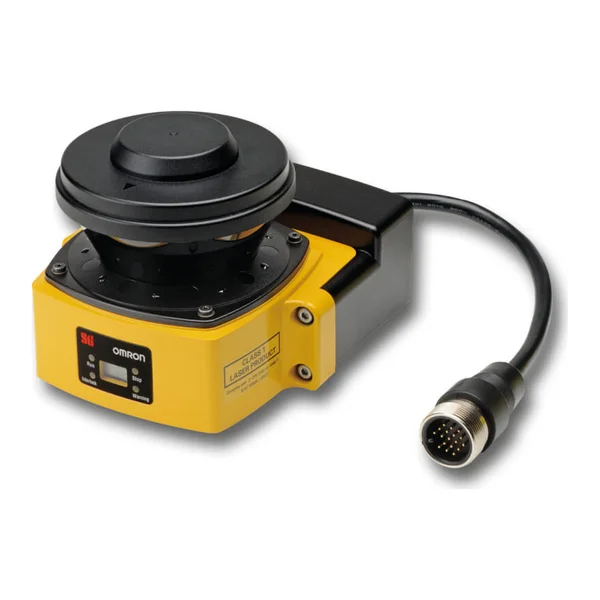 OMRONOS32CType 3 safety laser scanner
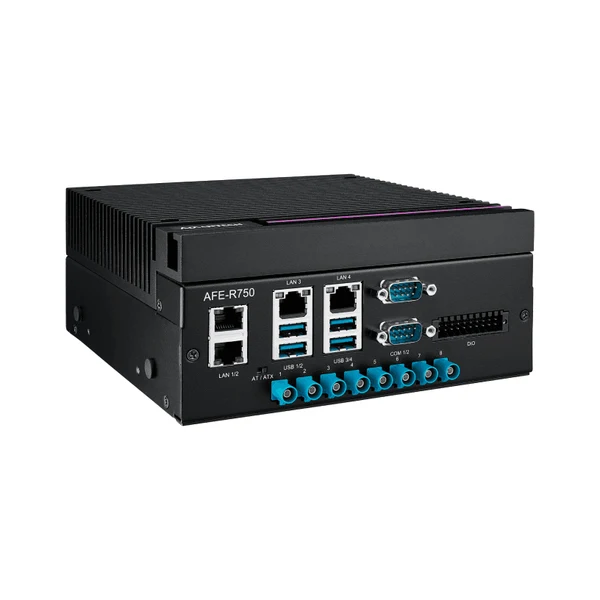 ADVANTECHAFE-R750AMR control system, Jetson Orin
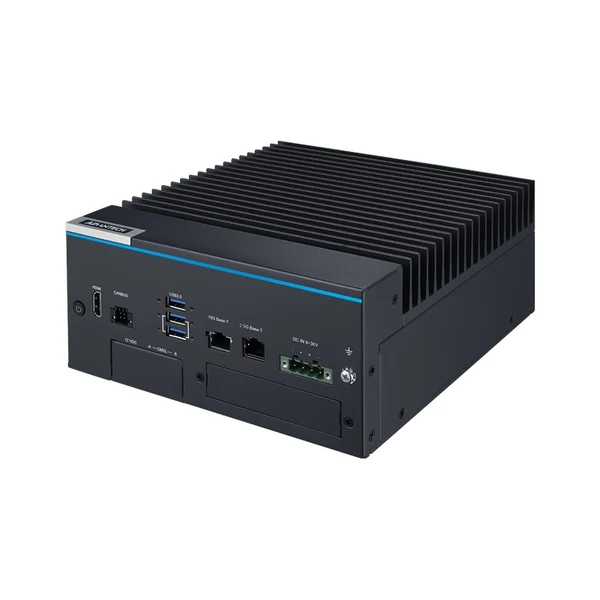 ADVANTECHMIC-732-AONova Orin-based AMR AI system
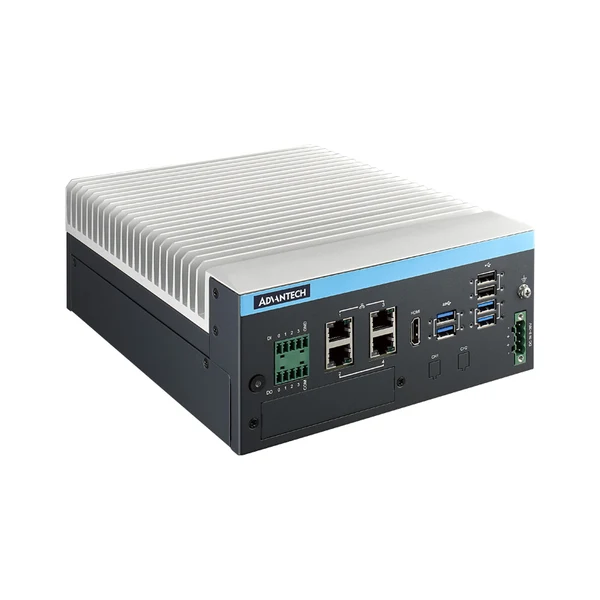 ADVANTECHMIC-733-AOJetson AGX Orin-based fanless edge AI
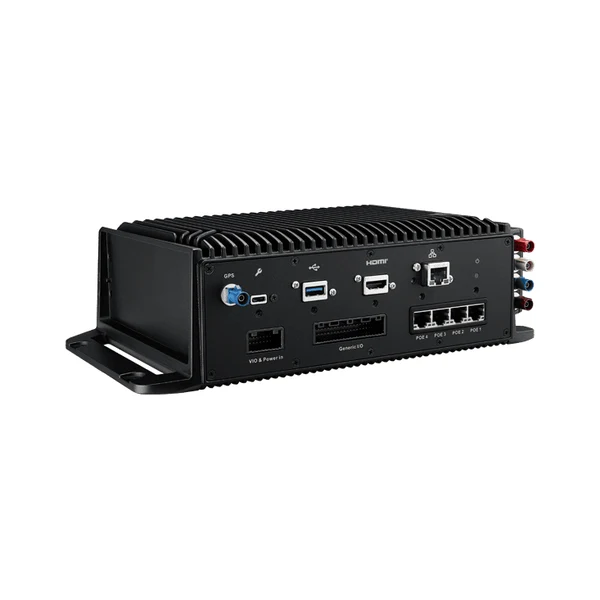 ADVANTECHTREK-50NIn-vehicle Jetson Orin NX AI platform
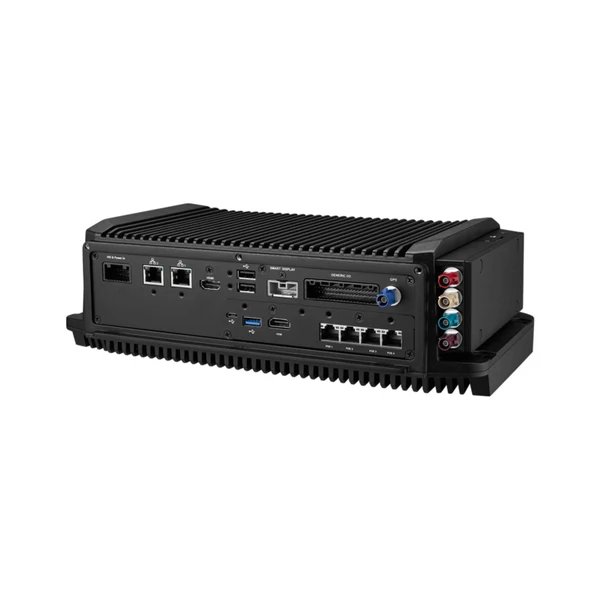 ADVANTECHTREK-60NIntel + Jetson dual-system in-vehicle platform
13. Vision stations and warehouse operator panels
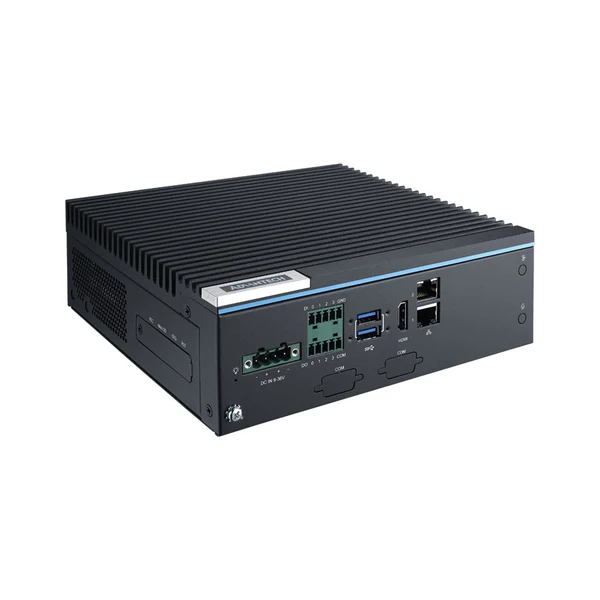
ADVANTECH positions AI-powered edge computers to manage autonomous sorting and routing processes in logistics operations, assigning the MIC-713-ON model to route planning, real-time inventory tracking, and sort-pick-pack robotic systems. Enabling high-resolution camera monitoring of warehouse and transit environments, the MIC-711, MIC-713, MIC-732, and MIC-733 models among these platforms gain GMSL support to perform 4K video transmission at 30-60 FPS. Providing a latency of under 10 milliseconds over transmission distances up to 15 meters, this connectivity infrastructure supports the data foundation for navigation and obstacle detection steps in warehouse and logistics operations.
ADVANTECH panel computers are used as operator interfaces at points such as robotic put walls, shuttle put walls, package sorting, product sorting, and dock management in automated warehouses. The PPC-300 series fanless panel PCs, prominent in this field, demonstrate operating performance in the temperature range of −20 to 60 °C with their aluminum body structures and IP66 front panel protection. Offering panel, wall, and VESA mounting options, the series enables field operators to use them with gloves thanks to resistive or PCAP touchscreen structures.

Which product for which requirement?
| Requirement | Product group |
|---|---|
| Single / multi-side code reading on conveyor | HIKROBOT ID6000 logistics code reader, IDS components |
| Wide belt, bottom side reading | HIKROBOT ID7000 line scan code reader, line scan cameras |
| Volume and dimension measurement (DWS) | HIKROBOT cargo logistics 3D cameras |
| Parcel positioning, separation, OCR | HIKROBOT SC5000X / SC6000 smart cameras, warehouse logistics 3D camera |
| Manual reading in receiving, picking, and shipping | HIKROBOT IDH handheld code readers |
| Parcel presence, code reader triggering, transparent packaging | OMRON E3Z, PANASONIC CX-441 / CX-481, TELEMECANIQUE XUM / XUB |
| Irregular parcel, cardboard jam, pallet level | TELEMECANIQUE XX ultrasonic sensors |
| Carrier, tote, and tray identification | OMRON V680S, TELEMECANIQUE OsiSense XG |
| AS/RS platform and shuttle position, overtravel | OMRON E2B / TL-W, TELEMECANIQUE XS / XCMD |
| Conveyor and aisle access safety, pallet passage (muting) | OMRON F3SG-SR / F3SG-RA, PANASONIC SF4D / ST4, TELEMECANIQUE XUSL4 |
| AGV / AMR safety scanner and control computer | OMRON OS32C, ADVANTECH AFE-R750 / MIC-732-AO |
| Vision station and warehouse operator panel | ADVANTECH MIC-713-ON, PPC-300 panel PC |
Related products
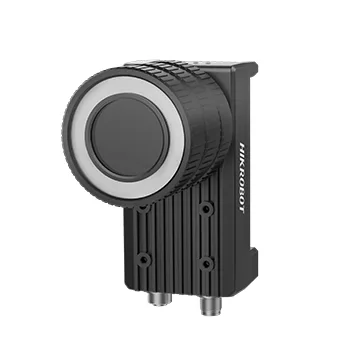 HIKROBOTID6000 Logistics Code ReaderHigh-resolution code reader for logistics lines
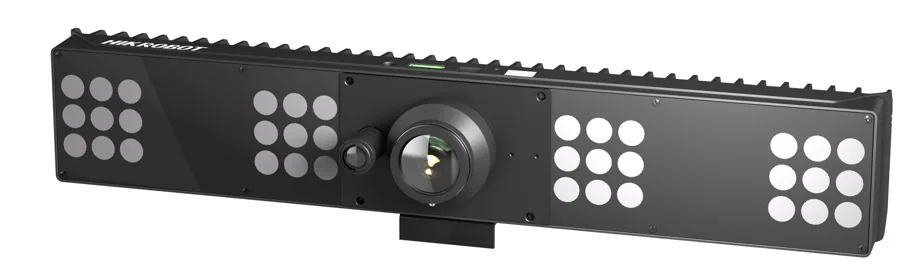 HIKROBOTID7000 Line Scan Code ReaderLine scan for wide-belt logistics lines
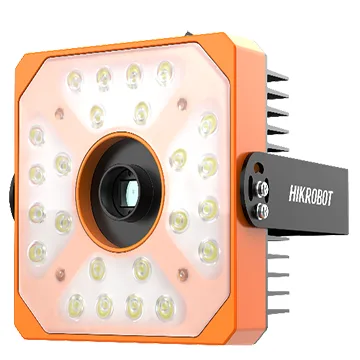 HIKROBOTIDS Code Reading ComponentsCore components of the logistics code reading station
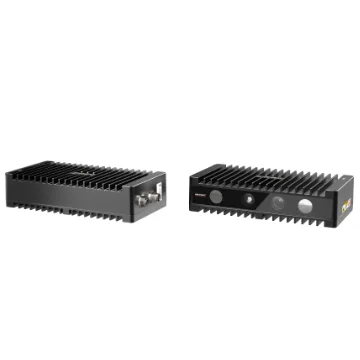 HIKROBOTCargo Logistics 3D CameraParcel volume measurement and sorting lines
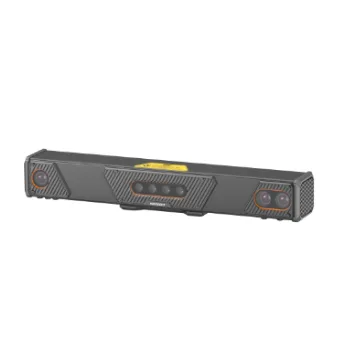 HIKROBOTWarehouse Logistics 3D CameraIn-warehouse palletizing and picking
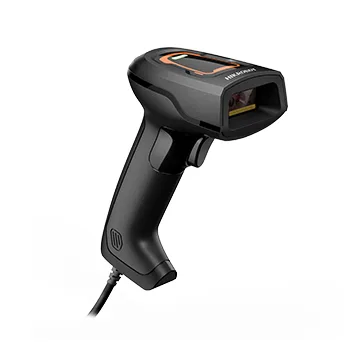 HIKROBOTIDH Handheld Code ReaderWarehouse, assembly, and dispatch points
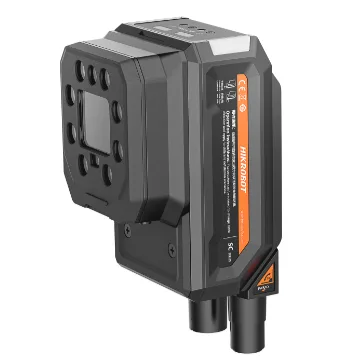 HIKROBOTSC5000X / SC6000 Smart CameraDeep learning-supported smart vision sensor
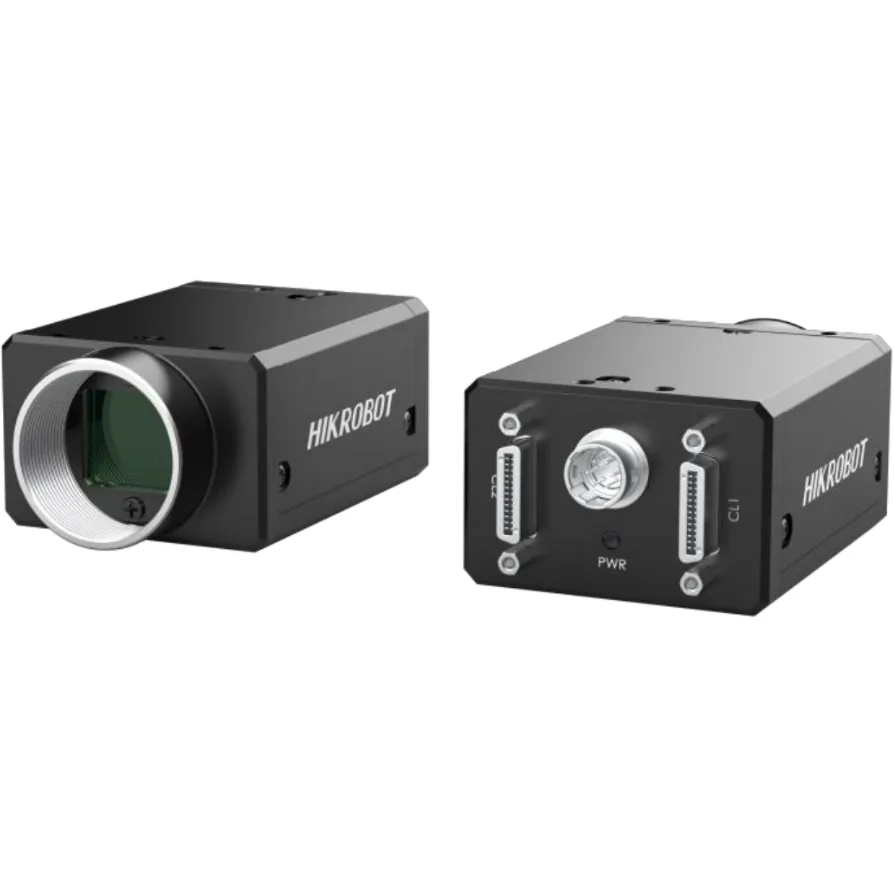 HIKROBOTCH Series Area Scan CameraHigh-resolution area scan cameras
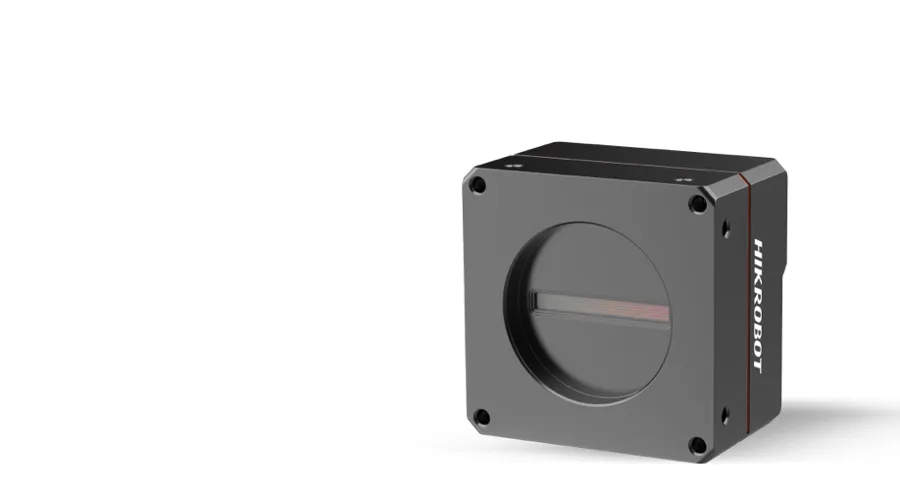 HIKROBOTLine Scan CamerasLine-by-line imaging on a moving belt
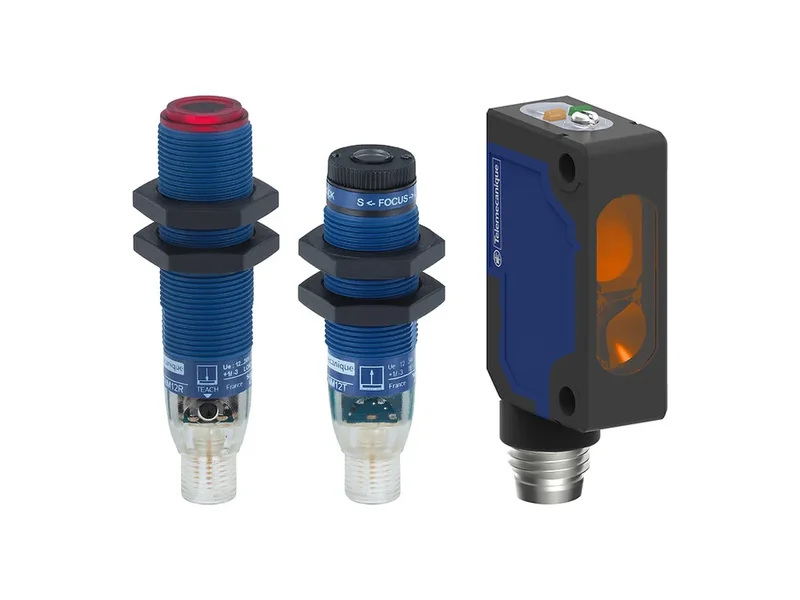 OMRON · PANASONIC · TELEMECANIQUEPhotoelectric SensorsThrough-beam, retro-reflective, diffuse-reflective
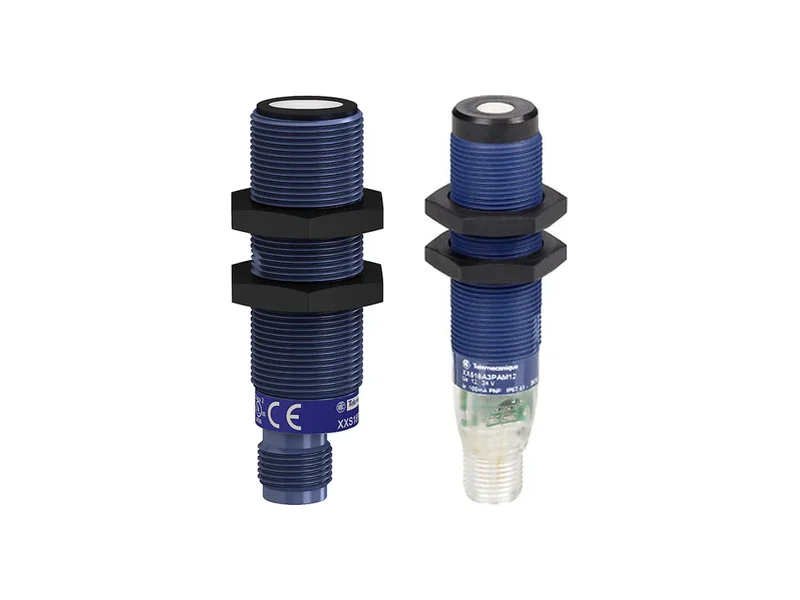 TELEMECANIQUEUltrasonic SensorsDetection independent of color and transparencyOMRON · TELEMECANIQUERFID SystemsPallet, carrier, and part tracking
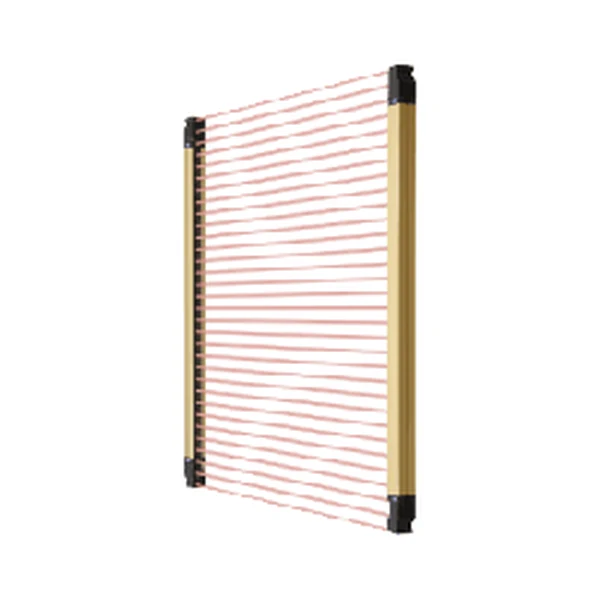 OMRON · PANASONIC · TELEMECANIQUESafety Light CurtainsLight barrier at access points
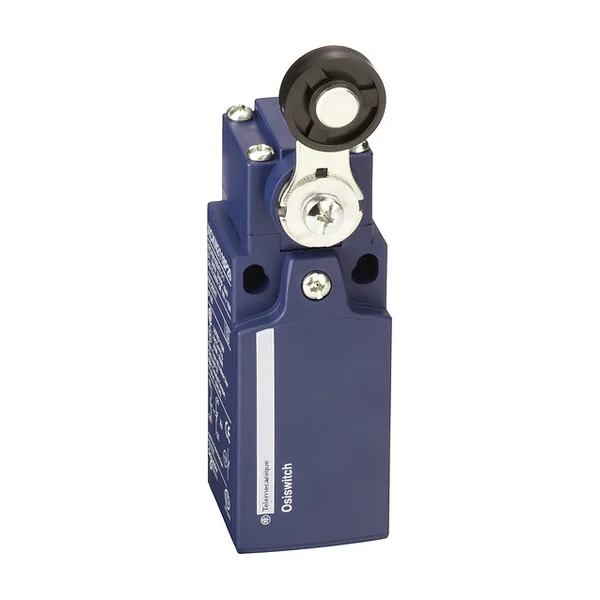 OMRON · TELEMECANIQUELimit SwitchesPosition and end-point detection
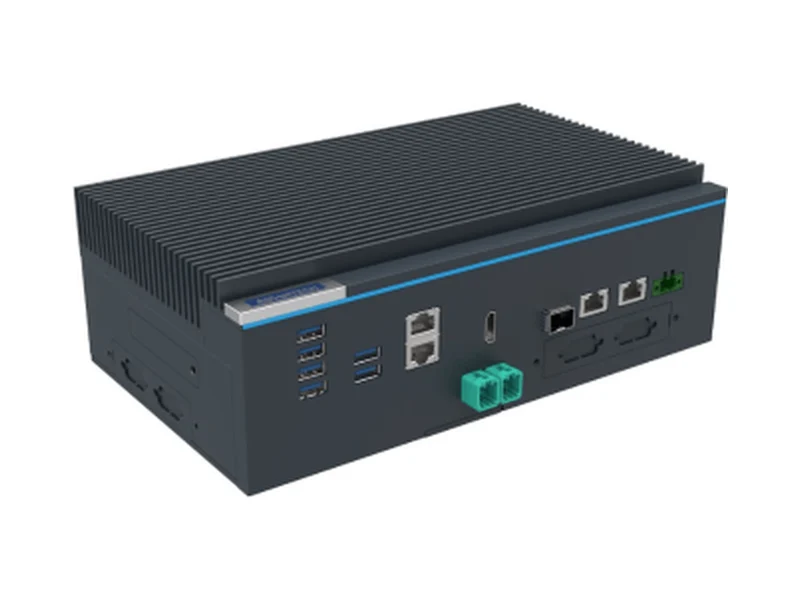 ADVANTECHNVIDIA AI PCJetson-based edge AI computers
Source: HIKROBOT logistics industry page and case studies; OMRON, PANASONIC, TELEMECANIQUE, and ADVANTECH product pages, brochures, and application guides. Images belong to HIKROBOT. Application values are manufacturer examples; selection for your own line is made on a project-by-project basis.
Tell us about your application
Share your belt speed, parcel dimensions, code type, faces to be read, warehouse type, and safety requirements; let’s select the code reader, 3D camera, sensor, RFID, safety, and control components together. In projects in this industry, FST Teknoloji delivers turnkey machine vision and system integration solutions with HIKROBOT hardware.