
Food & Beverage
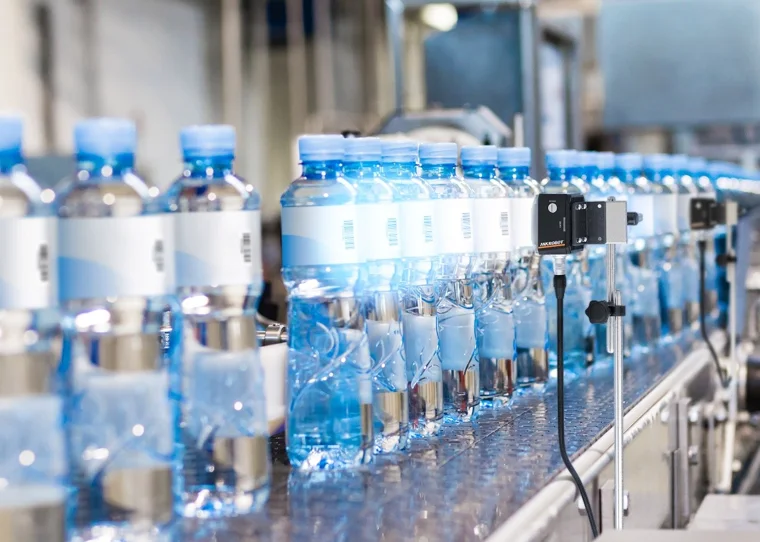
To verify date and lot codes, check that packaging is fully sealed and contents are correct, and read bottle and package codes at high speed on food and beverage lines, HIKROBOT smart cameras, code readers, and cameras are used. Products from TELEMECANIQUE, OMRON, and PANASONIC for sensor, hygienic design, RFID, and safety layers in filling, capping, labeling, packaging, cartoning, and palletizing machines, as well as ADVANTECH products for control and inspection computers, are also explained on this page with the manufacturers’ own application examples.
What does machine vision solve in food and beverage production?
While production lines in the food and pharmaceutical sectors operate at a high pace, according to sector evaluations shared by HIKROBOT, manufacturers face the pressure to increase equipment efficiency without compromising quality. Machine vision and code reading technologies in product transitions on the line are used to shorten downtime, ensure that products delivered to consumers remain safe and high-quality, and maintain traceability in the supply chain. Because products can break or be damaged especially in processes prior to the packaging station, the integrity of the product as well as its size, shape, color, and texture consistency must be inspected before proceeding to the packaging stage. Deploying smarter vision systems starting from the initial steps of the production chain enables the detection of damaged products moving on the line as well as foreign matter and contamination, allowing businesses to reduce their scrap rate.
While field integration of technology in the food industry is carried out on a broad scale, HIKROBOT signed a strategic cooperation with condiment manufacturer Chongqing Qiaotou Foods in May 2025. Within the framework of this cooperation, HIKROBOT provides the food facility in question with AMR logistics systems, industrial vision inspection equipment, and inspection technologies tailored for the food industry.
1. Date/lot code and print character inspection (OCR/OCV)
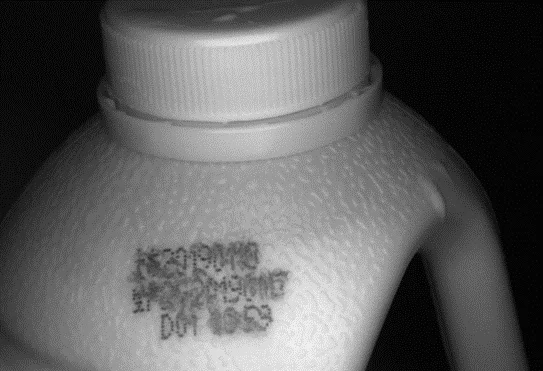
Inkjet manufacturing date printing applied on fresh milk packaging lines can lead to incomplete, distorted, or scattered character printing due to field conditions such as nozzle cleaning, machine vibration, and high ambient humidity. As retail chains do not tolerate incomplete, blurry, or smudged printing in date information, in HIKROBOT’s fresh milk packaging case study, the miss rate was targeted to remain below 0.03% at a production cadence of 4 bottles per second. In the face of diverse defect patterns and constantly changing date information, deep learning algorithms were used, thereby raising the real character defect detection rate to over 99.7%.
Introduced at the VISION 2024 trade fair for character recognition (OCR) and code reading needs on food packaging lines, the HIKROBOT SC3000XM series smart camera stands out with its triple optical design and embedded deep learning algorithms. Adapting to narrow mounting spaces thanks to its compact body structure and 180° rotatable rear cable outlet, the SC3000XM series helps overcome physical layout challenges caused by tight spaces on food lines. Positioned also for appearance inspection, the HIKROBOT SC6000 AI smart camera inspects defects such as missing, extra, and overlapping printed characters at an inspection speed of 100 ms.
| Values from the HIKROBOT fresh milk case study | |
|---|---|
| Production rate | 4 bottles per second |
| Target miss rate | < 0.03% |
| Real character defect detection | > 99.7% (deep learning) |
Values are from case studies published by HIKROBOT; design for your own line is performed on a project basis.
2. Packaging inspection and content presence/absence
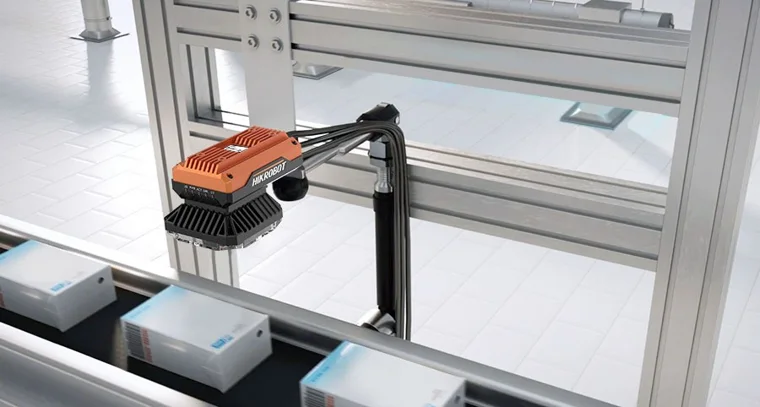
In processes on food packaging lines where a single assembly error can affect the entire product batch, according to HIKROBOT’s food and pharma sector analyses, verifying that packaging is properly sealed and complete provides time and cost savings. In the instant noodle packaging line case, while two people performed visual inspection at each station due to automatically dropped forks occasionally outputting extra or missing, the goal was to operate at a pace faster than 6 packages per second. Complexity caused by random orientation and position of the fork, potential covering by the seasoning packet, and color similarity to noodles, along with light attenuation issues, were resolved using deep learning algorithms. Thanks to this implemented deep learning solution, the miss rate in product inspections on the conveyor was kept below 0.01%, and the algorithm processing time remained under 30 ms.
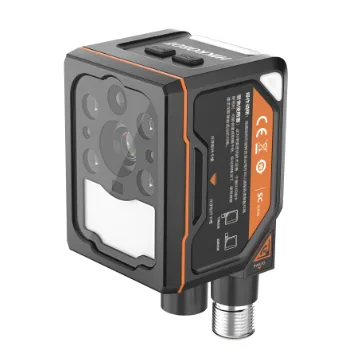
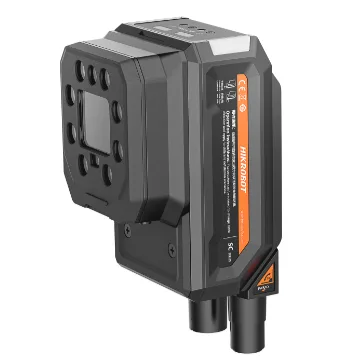
While versatile visual inspection tools are required for object presence checks on packaging lines, HIKROBOT SC3000 series smart cameras are positioned to meet this requirement in food and pharmaceutical packaging inspections. Featuring more than 20 inspection tools, the SC3000 series smart camera offers the capacity to check different points on the package simultaneously up to 16 locations.
| Values from the HIKROBOT instant noodle case study | |
|---|---|
| Line speed | Faster than 6 packages per second |
| Miss rate | < 0.01% |
| Algorithm time | < 30 ms |
Values are from case studies published by HIKROBOT; design for your own line is performed on a project basis.
3. Traceability and high-speed code reading
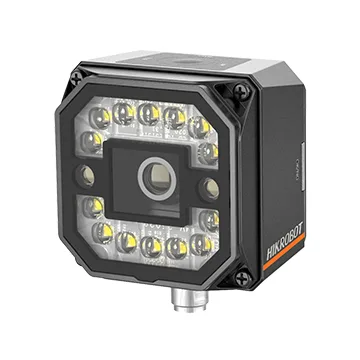
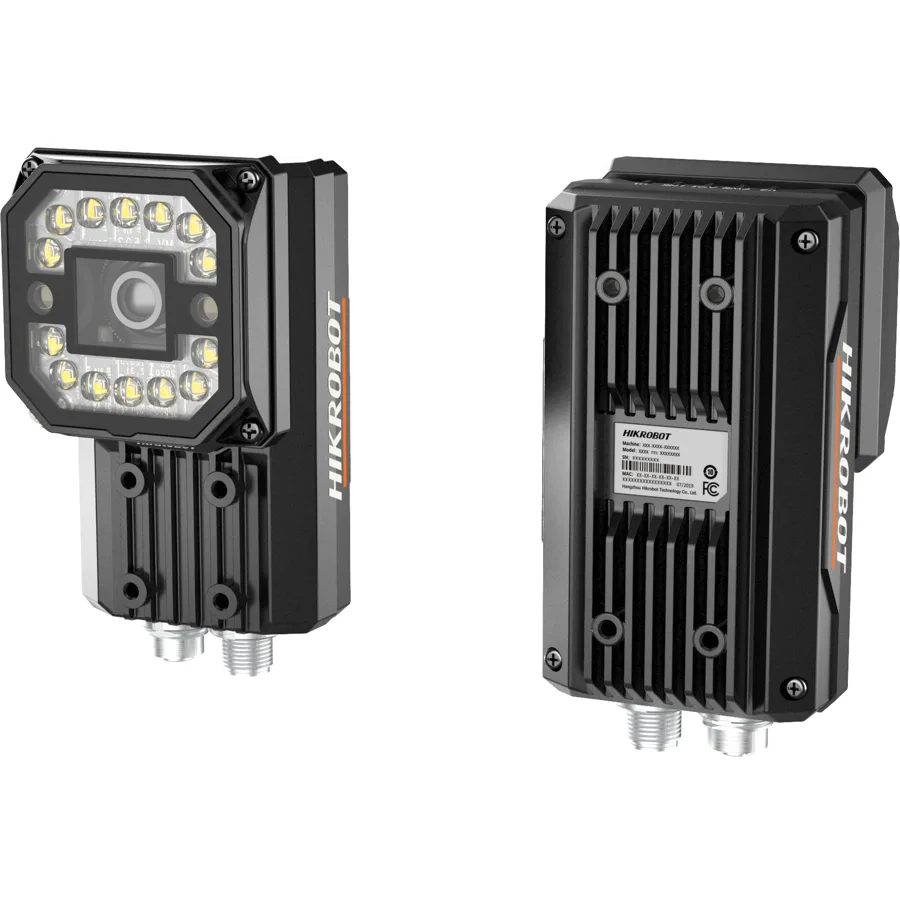
As regulatory agencies require food manufacturers to mark and trace products, image-based code readers are widely used in warehouses and distribution centers to increase speed, accuracy, and efficiency. Capable of reading codes printed on reflective packaging materials, these systems allow food products to be tracked throughout the supply chain while contributing to combating counterfeiting. For high-speed traceability steps on food and beverage filling and cartoning lines, HIKROBOT recommends the ID3000XM code reader, which meets applications at speeds of 10 m/s with its high frame rate and low algorithm execution time.
On food and packaging lines, when products move on a conveyor in a fixed position but at a very high speed, processing speed becomes a more critical factor than field of view and depth of field. Positioning the ID3000 and ID5000 series with high frame rate and modular design for these fast line transitions, HIKROBOT introduced the ID3000Pro model with a deep learning chip, modular light, and lens to the food and pharmaceutical packaging sector in 2020. Furthermore, in packaging environments with surface glare, the HIKROBOT ID3050 reader eliminates glare by switching directly to polarized mode via software without physically changing the polarization module, targeting food and pharmaceutical applications.

4. Bottled beverage and glass bottle inspection
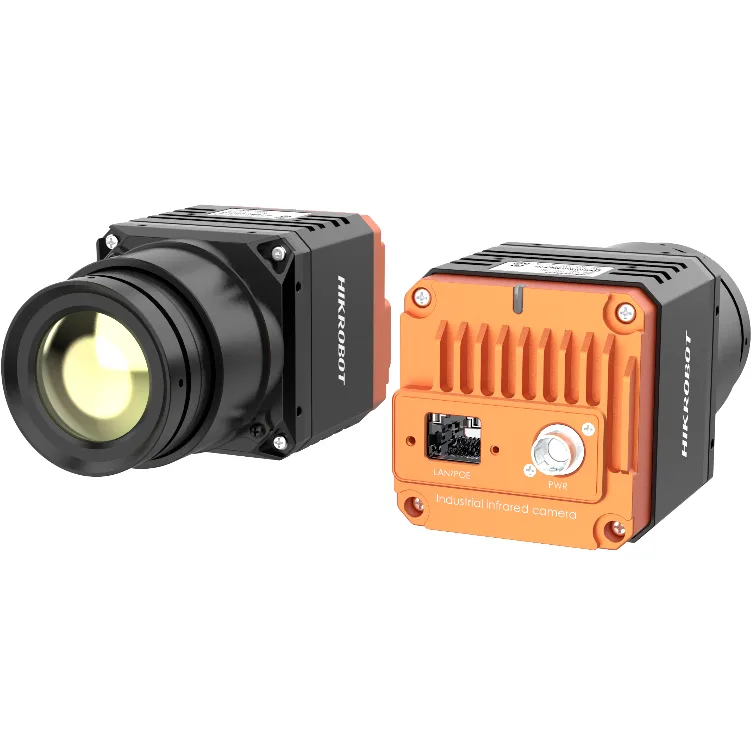
For the multi-sided inspection of products in motion on bottled beverage production lines, a demonstration was conducted at the VisionChina 2025 event with 6 cameras connected to HIKROBOT’s vision processor board. In this application, packaging defects of bottles moving on the conveyor were detected while characters on the top section were read, and it was stated that the vision processor board did not utilize computer resources during processing. For glass bottle inspection processes, it was announced under the Food and Pharma heading at the VISION 2024 fair that SWIR cameras with InGaAs sensors operating in the 400–1700 nm spectral range yielded successful results. The HIKROBOT CI series page at FST also includes InGaAs SWIR models such as MV-CI013-GS and MV-CI050.
5. Carton palletizing and depalletizing with 3D vision
HIKROBOT designed the MV-DB1300A RGB-D stereo camera for palletizing and depalletizing in warehouse and logistics scenarios; the sources in this section are not specific to food, but case and sack palletizing also take place at the end of the line in food plants. Positioning the pallet and separating cases individually with deep learning algorithms, this camera undertakes the task of calculating pick-and-place points and robot movement trajectory for industrial robots. Highlighted at the CeMAT ASIA 2024 fair, the wide field-of-view RGB-D stereo camera hardware recognizes different loads such as cardboard cases, jute sacks, and material totes, guiding the robot arm via the RobotPilot platform. Receiving case dimension and position data via the stereo camera, the smart palletizing and depalletizing system adapts to various stacking patterns in warehousing and logistics with an operating speed of up to 850 pieces per hour.
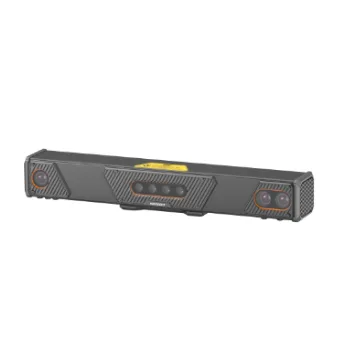
Filling, packaging, hygiene, and traceability components
Vision inspection is only one layer of the line; components that detect filling nozzles and filling levels, stop the machine upon a missing cap, see transparent bottles and labels, withstand washdown chemicals and pressurized water, identify carriers via RFID, and monitor doors must also operate at the same pace. TELEMECANIQUE examples come from the manufacturer’s packaging line page and the XS, XT, XX, and XG catalogs; these catalogs explicitly mention resistance to food products, detection of materials such as flour and milk powder, and RFID traceability in food processing. OMRON examples directly mention food and beverage in D41L, E2A, ES1B, color mark, and RFID sources; PANASONIC examples are taken from Panasonic Industry Europe’s packaging industry sensor selection guide, while ADVANTECH information is sourced from the manufacturer’s food-beverage page and guides.
6. Filling and capping: nozzle, fill level, and cap height
TELEMECANIQUE states that filling and capping machines dictate the pace of the entire packaging line, and therefore the station must be continuously supplied with containers. While the XS inductive sensor positioned in the machine’s filling area detects filling nozzles in an accurate and repeatable manner, the completion of the process is monitored by the XT capacitive sensor, which can be selected with a plastic or metal housing depending on the machine’s cleaning requirements. According to the bottle filling example in the brand’s XT catalog, the first sensor detecting the bottle arriving via conveyor starts the filling, and the second sensor detecting that the water in the bottle has reached the desired level stops the filling; in this application, the container wall must not be metal and its thickness should be a maximum of 4 mm. Although IP69K or Ecolab-certified stainless steel sensors are required for durability on filling and capping machines washed with detergent, the stainless series specifically recommended by the manufacturer for this job is not available on FST product pages.
Stating that its sensor range extends from food packaging to semiconductors, the PANASONIC guide positions various optical technologies for monitoring transparent objects in bottling and capping machines. Operating on these lines, the CX-481 retro-reflective sensor stably detects every container, including highly transparent bottles; typical objects detected by the CX-48□ transparent object type include 500 ml PET bottles, cylindrical glass, and 10 μm food stretch film. Engaging at the capping stage of the station, the HG-C1050 sensor measures cap height with a 30 μm resolution to distinguish incorrect caps.
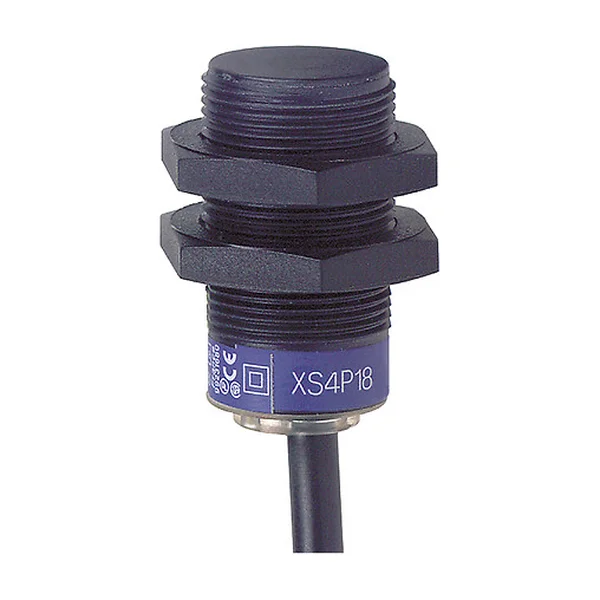 TELEMECANIQUEXS4P18PA340M18 plastic body inductive sensor
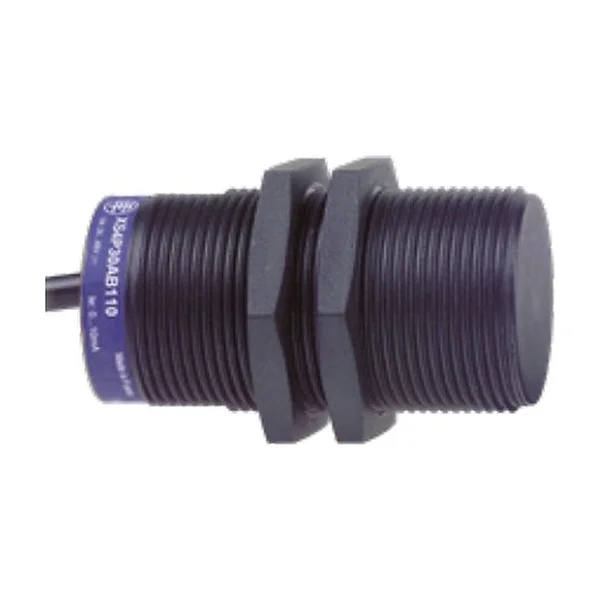 TELEMECANIQUEXS4P12PA340M12 plastic body inductive sensor
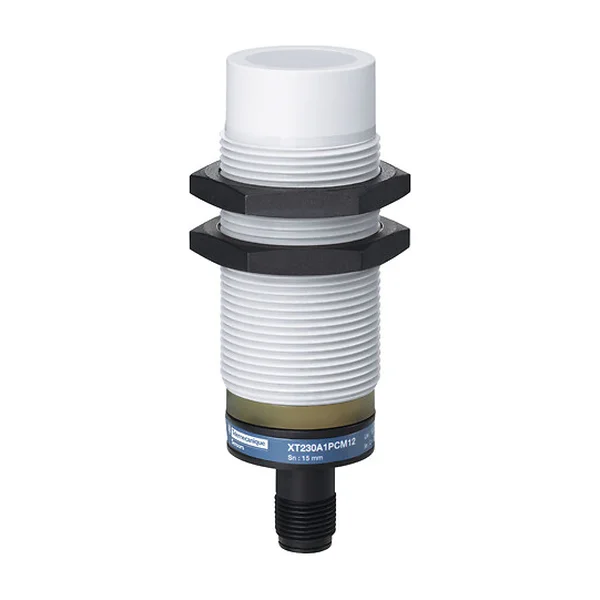 TELEMECANIQUEXT230A1PCM12M30 plastic body, non-flush capacitive sensor
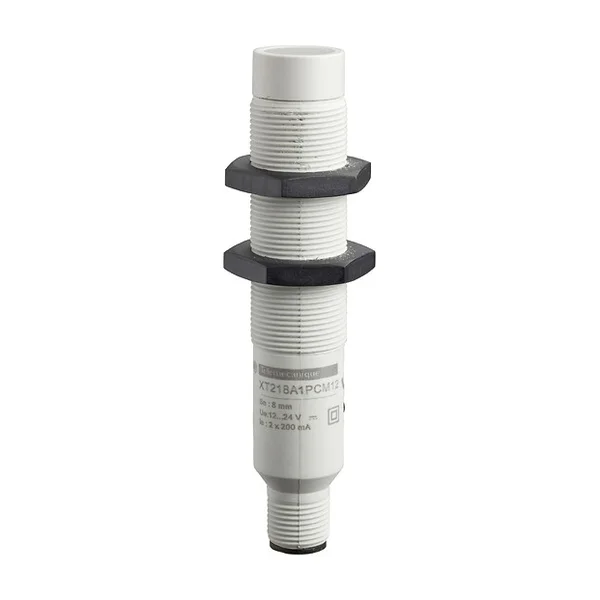 TELEMECANIQUEXT218A1PCM12M18 plastic body, non-flush capacitive sensor
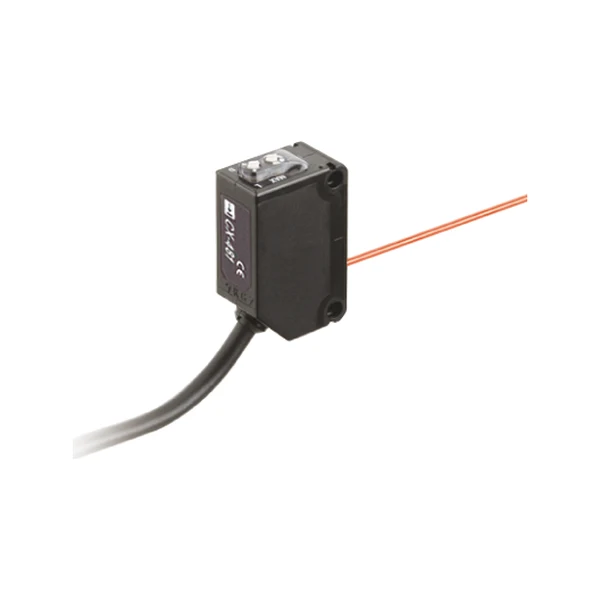 PANASONICCX-481Retro-reflective sensor detecting transparent objects
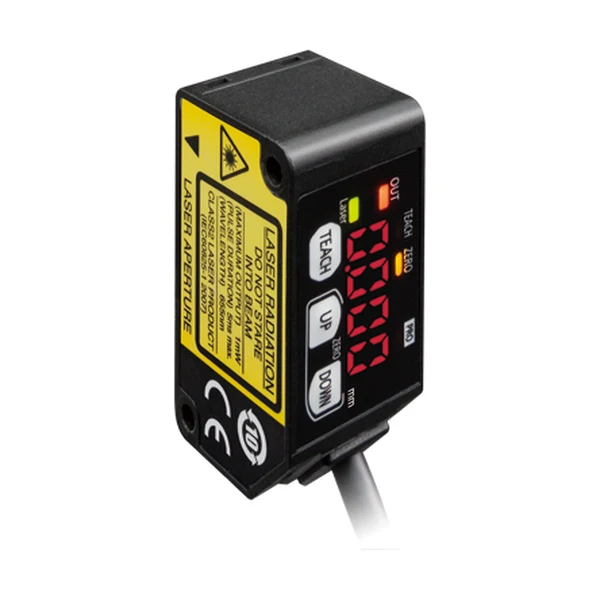 PANASONICHG-C1050CMOS laser distance sensor, ±15 mm
7. Cap presence, bottle detection, and defective product rejection
TELEMECANIQUE sensors monitor the position and color of the cap during the capping process with the aid of an XU photoelectric sensor to inspect whether the cap is correctly fitted. Upon reaching the station exit, improperly filled or capless containers are rejected from the line, and the XUB cylindrical sensor with a right-angle connector is recommended for bottle detection tasks in this area. The multi-mode XUB0APSNM12 photoelectric sensor carries IP65, IP67, and IP69K protection ratings according to the manufacturer datasheet.
The brand’s XX ultrasonic sensor catalog shows various applications that automatically stop the filling and capping machine by detecting missing cap or low cap feed conditions. While the XX518A3 model available at FST is used for missing cap detection, the XXS18 and XXA18 series are recommended for monitoring transparent bottles thanks to ultrasonic technology’s ability to detect objects independently of their color and transparency.
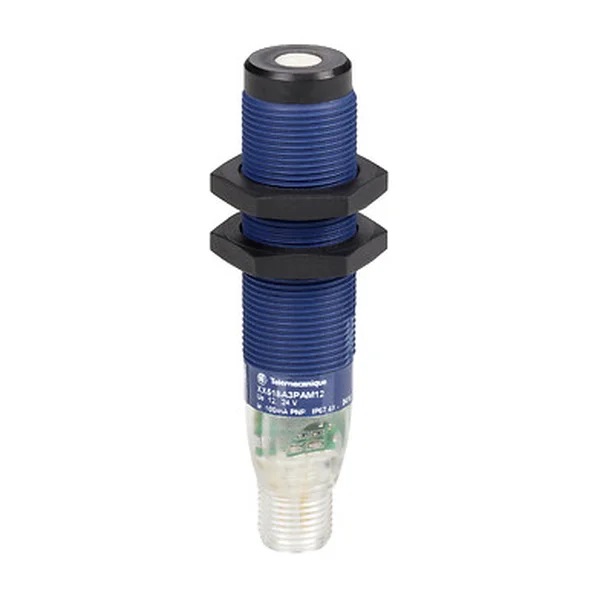 TELEMECANIQUEXX518A3PAM12M18 diffuse-reflective ultrasonic sensor, IP67
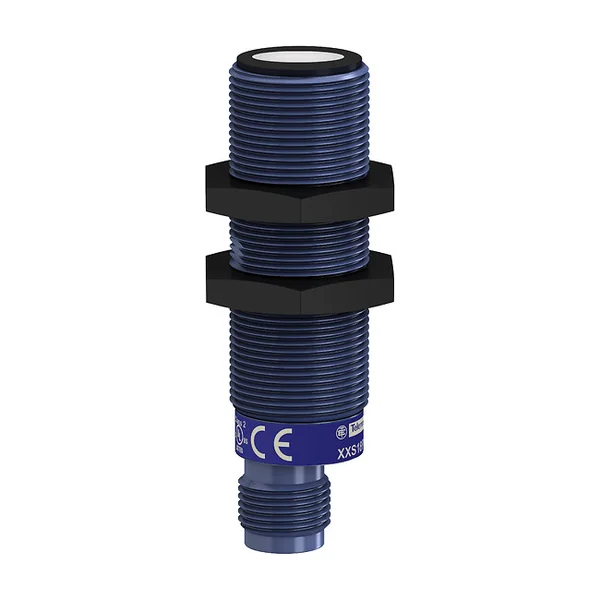 TELEMECANIQUEXXS18P1AM12M18 ultrasonic sensor, 4–20 mA, ECOLAB
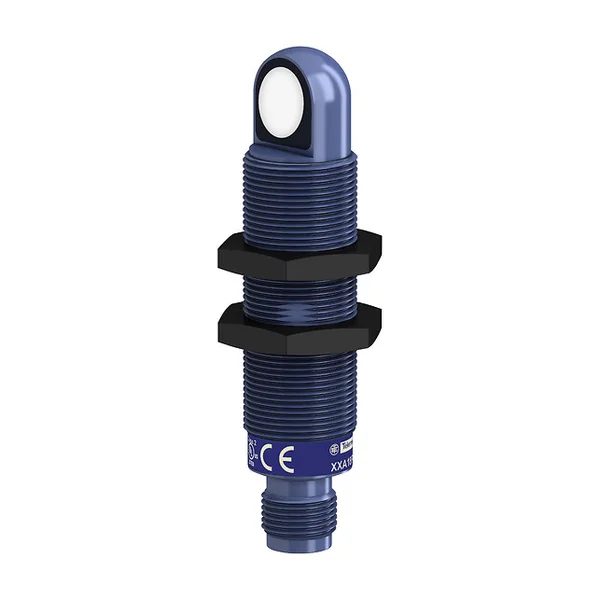 TELEMECANIQUEXXA18P1AM12M18, 90° right-angle head ultrasonic sensor
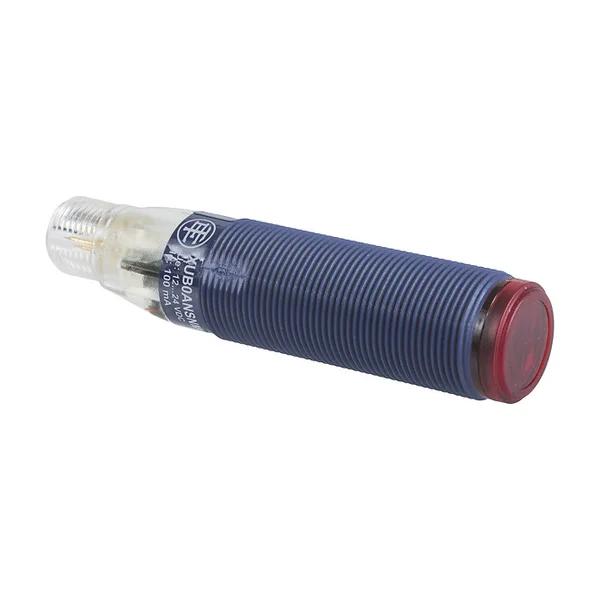 TELEMECANIQUEXUB0APSNM12M18 multi-mode XUB photoelectric sensor
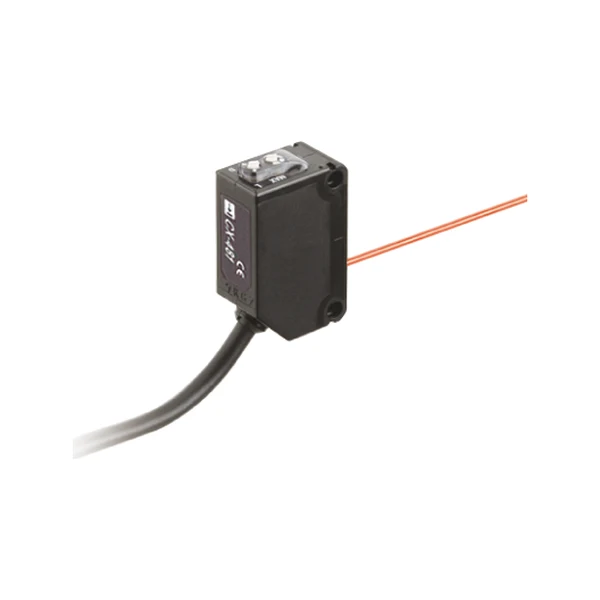 PANASONICCX-483Transparent object retro-reflective sensor, CX-48□ series
8. Labeling and color mark
Stating that the labeling machine needs an accurate and fast-responding label detection system for correct positioning of the label on the container, TELEMECANIQUE offers fork-design sensors that increase efficiency and limit label waste. In transparent label detection applications, the XUVU06M3PSNM8 fork ultrasonic sensor is used, whereas the XX518A3 ultrasonic sensor model with an M18 body comes into play for detecting label edges moving on the backing tape. The manufacturer also divides its XU application sensors in the packaging and food & beverage sectors into families such as mark detection or colored object detection, and the datasheet for the IP67- and IP69K-protected XUMRACAYM8 directly defines this product as a color mark reader.
While PANASONIC’s labeling machine page lists label splice, transparent container, and remaining label roll quantity detections, recommending the CX-481 sensor for transparent containers; the light emission level selection of the FX-300 fiber amplifier stabilizes the inspection of transparent labels that saturate the receiver; the EX-30 series monitors the label quantity inside the magazine. On the other hand, the OMRON color mark brochure lists highly glossy packaging such as aluminum vapor deposition, packaging with low color contrast between mark and background, and low-reflectivity thin matte films as industry challenges. OMRON states that the E3S-DC and E3NX-CA models accurately detect color marks on these glossy and colorful packages, aiming to reduce failure calls to machine builders by decreasing downtime caused by false detection.
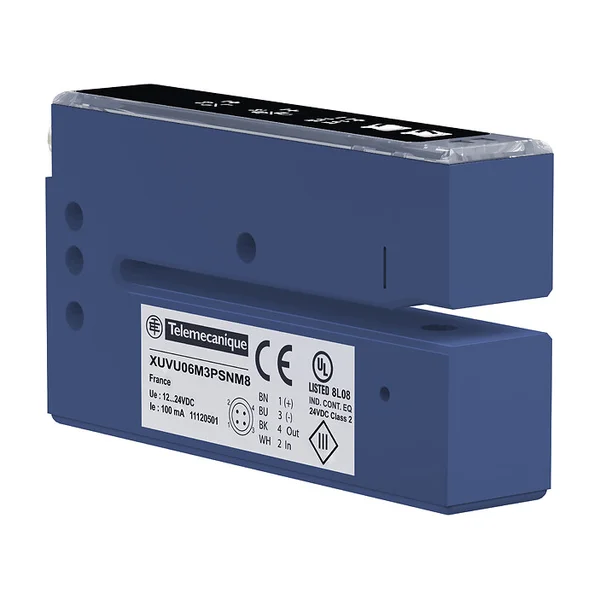 TELEMECANIQUEXUVU06M3PSNM8Ultrasonic fork label sensor, 3 mm, IP65
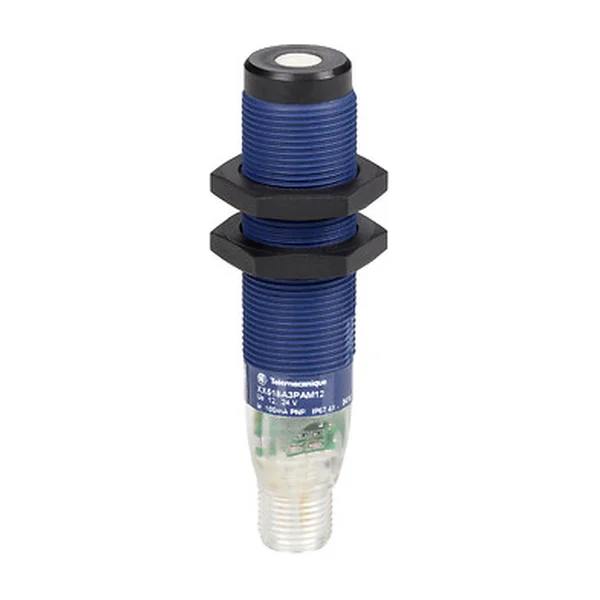 TELEMECANIQUEXX518A3PBM12Ø18 diffuse-reflective ultrasonic sensor, IP67
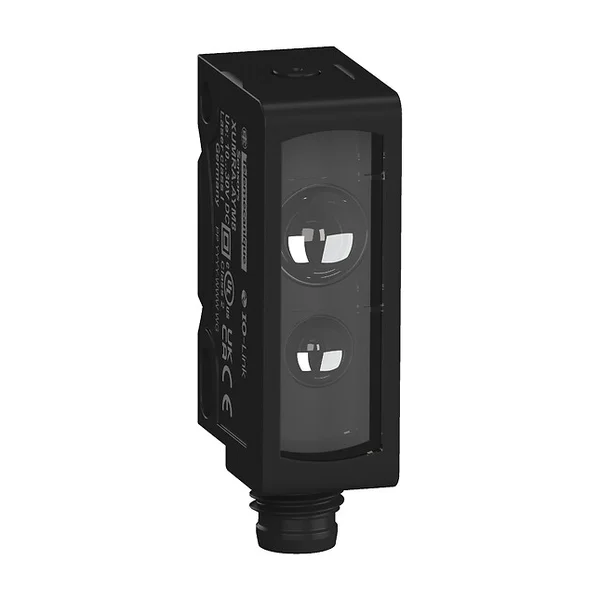 TELEMECANIQUEXUMRACAYM8RGB color/contrast mark reader, 12 mm, IO-Link
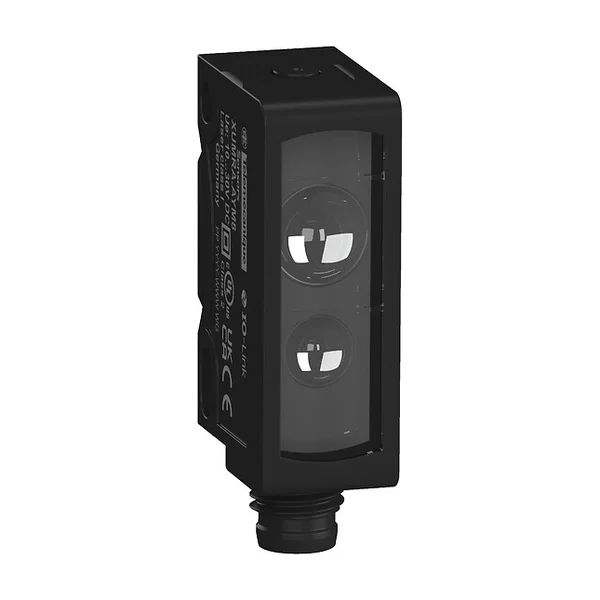 TELEMECANIQUEXUMRAGAYM8Contrast mark reader, 12 mm, IO-Link
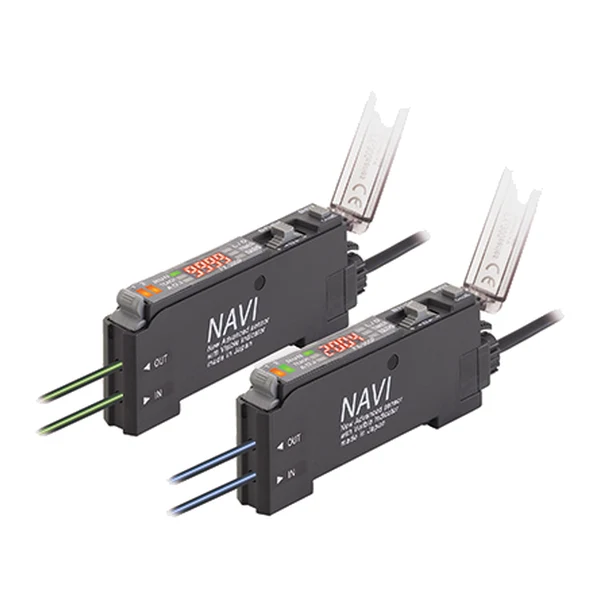 PANASONICFX-300Fiber amplifier
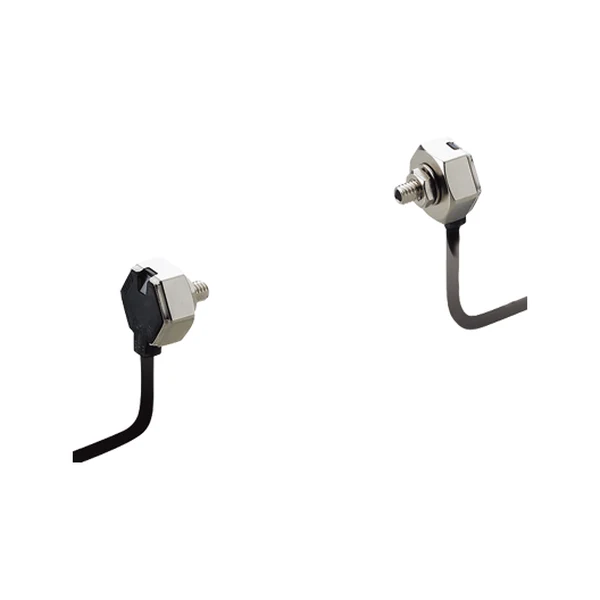 PANASONICEX-31EX-30 series miniature thru-beam sensor
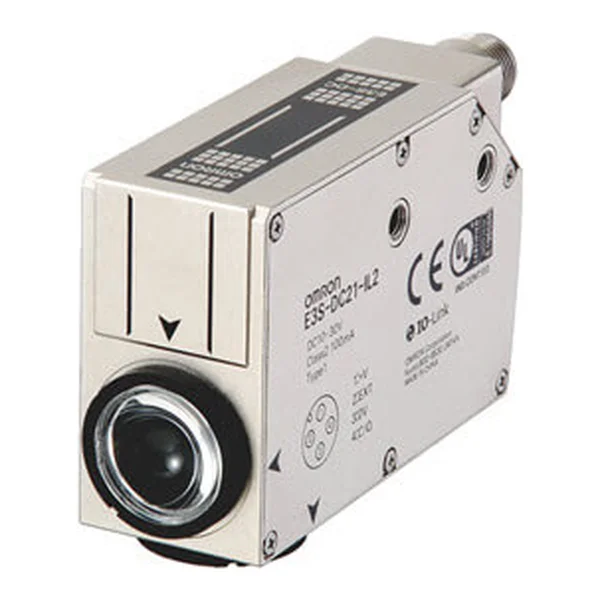 OMRONE3S-DCColor mark photoelectric sensor
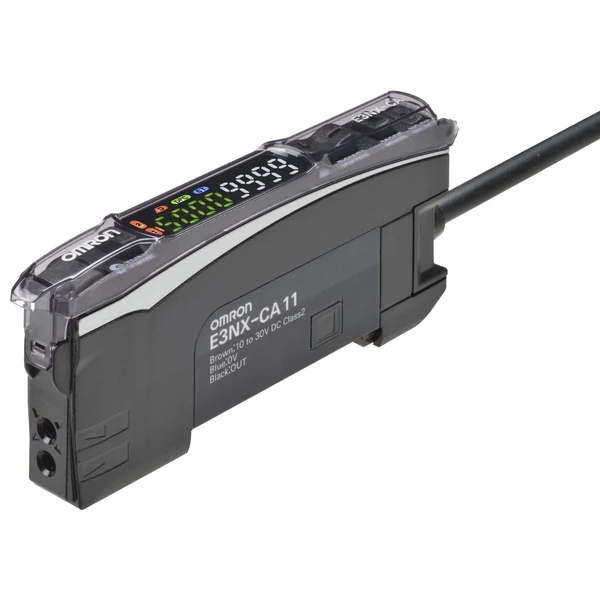 OMRONE3NX-CASeparate head color fiber amplifier
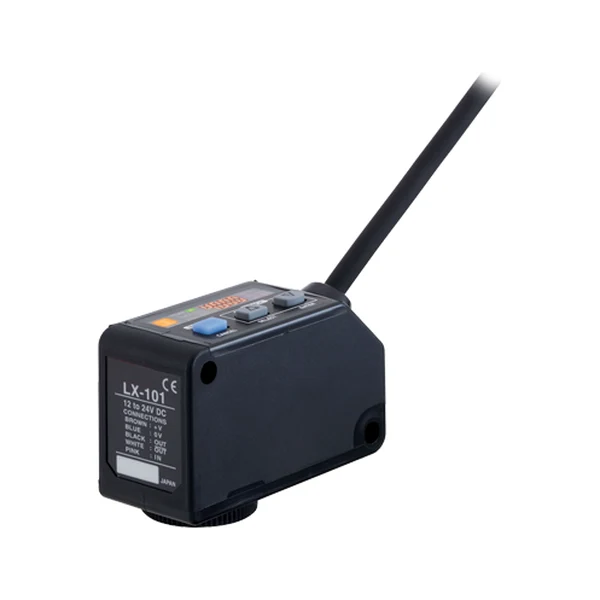 PANASONICLX-101Color mark sensor
9. Vertical/horizontal packaging and sealing temperature
While PANASONIC measures the filling level in the hopper without being affected by the object’s color or viscosity using the HG-C1400 sensor in vertical packaging machines, it detects packages on the conveyor independently of packaging color or gloss with the HG-C1200 model. Monitoring print marks on packaging films, the LX-101 model reads with a response time of 45 μs in “Mark” mode and by RGB ratio in “Color” mode; in horizontal packaging machines, the high-power CX-413 infrared sensor detects content displacement through the film to prevent potential sealing errors. For HG-C series sensors, which can be installed on splash-exposed food packaging lines with an IP67 protection rating, to take accurate measurements, water droplets accumulated on the sensing surface must be cleaned.
Highlighting that packaging in the food industry must be properly sealed, the OMRON ES1B brochure states that the sensor is suitable for measuring the temperature at the exact point where actual sealing takes place to achieve consistent quality. Also capable of measuring the temperature of food products moving on a conveyor belt, this hardware provides an accurate and hygienic method because it does not directly contact food, while its IP65 protection class enhances the product’s suitability for this sector. The sensor’s model list offers four different measurement range options based on the thermal requirements of the process: 10–70 °C, 60–120 °C, 115–165 °C, and 140–260 °C.
10. Conveyor detection in food packaging and beverage lines
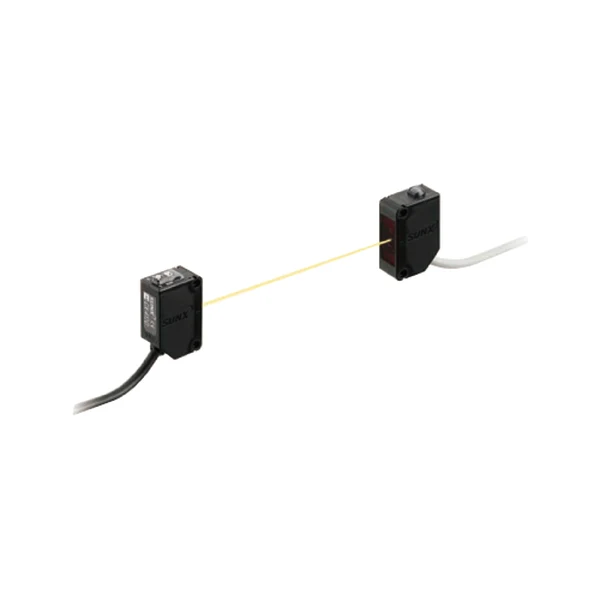
OMRON states that the E3Z family, which sells more than one million units per year, offers various options for food packaging, beverage bottling, material handling, and logistics applications; the E3Z models at FST are IP67-protected. Among the brand’s customer references, the Dutch company Bandall paired the E3X series fiber amplifier with the E32 series fiber sensor in its standalone banding machines for food and beverage products, instead of using a separate sensor for each material. Thanks to intelligent power control that automatically adjusts detection when light intensity drops and smart one-touch tuning capability, this pair is installed on all of the company’s standalone machines, while according to the reference document, this method of wrapping the product with thin paper or film tape can help reduce packaging material by 80%.
TELEMECANIQUE states that XX ultrasonic sensors used in the buffer areas of packaging lines detect containers regardless of material reflectivity, and their right-angle format simplifies mounting without requiring additional mechanical parts. Listing glass bottles, carton packages, and cakes among applications where object flow on conveyors is monitored, the XX catalog lists ultrasonic sensors with a 90° head such as the ECOLAB-certified and IP65/IP67-protected XXA30P2AM12 for container presence. When containers passing through a buffer area or flowing on a conveyor need to be accurately counted, the manufacturer recommends the XU photoelectric sensor family, which stands out with its multi-technology structure.
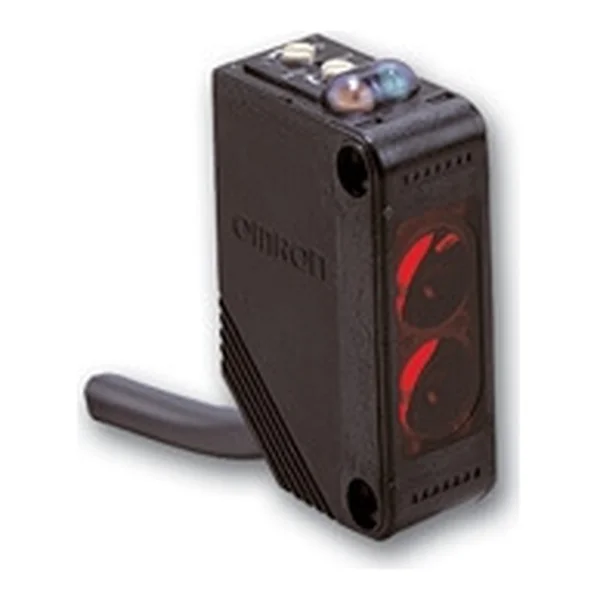 OMRONE3Z-T81-2MThru-beam photoelectric sensor, 15 mOMRONE3Z-R814 m polarized retro-reflective sensorOMRONE3Z-D81-2M100 mm diffuse-reflective sensor, IP67
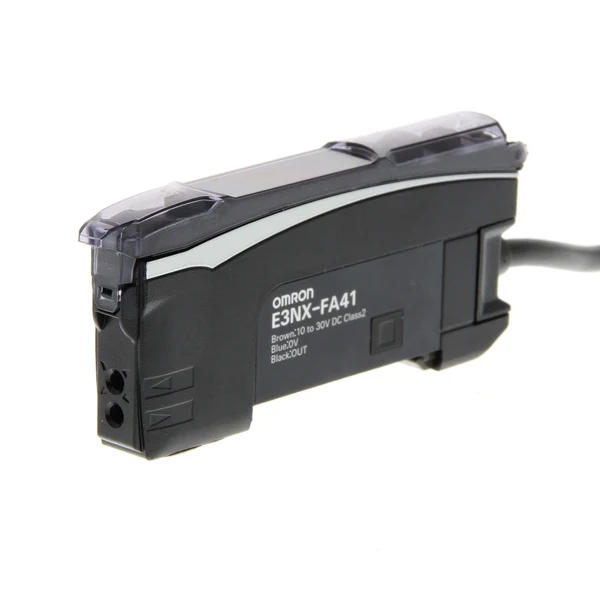 OMRONE3NX-FADigital fiber amplifier
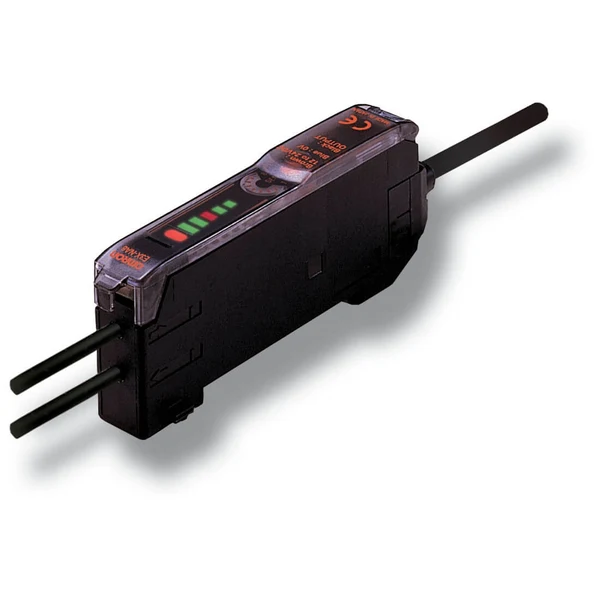 OMRONE3X-NAFiber amplifier, E3X series
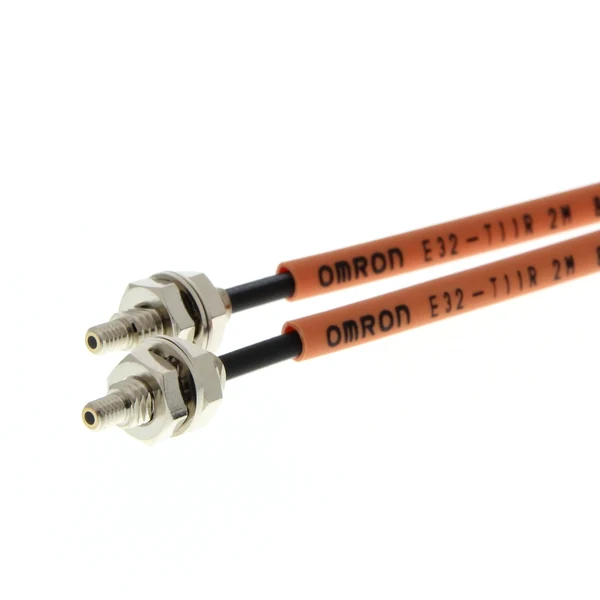 OMRONE32 standard cylindricalE32 standard cylindrical fiber units
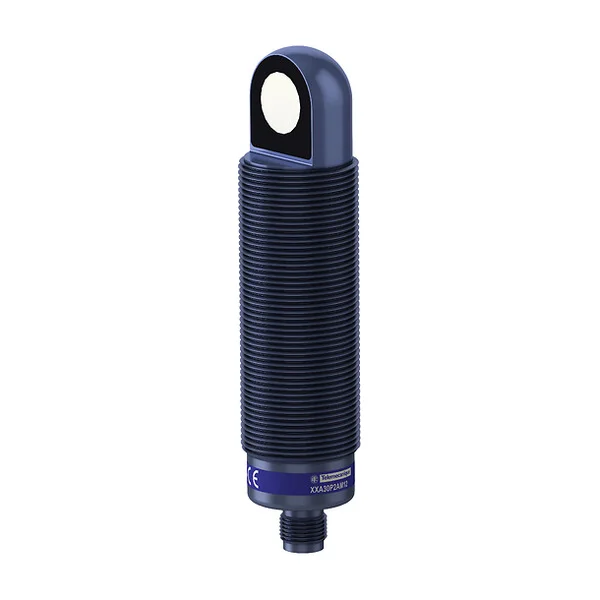 TELEMECANIQUEXXA30P2AM12M30, 90° right-angle head ultrasonic sensor
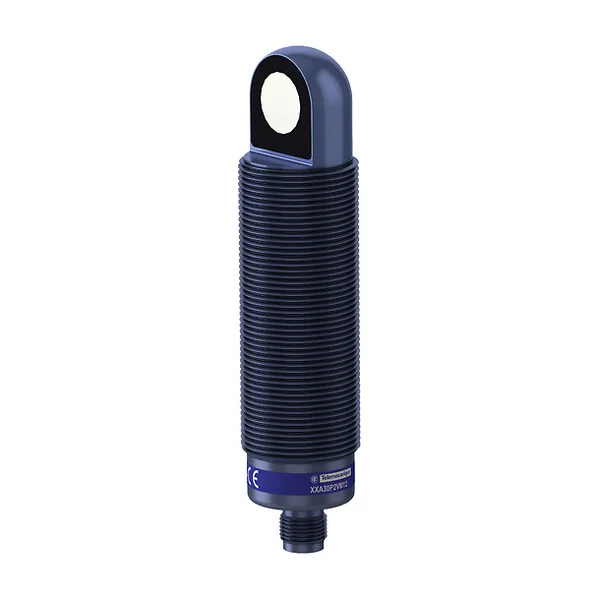 TELEMECANIQUEXXA30P2VM12M30, 90° right-angle head ultrasonic sensorTELEMECANIQUEXUB0APSNM12M18 multi-mode XUB photoelectric sensor
11. Valve position and raw material level in dairy and beverage processes
Under the heading of process control for the food and beverage industry, the OMRON inductive sensor brochure shows that the E2A series provides valve positioning control in dairy and brewery systems and position feedback in selector boxes during beverage production. In these processes requiring high resistance to temperature changes, vibration, and mechanical impact, sensors are expected to feature cable breakage protection and high water resistance. According to the OMRON table, the E2A-S30KS15, E2A-S18KN16, E2A-S12KN08, and E2A-S08KN02 models belonging to the E2A-S series—the stainless steel body version of the E2A family—adapt to harsh process conditions with IP67 and IP69K protection classes.
According to the TELEMECANIQUE XT catalog, the spherical electric field of plastic-bodied IP67-protected cylindrical capacitive sensors detects all types of insulating or conductive materials—solid, liquid, or granular—such as flour, sugar, milk powder, water, and oil through a partition or via direct contact. The same catalog provides the dielectric constants of materials for calculating the sensor’s sensing distance as 2.5 to 3 for flour, 3 for sugar, 3.5 to 4 for milk powder, and 80 for water. In continuous process monitoring tasks, analog-output sensors such as XXS18 and XX930 specified in the brand’s XX ultrasonic catalog continuously monitor raw material levels, while other models are positioned in two-level upper and lower limit control applications.
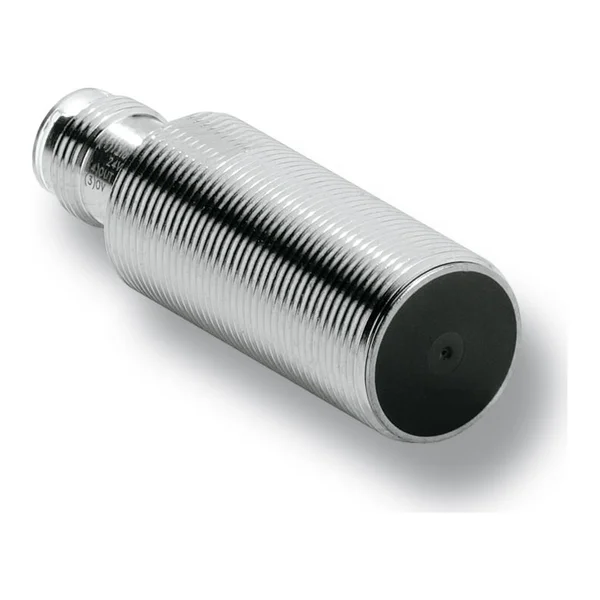 OMRONE2A-S18KN16-M1-B1M18 stainless inductive, 16 mm, IP67/IP69KOMRONE2A-S30KS15-M1-B1M30 stainless flush-mountable inductive, 15 mmOMRONE2A-S12KN08-M1-B1M12 stainless inductive, 8 mm, IP67/IP69K
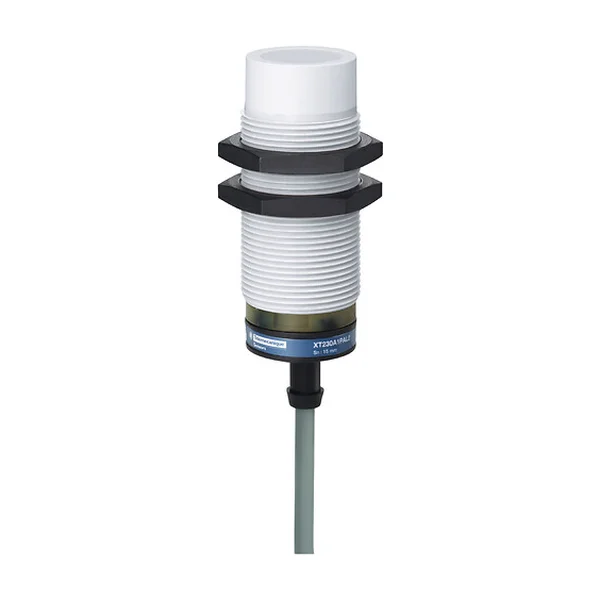 TELEMECANIQUEXT230A1FAL2M30 plastic body capacitive sensor, Sn 15 mm
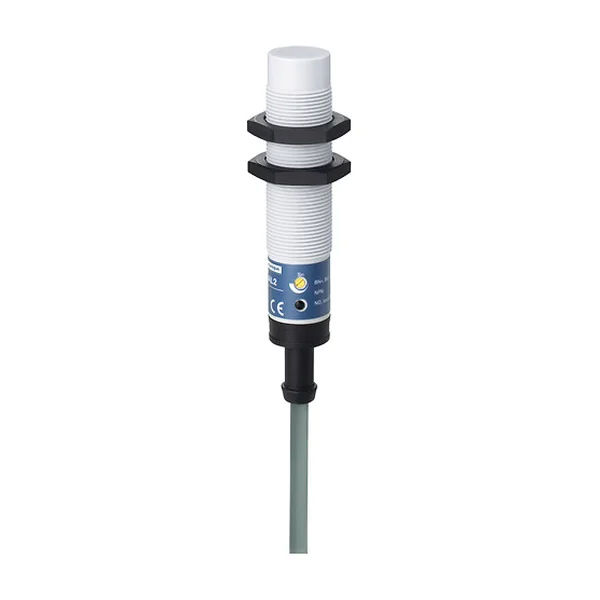 TELEMECANIQUEXT218A1FAL2M18 plastic body capacitive sensor, Sn 8 mm
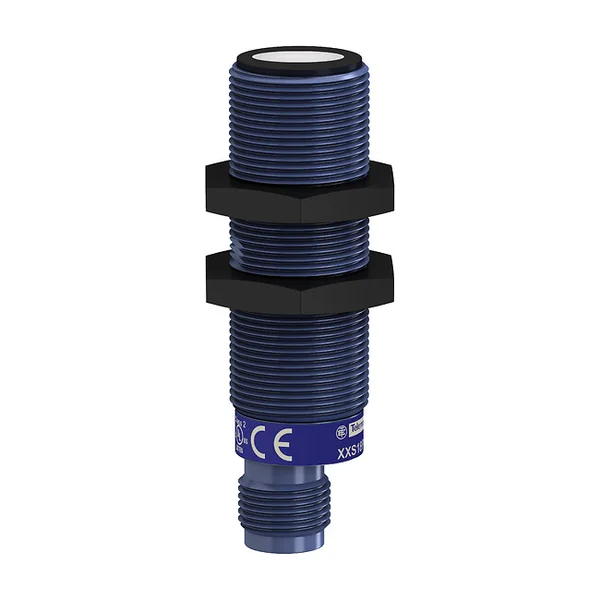 TELEMECANIQUEXXS18P1VM12M18 ultrasonic sensor, 0–10 V, ECOLAB
12. Hygienic and chemical-resistant sensors in washdown machines
Stating that packaging machine cleaning is closely monitored alongside increasing food safety and traceability requirements, TELEMECANIQUE offers full stainless steel or plastic body sensors for food and beverage applications. As stated in the manufacturer’s XS inductive and XX ultrasonic catalogs, while plastic-bodied models demonstrate very high resistance to products such as vegetable oil, animal fat, fruit juice, and milk protein, Ecolab-certified products with PBT bodies such as XS8D1A1PAL2 and XS4P18PA340 withstand intensive washdown processes in food processing environments. In the catalog, the IP69K protection rating is defined as the product’s ability to withstand a water jet under 90 bar pressure and at a temperature of +80 °C for 3 minutes without degrading.
On its product page targeting food processing and filling machines, OMRON states that the D41L series prevents the accumulation of water and foreign matter thanks to its design, while its ECOLAB-certified detergent resistance allows for fast cleaning. The flat surface design of the D41L model leaves no recesses, keyholes, or cavities where dust or water could remain, offering resistance to a wide range of cleaning agents while equipped with IP66, IP67, and IP69 protection classes. The brand’s RFID-based D40ML magnetic lock switch also offers IP69K protection in its stainless steel versions with hygienic design and can be used with up to 20 switches in series connection.
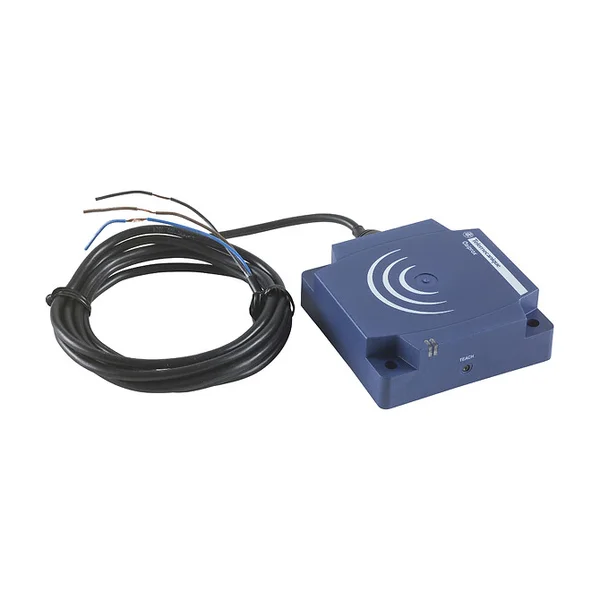 TELEMECANIQUEXS8D1A1PAL280×80 mm PBT body inductive sensor, Sn 60 mm
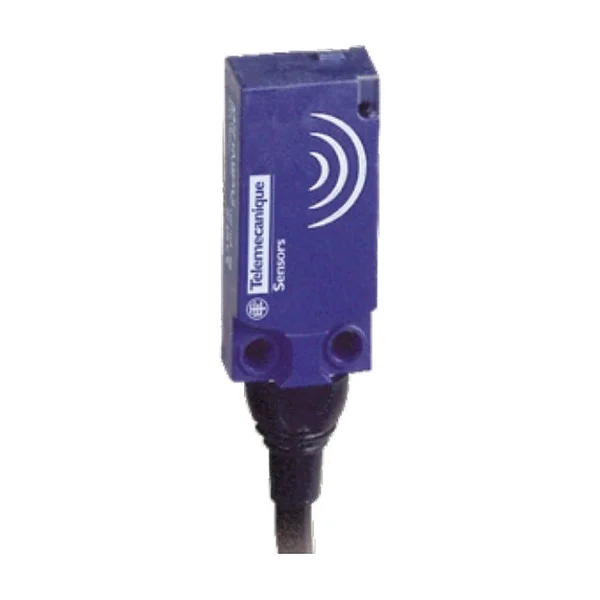 TELEMECANIQUEXS7E1A1PAL226×26×13 mm PBT body inductive sensor, Sn 10 mmTELEMECANIQUEXS4P18PA340M18 plastic body inductive sensor
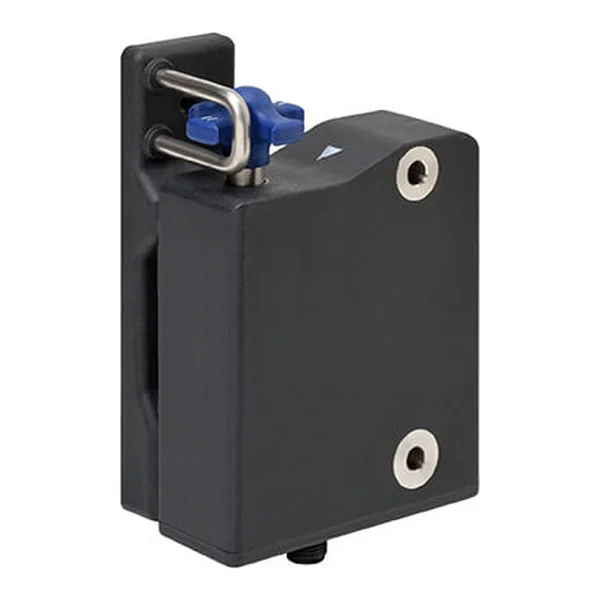 OMROND41LHygienic, RFID-coded interlock switch
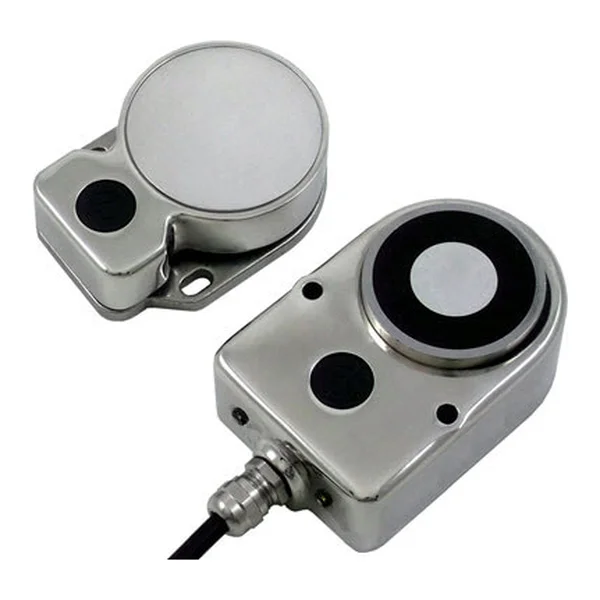 OMROND40MLRFID magnetic interlock switchOMRONE2A-S08KN02-M1-B1M8 stainless inductive, IP67/IP69K
13. Cartoning, case packing, palletizing, and stretch wrapping
While PANASONIC sensors serve at various points of cartoning machines, the HG-C1100 model measures the height of the carton stack without being affected by its color to monitor the remaining quantity in the magazine, and the HG-C1050 spot laser sensor verifies the closing status of the box flap. Transitioning to the case packing stage, the IP67-protected CX-411 thru-beam sensor detects cartons, while the CX-442 sensor operates without requiring a receiver or reflector thanks to its BGS mode, and using the CX-491 retroreflective sensor with polarization filter on long conveyor lines significantly reduces wiring labor. On the palletizer, the HG-C1000 laser sensor detects boxes independently of color and is suitable for mounting on a robot arm with its tiny, lightweight body; the GX-F12A rectangular inductive sensor features an IP68G protection structure; around the station, the SF4D safety light curtain—withstanding torsion, vibration, and direct impacts with its slim yet robust metal housing—is utilized.
TELEMECANIQUE products detect the random positions of boxes at the outlet of the cartoning machine to engage conveyor drives and prevent potential jams with the help of the wide-beam XXW54P3APL01DM6 ultrasonic sensor rated IP65, IP67, and IP69K. On lines entering the palletizing section, the XT5 capacitive sensor is recommended to monitor the pallet feed on the conveyor, while the XXS ultrasonic sensor is recommended to monitor the pallet stack level and prevent process interruptions. On the stretch wrapping post at the end of the line, the robust and vibration-resistant XCKP limit switch monitors top and bottom over-travel, while the XX ultrasonic sensor with analog output provides advance warning when the film roll is running out.
PANASONICHG-C1100CMOS laser distance sensor, ±35 mm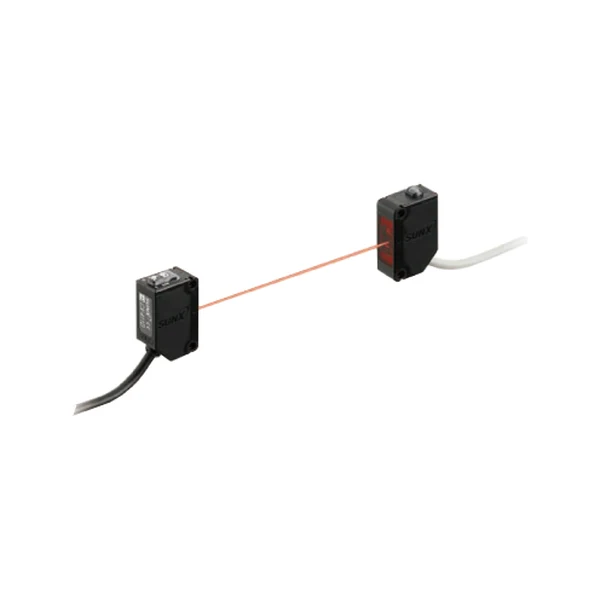 PANASONICCX-411Thru-beam photoelectric sensor, IP67
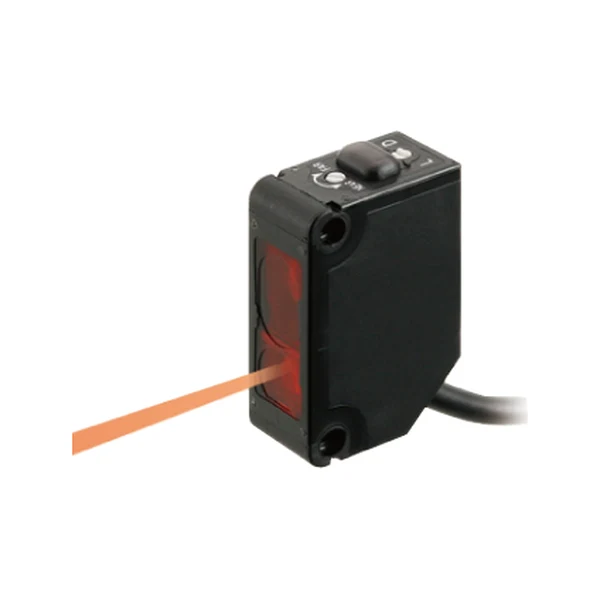 PANASONICCX-442Background suppression (BGS/FGS) sensor
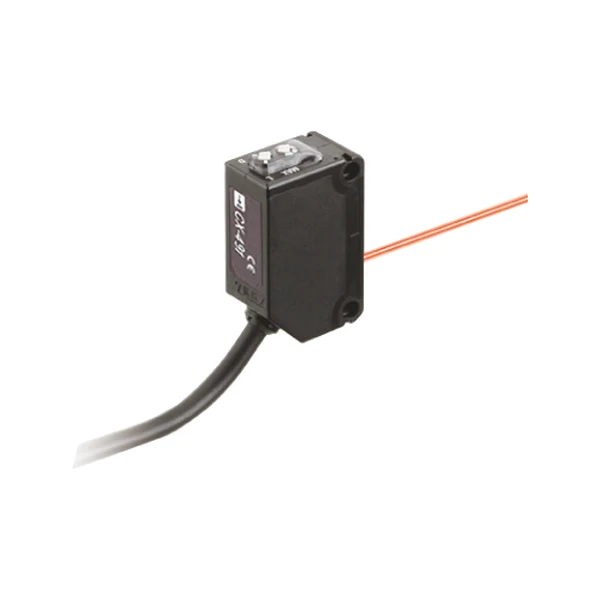 PANASONICCX-491Polarized retro-reflective sensor
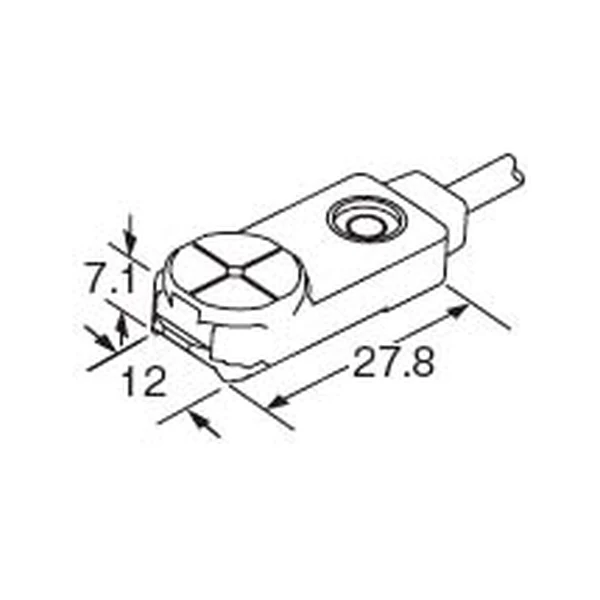 PANASONICGX-F12Rectangular inductive sensor
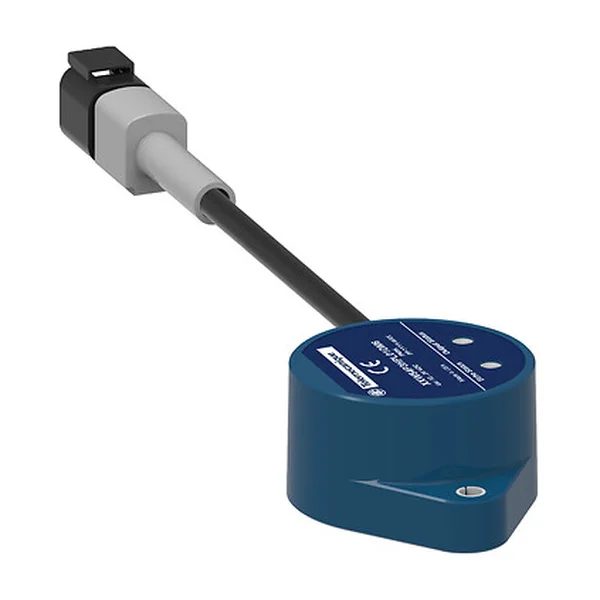 TELEMECANIQUEXXW54P3APL01DM6Ø54 mm wide-beam ultrasonic sensor
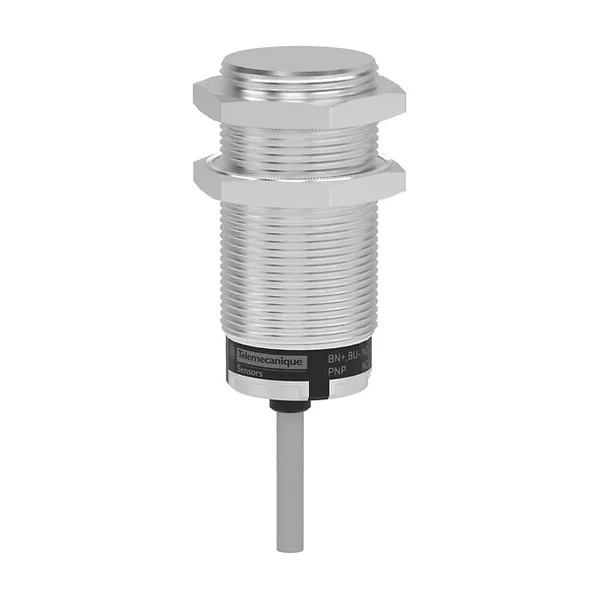 TELEMECANIQUEXT530B1PAL2M30 brass body XT5 capacitive sensor, Sn 10 mm
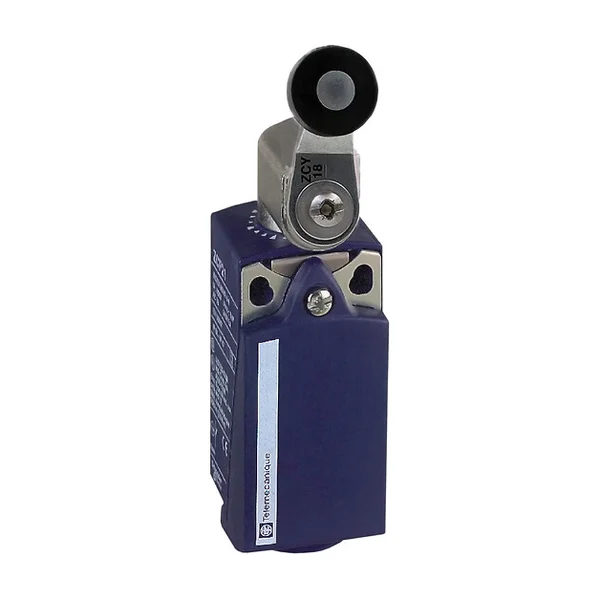 TELEMECANIQUEXCKP2118P16XCKP compact limit switch, roller lever
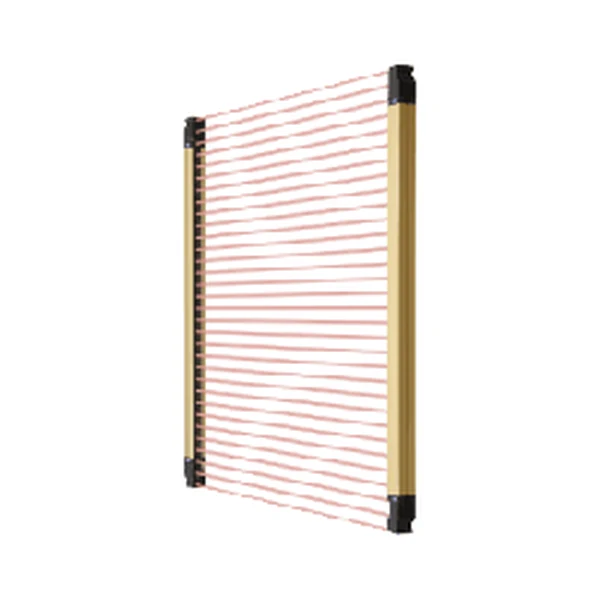 PANASONICSF4D-HType 4 safety light curtain, PL e / SIL 3
14. Traceability with RFID
The OMRON food and beverage industry application page states that inconsistent identification leads to limited traceability on production lines and positions RFID tags attached to the product or its carrier to provide a unique identity to solve this problem. This system records the product’s journey throughout production by storing all traceability data generated during manufacturing directly on the tag. The V680S-D2KF67 and V680S-D2KF68 RFID tags offered by OMRON operate with a 2,000-byte FRAM capacity while continuing their duty in harsh line conditions between −20 and +85 °C with IP68 water resistance, IP67G-equivalent oil resistance, and IPX9K protection.
The TELEMECANIQUE XG RFID catalog highlights traceability in the food processing industry among its product applications and states that the system offers object recognition and access control functions. According to its manufacturer, operating at a frequency of 13.56 MHz, the XG system provides flexibility with its open architecture for tags complying with ISO 15693, ISO 14443, and ISO 18000-3 standards, while withstanding environmental challenges such as humidity, temperature, mechanical shock, vibration, and dust. This architecture, which also includes the IP68-protected XGHB444345 tag, integrates Modbus RTU, Uni-Telway, Modbus TCP/IP, PROFIBUS-DP, and EtherNet/IP protocols to communicate with other automation devices in the factory.
 OMRONV680S-D2KF6x/D8KF6xFRAM RFID tag
 OMRONV680S-HMD6x-EIP/PNT3-in-1 RFID reader, EtherNet/IP / PROFINET
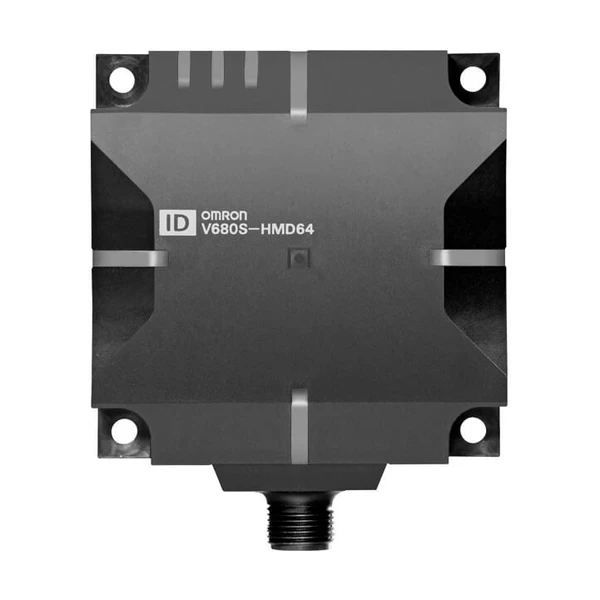 OMRONV680S-HMD6x-ETN3-in-1 RFID reader, Modbus TCP
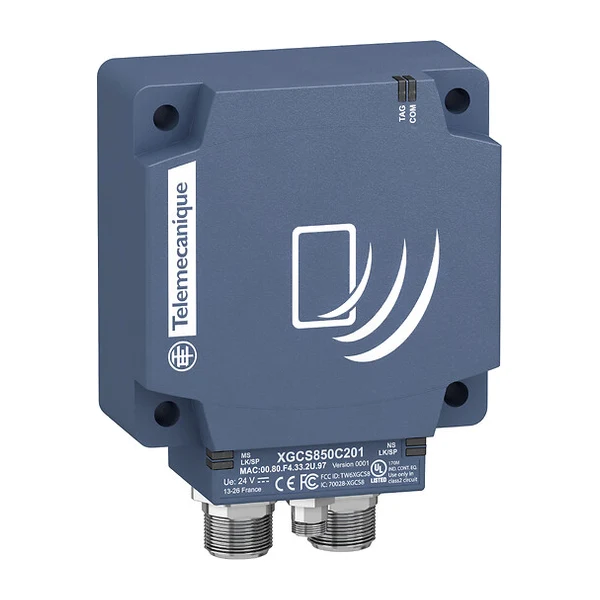 TELEMECANIQUEXGCS850C201Ethernet RFID smart antenna, 13.56 MHz
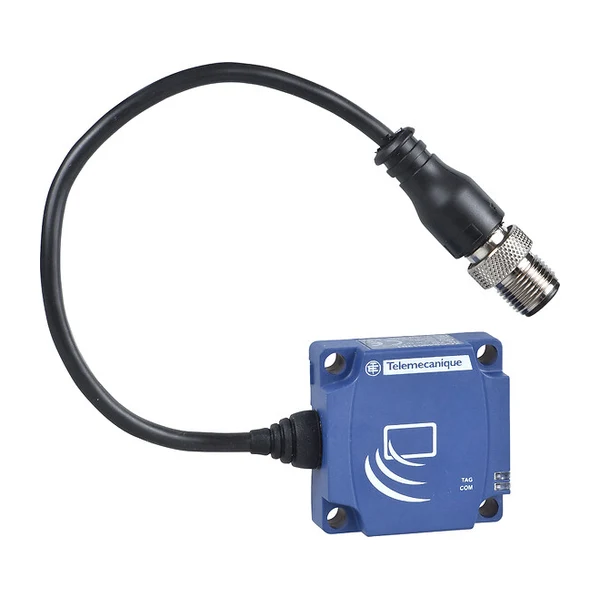 TELEMECANIQUEXGCS49/89Compact RFID smart antenna with integrated controller
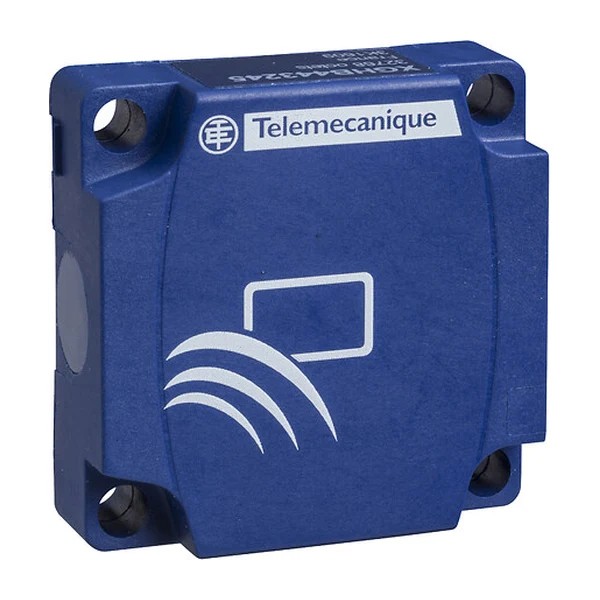 TELEMECANIQUEXGHB44xx4540 × 40 × 15 mm RFID tag, IP68
15. Safety in filling, packaging, and palletizing machines
Demonstrating safety applications in food processing, filling, and flow packaging machines, OMRON states that the ECOLAB-certified D41L door switch adapts to hygienic lines with its design preventing water and foreign matter accumulation. On the same packaging lines, the pairing of the G9SX-NS safety relay and the D40A non-contact door switch, which creates no dust particles due to the absence of physical contact and wear, forms an ideal structure for the packaging, food, and pharmaceutical industries. A single G9SX-NS controller in the system can simultaneously monitor up to 30 D40A switches that can be mounted from either side and indicate door status or cable disconnection via red and yellow LED indicators.
TELEMECANIQUE ensures ISO 13849-1 PL e compliance by monitoring the door statuses of filling, capping, and labeling machines—kept in enclosed spaces to prevent contamination—with RFID safety switches such as the Ecolab-certified, IP69K-rated, and IEC 62061 SILCL3-certified XCSRC32M12. To keep the area around the palletizing robot safe for operators, standard XUSL light curtains with IP67 protection operating between -30 and 55 °C are deployed, while special Ecolab-compliant IP69K models of these series are also available. On the other hand, PANASONIC offers the IP67-protected slim SF2C light curtain, suitable for food equipment with its resin body and stainless steel bracket, the SF4C model that allows easy status monitoring at the exit of the shrink tunnel, and the SG-P non-contact switch with bright indicators that shows the open or closed status remotely on case packing doors.
OMROND41LHygienic, RFID-coded interlock switch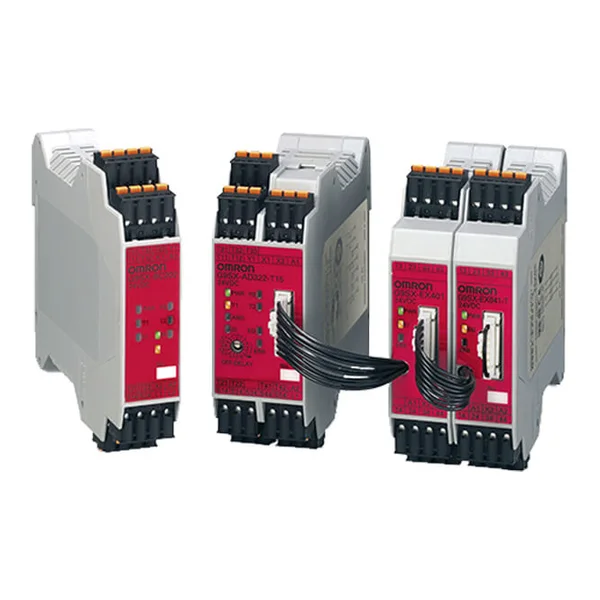 OMRONG9SXSafety controller
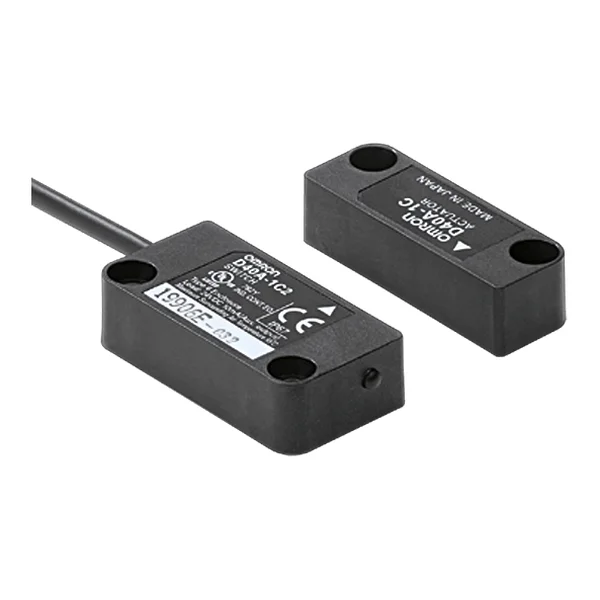 OMROND40ANon-contact safety door switch
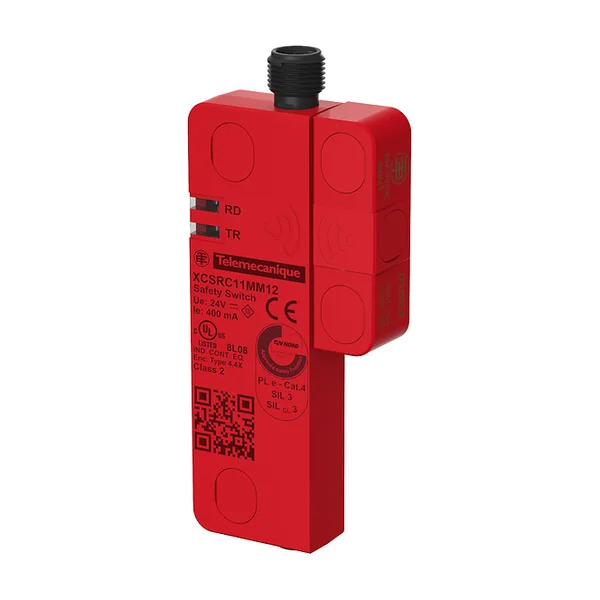 TELEMECANIQUEXCSRCRFID non-contact safety switch
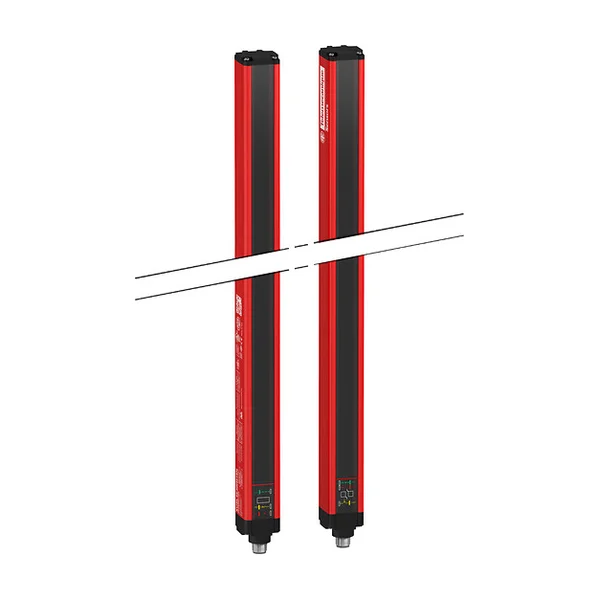 TELEMECANIQUEXUSL4E30HType 4 safety light curtain
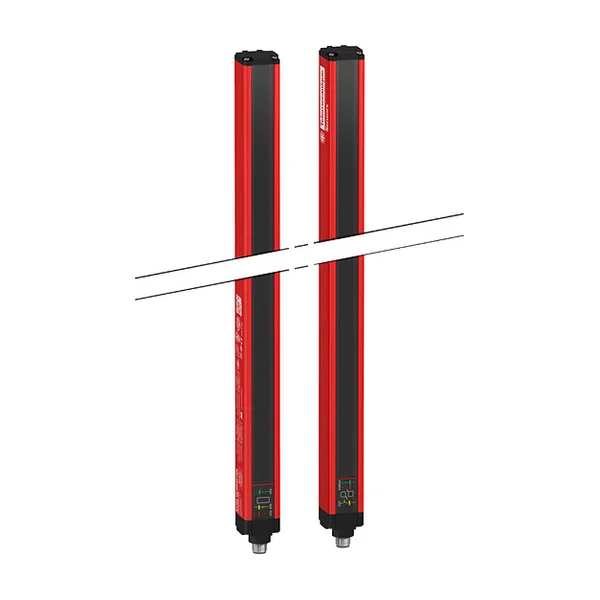 TELEMECANIQUEXUSL4E14FType 4 safety light curtain
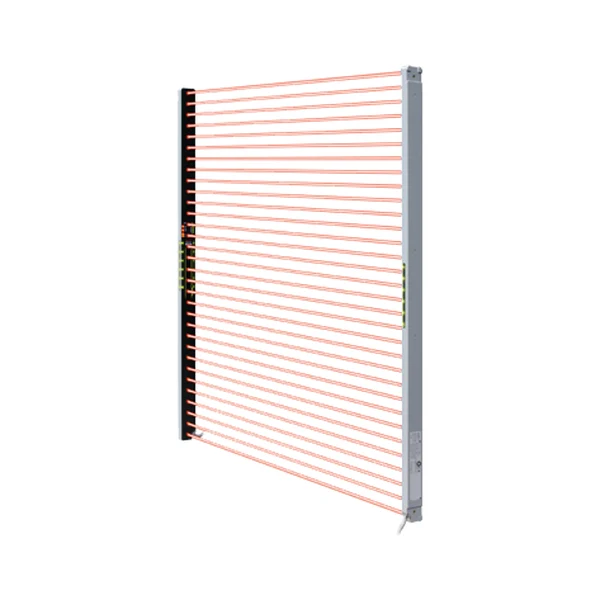 PANASONICSF2C-HUltra-slim safety light curtain, IP67
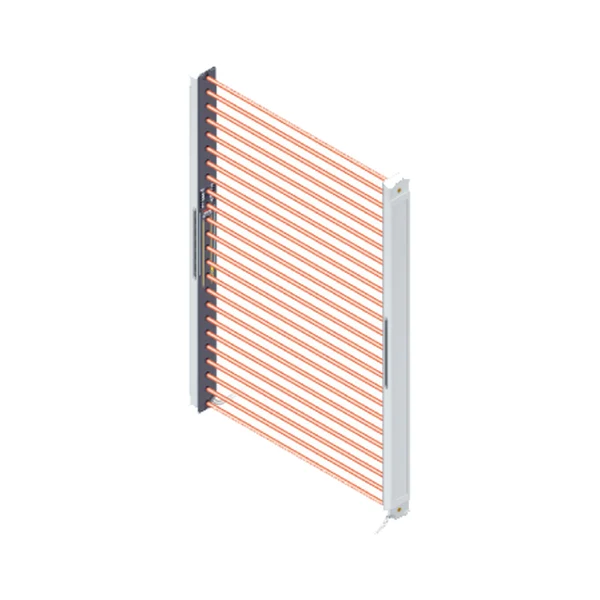 PANASONICSF4C-HUltra-slim Type 4 safety light curtain
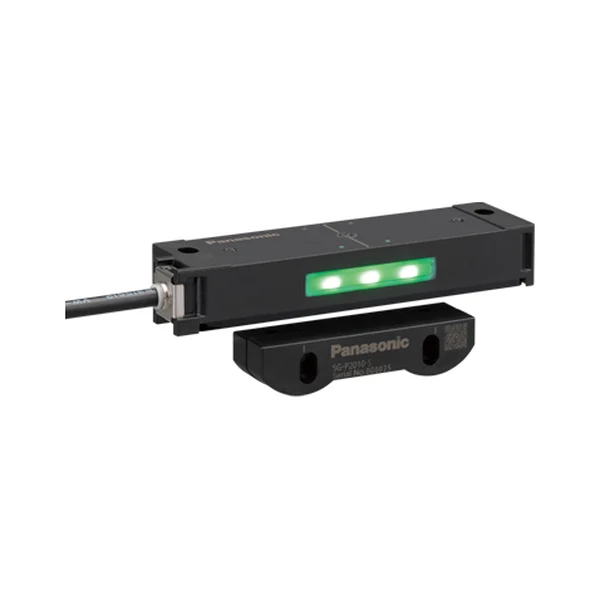 PANASONICSG-PNon-contact safety door switch, large indicator
16. Edge AI inspection, control PC, and recipe HMIs
ADVANTECH automated quality inspection and artificial intelligence guides state that inspecting expiration dates, lot codes, barcodes, packaging seals, cap presence, and label placement in food and beverage facilities supports traceability by reducing the risk of incorrect packaging. For these visual inspection and deep learning requirements, Jetson Orin Nano-based MIC-AI systems offer performance up to 67 TOPS with Super Mode, while inspection models can be updated directly during production thanks to artificial intelligence training. In addition to quality control, the UNO-137 modular DIN-rail control computer—operating between -40 and +70 °C, offering iDoor expansion, and equipped with an INTEL Atom E3940 processor—is utilized for 3-axis motion, speed, or frequency control, which is the core function of processing and packaging. ADVANTECH’s food-beverage page also lists waterproof, splash-resistant, and corrosion-resistant design requirements with time, speed, temperature, pressure, and pH control for preprocessing (washdown, cutting, sorting); the IP69K products recommended for this stage are not available on FST product pages.
Addressing industrial screens used in food production, the ADVANTECH HMI guide emphasizes that these panels supervise cooking, mixing, packaging, and pasteurization processes through recipe management for different products. According to the general finding of the guide, the automatic logging capability of HMI screens supports regulatory compliance of pharmaceutical and food processing facilities by preserving food safety documentation required by HACCP and similar regulations. Among ADVANTECH products at FST, the fanless PPC-300 panel PC with 13th generation INTEL CORE processor and the FPM-715 industrial monitor with aluminum front bezel feature IP66 front panels; the software and validation side of requirements such as HACCP are handled on a project basis.
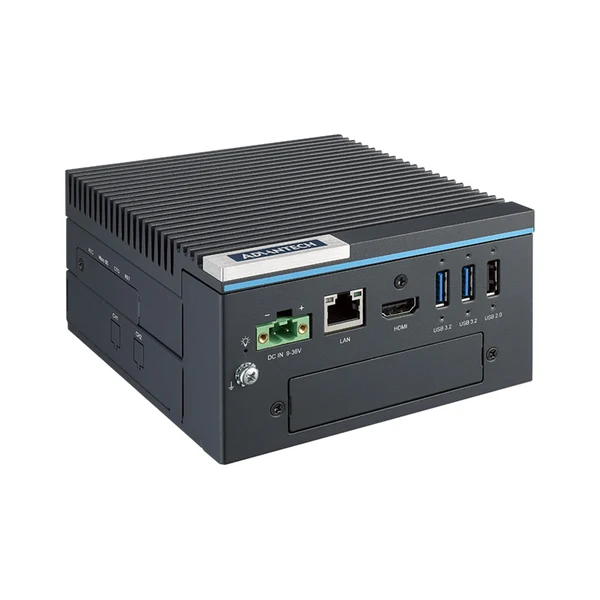 ADVANTECHMIC-711-ONJETSON Orin Nano-based fanless AI
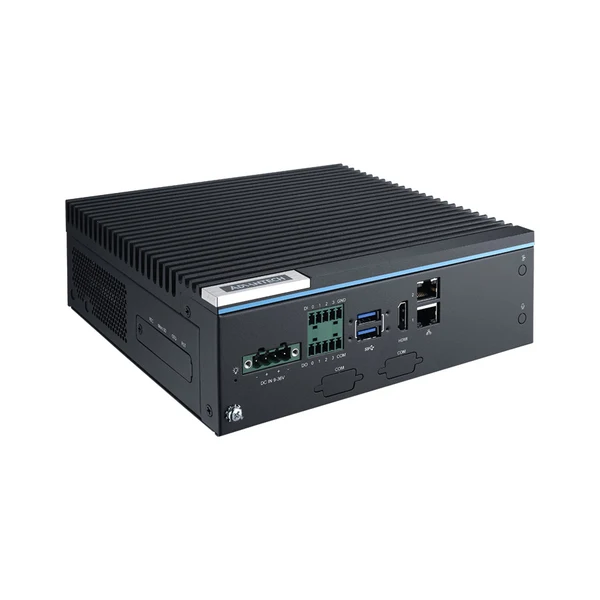 ADVANTECHMIC-713-OXJETSON Orin NX-based compact fanless AI system
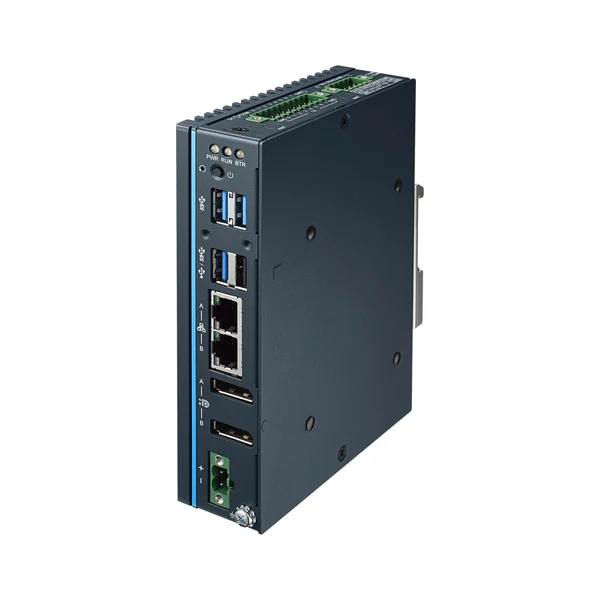 ADVANTECHUNO-137INTEL Atom E3940, −40…70 °C, DIN rail IPC
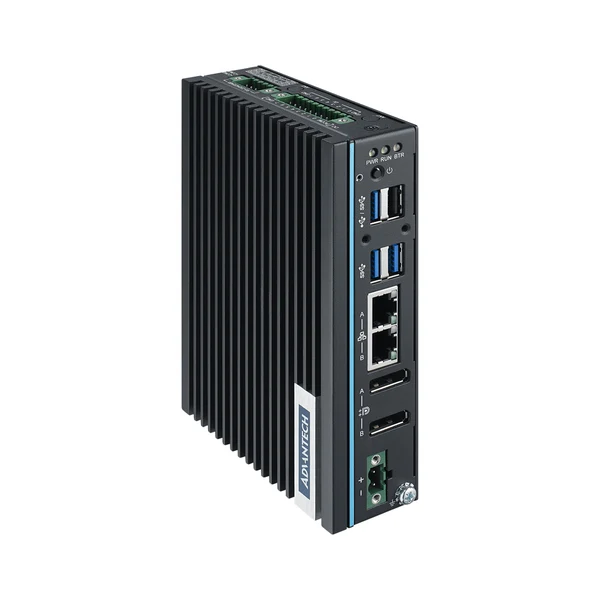 ADVANTECHUNO-137 V2DIN rail IPC, INTEL Atom x6000E
 ADVANTECHPPC-315S RPL15″ fanless panel PC, IP66 front panel
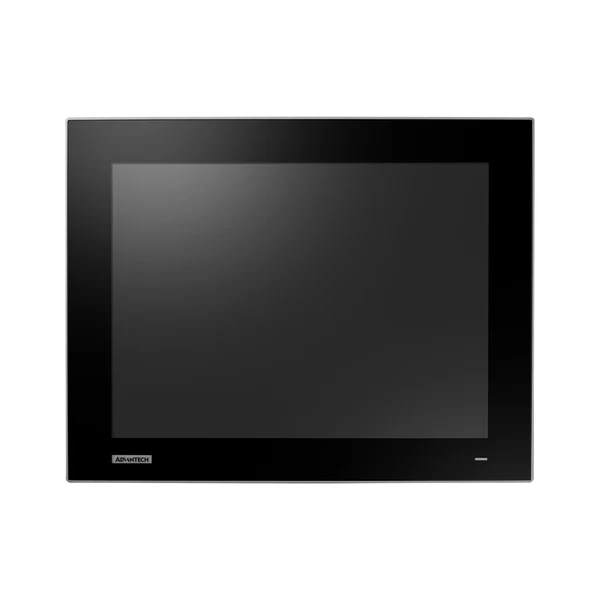 ADVANTECHFPM-71515″ resistive touch industrial monitor
Which product for which requirement?
| Requirement | Product group |
|---|---|
| Date/lot code OCR, print verification, content presence/absence | HIKROBOT SC3000, SC5000X / SC6000 |
| High-speed code reading on bottles, cans, and packages | HIKROBOT ID3000, ID5000 |
| Glass bottle SWIR inspection | HIKROBOT CI series (SWIR models) |
| Filling nozzle and fill level | TELEMECANIQUE XS (ECOLAB) / XT capacitive |
| Missing cap, transparent bottle, cap height | TELEMECANIQUE XX518A3 / XXS18, PANASONIC CX-481 / HG-C1050 |
| Transparent label and color mark | TELEMECANIQUE XUVU / XUMR, OMRON E3S-DC, PANASONIC LX-101 |
| Sealing and food surface temperature | OMRON ES1B |
| Valve position and raw material level | OMRON E2A-S (IP69K), TELEMECANIQUE XT / XXS18 |
| Sensors and hygienic door in washdown area | TELEMECANIQUE XS (ECOLAB), OMRON D41L / D40ML |
| Cartoning, palletizing, stretch wrapping | PANASONIC HG-C / CX-491, TELEMECANIQUE XXW54 / XCKP |
| RFID traceability | OMRON V680S, TELEMECANIQUE OsiSense XG |
| Door monitoring and light curtain | OMRON G9SX / D40A, TELEMECANIQUE XCSRC, PANASONIC SF2C |
| Inspection computer, control PC, operator panel | ADVANTECH MIC-711, UNO-137, PPC-300 |
Source: HIKROBOT food/pharma industry page (CN), case studies, and news; TELEMECANIQUE packaging line page, XS/XT/XX/XG catalogs, and datasheets; OMRON product pages, brochures, and customer references; PANASONIC (PANASONIC Industry Europe packaging sector sensor selection guide) and product pages; ADVANTECH food & beverage page and guides. Images belong to HIKROBOT. This page is not a statement of compliance with food regulations or hygienic design; selection and validation are made on a project basis.
Tell us about your application
Share your product and packaging type, line speed, code and label type, inspection criteria, washdown conditions, and safety requirements; let’s select the camera, code reader, sensor, RFID, safety, and control components together. In projects in this industry, FST Teknoloji delivers turnkey machine vision and system integration solutions with HIKROBOT hardware.