
Robotics
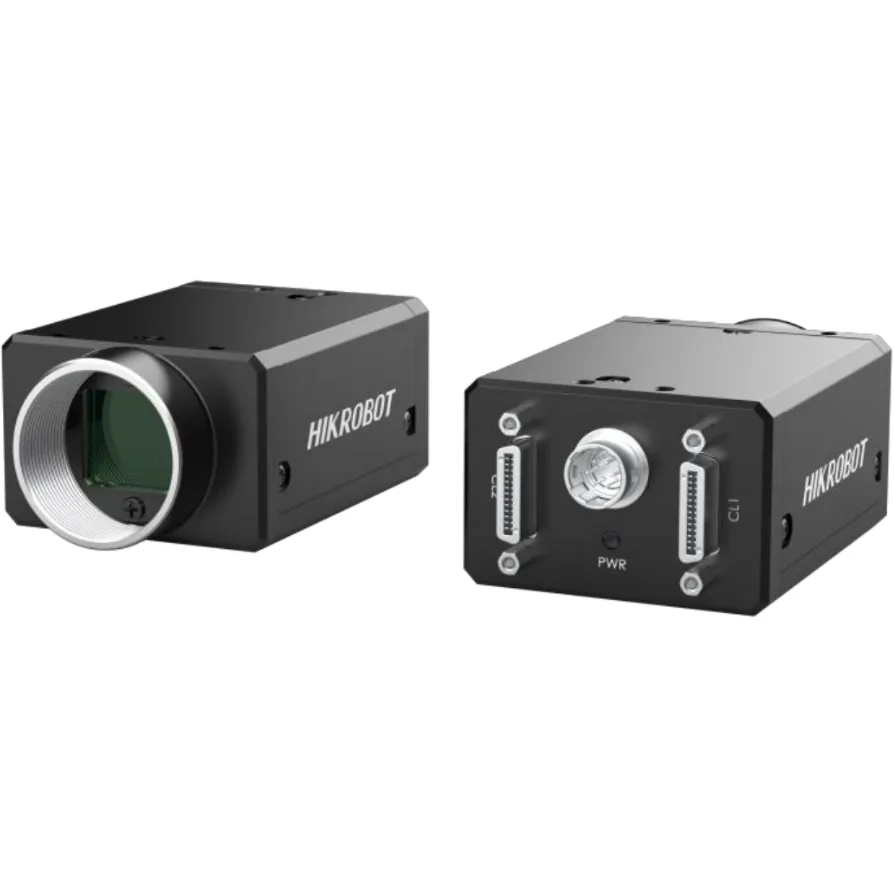
For robots to see parts whose positions are not known in advance, perform bin picking, execute depalletizing, and locate assembly points, HIKROBOT 3D cameras, RobotPilot software, smart cameras, and VisionMaster are used. Products from OMRON, TELEMECANIQUE, and PANASONIC for robot cell perimeter and door safety, enabling switches during teaching, cobot and palletizing cells, and sensors on robot arms, as well as ADVANTECH products for mobile and humanoid robot computers, are also explained on this page using the manufacturers’ own robotics examples.
What does machine vision solve in robotics?
While industrial automation processes aim for robots to detect and process parts with undefined positions, HIKROBOT’s RobotPilot software—introduced in 2022 to expand robot guidance applications—combines image processing, trajectory planning, robot management, and visual simulation functions into a single package.
HIKROBOT’s 3D product line focuses on two main areas—high-precision 3D measurement and 3D vision-guided control—creating the necessary optical infrastructure for detecting complex objects in three-dimensional space. According to HIKROBOT, the developed 3D-guided loading and unloading solution has been implemented in material handling operations for complex and irregular parts across the automotive, sub-industry, steel, and machinery sectors.
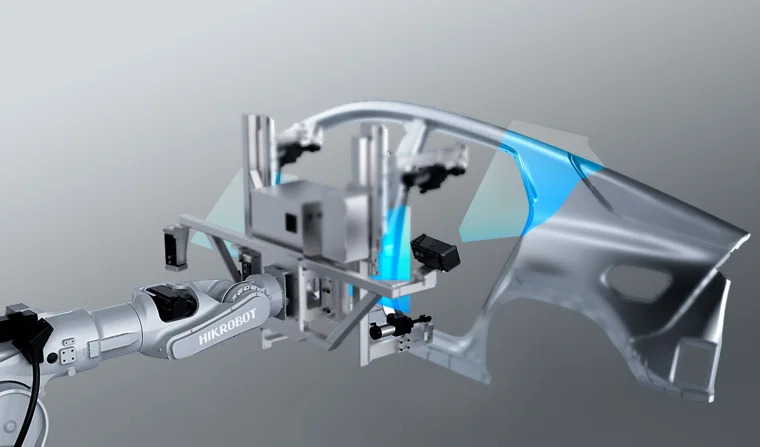
1. 3D robot guidance with RobotPilot
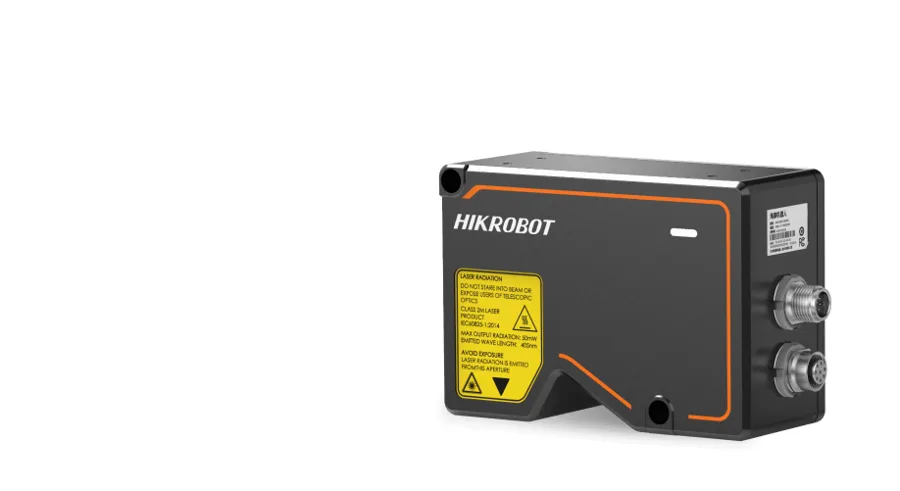
RobotPilot, HIKROBOT’s in-house developed robot vision guidance software, was launched in 2022 to popularize robot guidance applications in high-precision 3D measurement and 3D vision-guided control. Combining image processing, trajectory planning, robot management, and visual simulation functions into a single package, the software is listed alongside HiViewer as client software in the technical specs of RoboScan models. Within the system, application deployment is executed via a drag-and-drop method without writing code, and modular function blocks allow robot movement and live video to be displayed simultaneously on the screen.
The built-in trajectory planning architecture within RobotPilot evaluates obstacles in the workspace of the robot arm to prevent collisions and calculates the optimal grasping strategy and path of motion. The software, which can connect directly to numerous mainstream robot brands, also supports offline development.
2. Bin picking
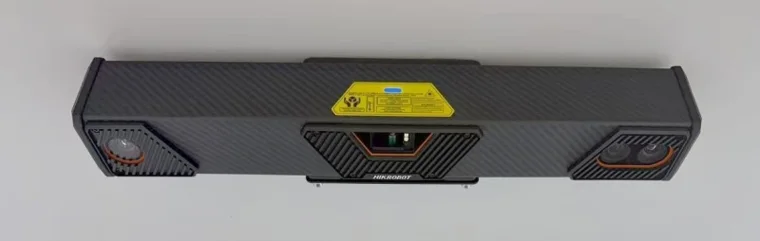
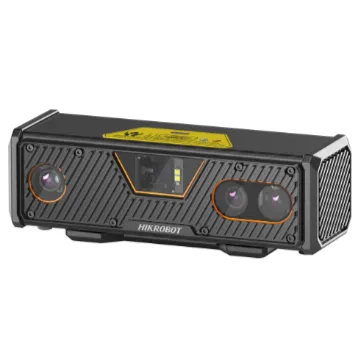
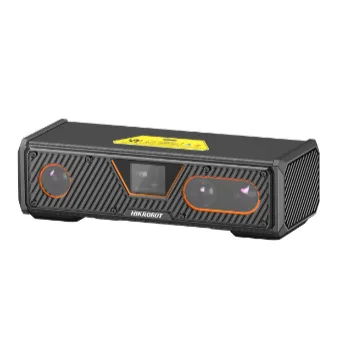
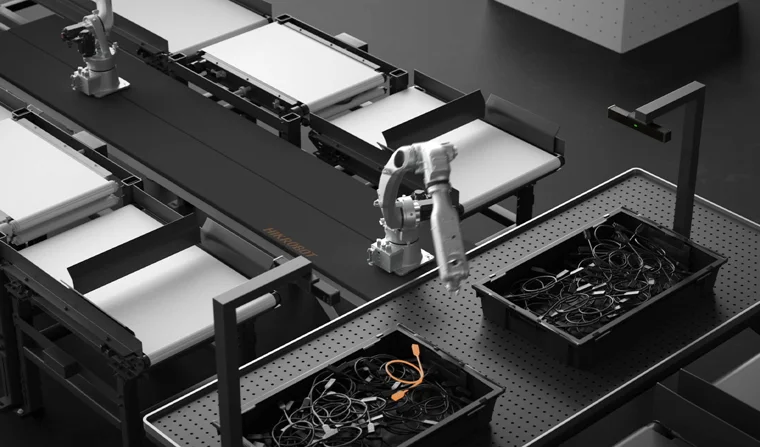
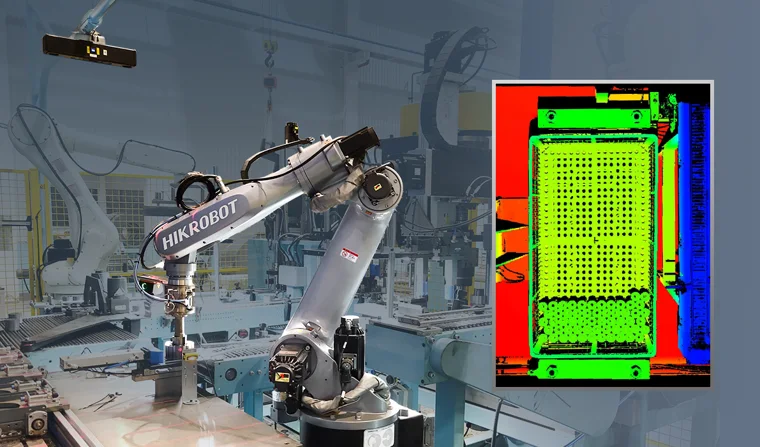
In the solutions showcased by HIKROBOT at LogiMAT 2026, the RoboScan series galvanometer laser 3D camera provides positioning data to robot arms via its wide field of view to execute 3D-guided bin picking applications. In the case of picking four shaft- and body-type parts from an unstructured bin, a wide field-of-view 3D galvanometer camera installed at a height of approximately 1,500 mm positions the bin and parts, while RobotPilot software manages collision-checked robot grasping. Challenges in this case, such as random part orientation, automatic recognition of internal bin dividers, and inconsistent bin appearances, are resolved by combining 3D point cloud and 2D deep learning technologies.
In the solar panel junction box case, the laser galvanometer stereo camera positions the crate and avoids obstacles while executing grasping from a random pile by combining instance segmentation with 3D point cloud matching. According to HIKROBOT data, image processing time in this application remains at 3 seconds or less per piece, with a grasping success rate of 98% or higher. Additionally, as demonstrated at AMTS 2024, the galvanometer multi-line laser 3D camera with a 1-meter sensing range and a capture time as fast as 1 second is used with RobotPilot for grasping irregular, stacked, and shiny casting parts.
| HIKROBOT case study values | |
|---|---|
| Junction box: image processing time | ≤ 3 s / unit |
| Junction box: grasping success | ≥ %98 |
| Shaft/body part: camera mounting height | ≈ 1,500 mm |
| Galvanometer multi-line laser 3D camera | 1 m detection range, fastest 1 s capture |
Values are from case study and product data published by HIKROBOT; design for your own cell is performed on a project basis.
3. 3D-guided part feeding, unloading, and racking
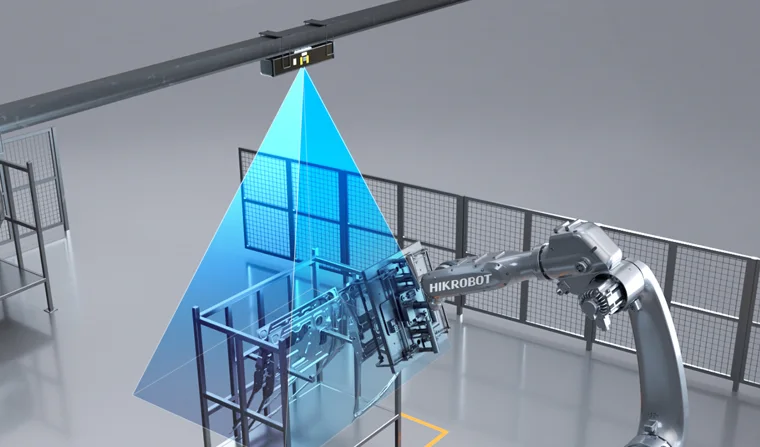
In the applications showcased by HIKROBOT at Automation World 2026, the RoboScan series galvanometer laser 3D camera and RobotPilot guide articulated robots to carry out the loading and unloading processes of material totes. In the welding part 3D feeding case, thanks to 2–3 3D cameras installed in Eye-in-hand or Eye-to-hand configurations, the need for high-precision crates is eliminated. In this setup, camera repeatability remains within ±0.06 mm, grasping accuracy within 0.5 mm, and system accuracy below 0.5 mm.
In the battery cell feeding case, positioning with ±1.5 mm per cell and polarity orientation recognition are performed through the integration of the 3D camera and RobotPilot. In this process, where the vision processing step and robot movement run in parallel, the cycle time requirement per cell is kept under 2 seconds. In the press line end-of-line crating case, a 2D area camera positions more than 10 press part types, while a wide field-of-view 3D camera guides the robot by monitoring crate type, part presence, and crate deformation.
| HIKROBOT case study values | |
|---|---|
| Welding part feeding: grasping accuracy | 0.5 mm |
| Camera repeatability | ±0.06 mm |
| Battery cell feeding: positioning | ±1.5 mm, cycle < 2 s / cell |
Values are from case study and product data published by HIKROBOT; design for your own cell is performed on a project basis.
4. 3D-guided depalletizing and palletizing
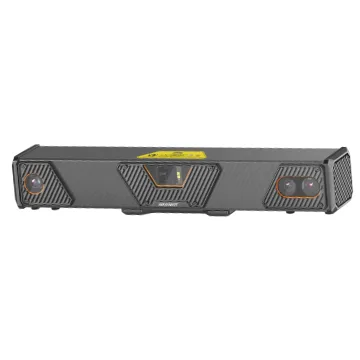
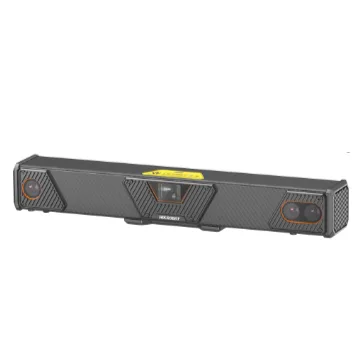
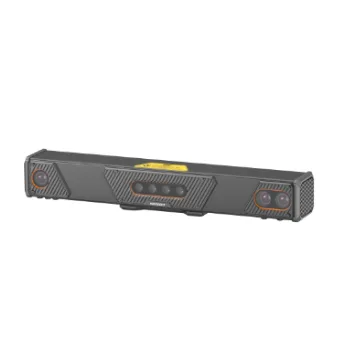
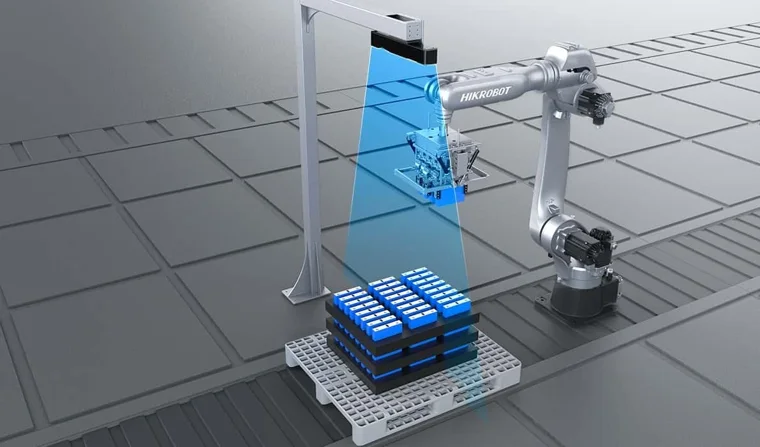
The 3D depalletizing system introduced by HIKROBOT at Logis-Tech Tokyo 2026 brings together the MV-RS-Base-L galvanometer laser 3D camera, an articulated robot, and RobotPilot software to offer a no-code configurable setup operating with reflective and dark plastic containers. According to the technical table for MV-RS-Base-L, the camera features a Z-repeatability of 0.08 mm at a distance of 1,800 mm, a VDI/VDE accuracy of 0.15 mm at 1,800 mm, and a far field of view of 1,220 × 1,000 mm at 2,200 mm. The MV-DB1300A V2.0, with its wide field of view and IP65-rated carbon fiber housing, delivers simultaneous RGB and depth images and is specified for depalletizing, palletizing, and large object volume measurement operations.
In the depalletizing case, the MV-DB1300A stereo camera and RobotPilot platform locate and segment boxes, supporting offset picking, center picking, multi-picking in a single capture, and multi-box picking in a single grasp options. While the system performs collision detection during path planning steps, it maps the existing stack to a predefined pallet pattern after a power outage, allowing the stacking process to resume from where it left off.
5. Robotic parcel feeding and single-piece separation
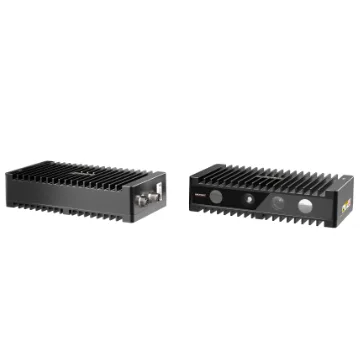
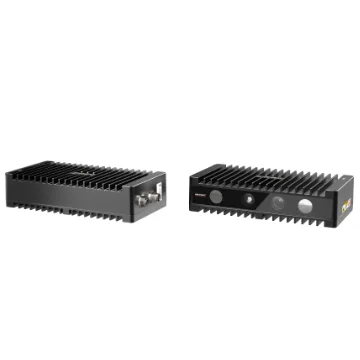
The MV-DB500S RGB-D camera, designed by HIKROBOT in 2022 for automated package feeding by robots, executes package segmentation, pose estimation, and classification functions based on point clouds and images. The RGB-D smart stereo camera used in the robot arm package feeding case guides the robot by combining deep learning and conventional vision algorithms, while the related software calculates pick-and-place coordinates, trajectory motion, and obstacle avoidance. Featuring embedded deep learning infrastructure for instance segmentation and positioning, the IP65-rated MV-DB500S-S allows one-click system calibration in single or multi-camera setups.
6. Eye-in-hand camera and smart sensor on robot
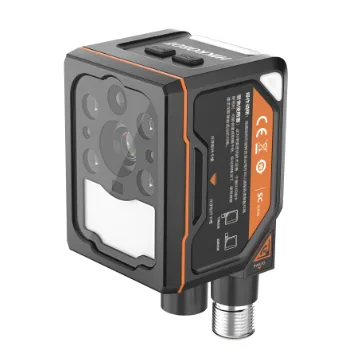
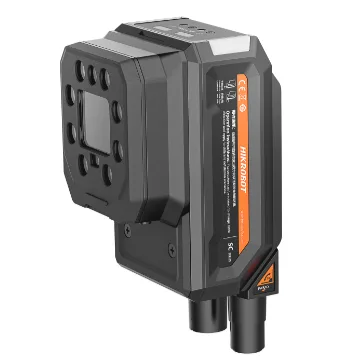
At the VISION 2026 exhibition, HIKROBOT’s SC3000X smart camera was demonstrated mounted on a robot arm to perform multi-face automated inspection on automotive parts. Featuring embedded algorithms for reading, presence, orientation, measurement, recognition, and counting, the SC3000X vision sensor works alongside the robot arm to inspect codes and characters on every face of the casting part. Meanwhile, at the SF+AW 2025 event, the SC3000XM series smart camera was reported to demonstrate robot arm calibration and grasping capabilities.
HIKROBOT’s new generation laser galvanometer stereo camera is 40% smaller in volume and 50% lighter, reducing the payload at the end of the robot in eye-in-hand applications. The RoboScan Base-S model in the product group weighs approximately 1.3 kg, while the Ultra-S model weighs approximately 1.95 kg, with both hardware devices operating under IP65 protection class and 24 VDC power supply.
7. Hand-eye calibration and robot connectivity
The junction box grasping solution offered by HIKROBOT supports one-click hand-eye calibration processes for mainstream robot brands along with an adaptation mechanism that eliminates the need for per-workpiece grasping point registration. In the robotic package feeding solution, the hand-eye calibration step is automatically completed with one click using positioning operators on the HIKROBOT algorithm platform, with the resulting parameters transferred directly to the system. This software infrastructure enables the connection of robotic systems without requiring knowledge of different robot brand languages, executing all teaching and simulation steps entirely within the software environment.
In the battery cell feeding case applied in production and assembly lines, the 3D camera is fixed outside the robot body and positioned in an eye-to-hand arrangement. Thanks to the camera being in a fixed position, the image processing step and the physical movement of the robot arm are executed in parallel without waiting for each other.
8. 2D positioning and assembly alignment (VisionMaster)
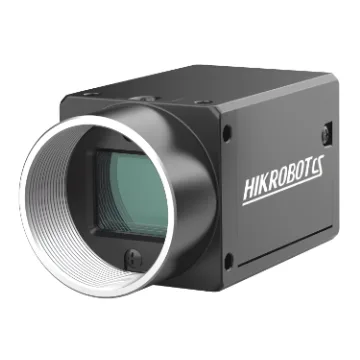
HIKROBOT’s VisionMaster (VM) positioning tools detect circle, line, blob, edge, and corner positions despite translation, rotation, scale changes, and lighting variations, making the resulting location and presence data available for robot guidance processes. Operating through a graphical interface, secondary development via SDK, and operator design mode, VisionMaster incorporates more than 1,000 in-house developed operators. In the four-camera screen-to-frame alignment case, 12 MP cameras and VisionMaster software transmit detected part centers to the PLC unit, which then directs the corresponding mechanism to align the secondary screen with the frame.
In the case of picking irregular parts from a vibratory feeder, a positioning accuracy of ±0.25 mm and a miss rate below 0.1% are achieved with VisionMaster, reaching a feeding capacity of 7,200 units per hour through fast robot integration. On battery module and pack production lines, positioning accuracy generally ranges between ±0.1 and ±0.5 mm for module insertion into the housing, accessory assembly, screw tightening, and pack picking operations, where 12 MP and 20 MP area cameras are preferred.
| HIKROBOT case study values | |
|---|---|
| Part picking from vibratory feeder | ±0.25 mm positioning, mispick under 0.1%, 7,200 pcs/hour |
| Positioning in battery module/pack assembly | Typically ±0.1 – ±0.5 mm (12 MP and 20 MP cameras) |
| Software | VisionMaster (VM): More than 1,000 operators |
Values are from case study and product data published by HIKROBOT; design for your own cell is performed on a project basis.
Robot cell safety, sensors, and robot computers
Vision guidance is only the eyes of the robot; the perimeter of the robot cell, doors, teaching and maintenance moments, the space shared by the cobot with humans, and the sensors on the robot arm must also be designed with the correct components. OMRON examples are taken from the robot cell in the safety components selection guide, the G9SX brochure, the A4EG datasheet, the OS32C manual, and the robot palletizer solution guide; TELEMECANIQUE examples are taken from the XCSR and XUSL manuals, which list robotic work cells as their primary application; PANASONIC examples are taken from the SG-C1 robot teaching switch and distance sensors mounted on the robot arm; ADVANTECH information is taken from AMR, humanoid, and ROS2 announcements. Risk assessment and the design of safety functions in robot safety are carried out on a project basis.
9. Robot cell perimeter safety
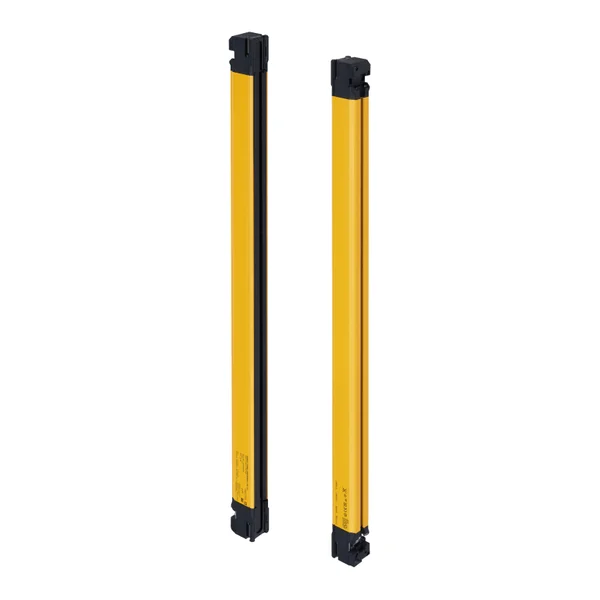
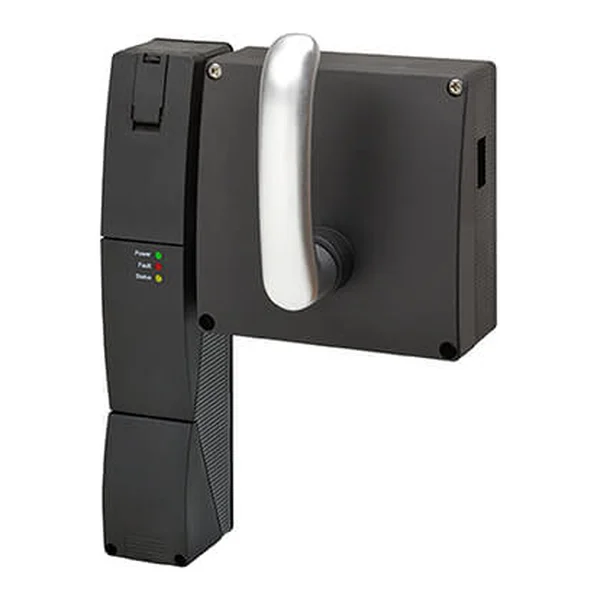
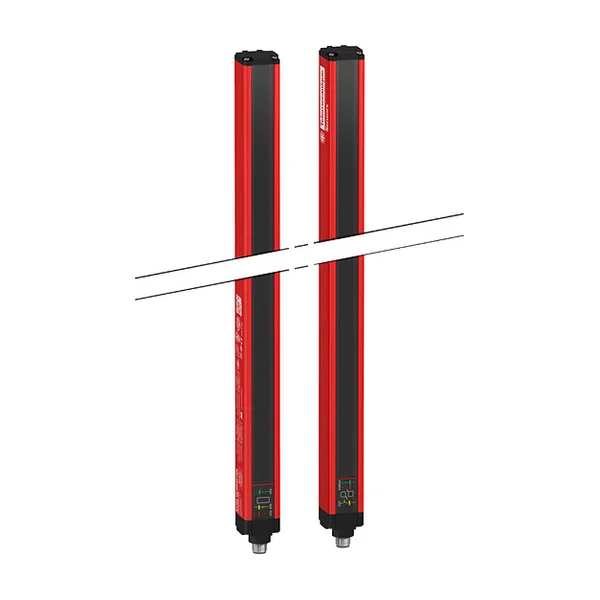
In the fenced robot cell structure featured in the OMRON Safety Components Selection Guide, the OS32C safety laser scanner for detecting presence in the hazardous area, the F3SG-SR light curtain for detection in entry areas with harsh environments, and the high-coded D41G door locking switch to prevent personnel from being trapped inside the cell are evaluated together. According to OMRON, since robot cells must be fully enclosed and activated only when the operating perimeter is completely clear, such complete protection solutions are constructed using a combination of light curtains, safety laser scanners, and interlocking switches. In the inner robot cell protection example in the device’s user manual, the OS32C safety laser scanner acts as a secondary protection device alongside the safety light curtain, verifying that the work area remains clear before the robotic arm initiates movement. The F3SG light curtains recommended for industrial robot cells in OMRON’s adaptive safety brochure reduce downtime thanks to their durability structure reaching levels from IP67G to IP69K, fast wiring capability, and easy alignment and diagnostic features.
According to the XUSL2E and XUSL4E user manuals published by TELEMECANIQUE, light curtain systems are used for finger, hand, and body detection around hazardous equipment, with robotic work cells constituting the first primary application defined for these systems. The manufacturer’s manual lists transfer lines, assembly lines, palletizers, welding stations, and packaging machines alongside robot cells in its application list. The optical infrared beam protection system in question protects field operators by stopping the movement of components located in the hazardous area if at least one beam is interrupted. In the XUSL manual, sensing distance options in the standard range are offered as 0…3 m / 1…6 m or 0…4 m / 0…12 m, while long-range models provide a range of 0…10 m / 3…20 m.
10. Robot gate and zone monitoring
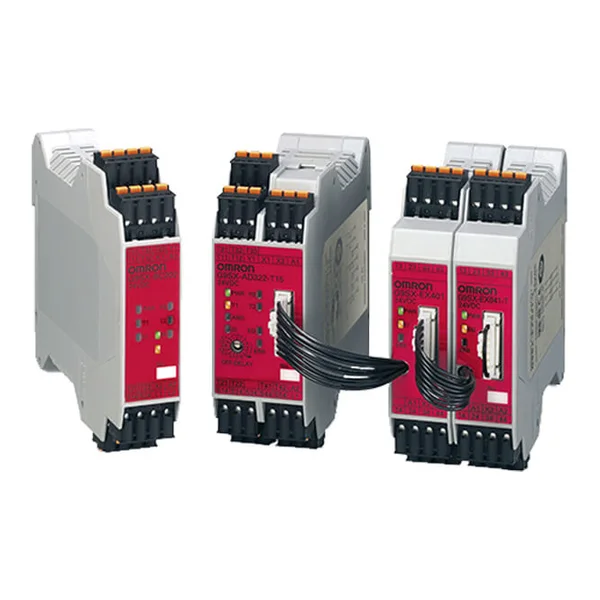
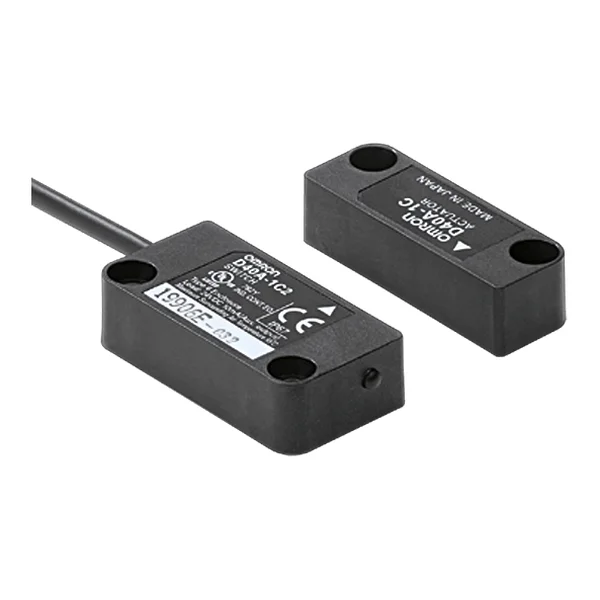
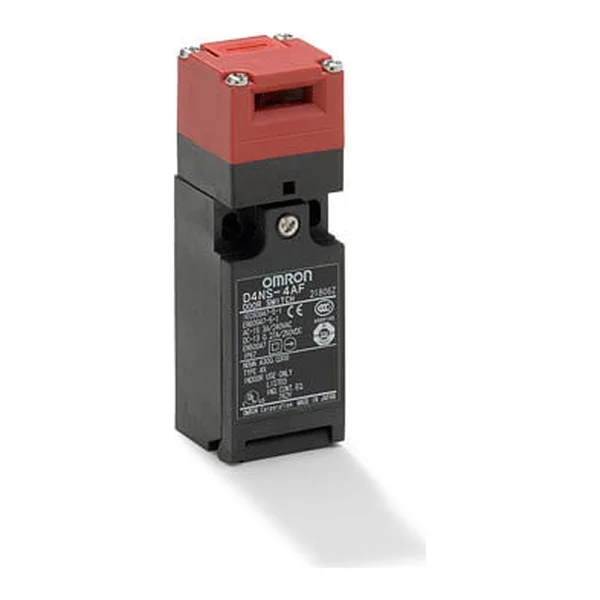
In the application example presented in the OMRON G9SX brochure, the doors of two separate robots are monitored using D40A non-contact door switches and a G9SX module, ensuring that when door A is opened, only robot A stops, when door B is opened, only robot B stops, and when an emergency stop is triggered, both robots stop simultaneously. In a processing robot operating across two different cells, while each cell is secured with independent light curtains, a single G9SX-GS switching unit automatically transitions between curtains based on data received from position switches on the robot, allowing the operator to prepare the next batch in the front area while the robot continues operating in the rear area. As explained in the OS32C manual, the safety laser scanner protects one side of the area based on the robot’s position; thanks to the multi-zone function signaled by discrete inputs from external devices, the operator completes preparation on the safe side while the robot operates on one side, and a similar structure is also applied in vertical protection zones. Additionally, the slide-key mounting bracket presented for the D4NS in the OMRON selection guide adapts to various door types, ranging from 20 x 20 mm aluminum profiles to large protective panels enclosing the robot perimeter.
In the XCSR manual by TELEMECANIQUE, robotic work cells rank first among the primary applications of XCSR RFID safety switches monitoring the position of movable guards, with the main objective being to prevent hazardous situations when a guard door is opened. Other application areas specified in the manual are listed as transfer lines, assembly lines, automated equipment, machine tools, and packaging machines. Featuring a TÜV-certified Cat4 / PL e – SIL3 safety level, the XCSR provides a tamper-proof architecture by offering unique high-level coding with a factory one-to-one paired reader and transponder structure. Users are offered three different connection options: STANDALONE with start/restart functionality and built-in EDM that can connect directly to contactors, DAISY-CHAIN with dual M12 connectors suitable for series wiring, and the SINGLE model establishing a point-to-point connection to the safety controller.
11. Enabling switch in robot teaching and maintenance
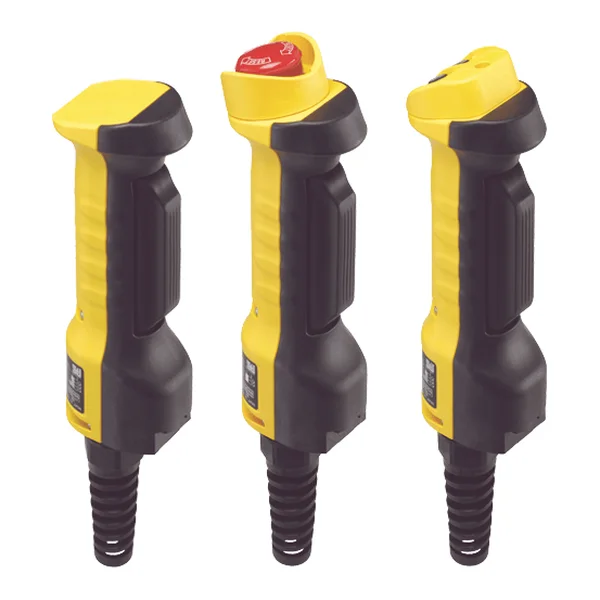
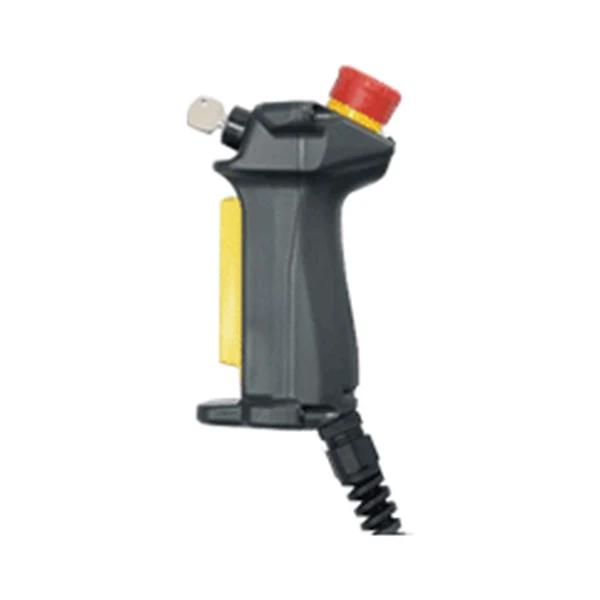
According to the OMRON A4EG datasheet, the product is a switch designed to perform teaching operations on machinery such as robots located within hazardous areas, and allows the connected system to operate only when the switch is continuously held pressed in position 2. In the robot cell example in the OMRON selection guide, while the A4EG enabling switch assumes the emergency stop function during teaching processes conducted in hazardous areas, according to OMRON, if force and speed monitoring mechanisms are not active during cobot teaching steps, a three-position safety enabling device is required. As stated in the G9SX brochure, when repositioning of the arm is required during robot maintenance or tool changing, the G9SX-GS switching unit provides limited yet positive motion control, and machine movement is stopped the moment the enabling switch is released. In the application scenario on the product page, after the operator completes loading and manually starts the robot cycle, the loading cycle is automatically selected when the robots return to their initial position, and pressing the A4EG switch in maintenance mode constitutes one of the emergency stop conditions together with the G9SX-GS.
The PANASONIC SG-C1 series is an enabling switch used to activate the system during manual teaching operations on a robot-like machine in a hazardous working area, operating on the principle that the machine runs only when the switch is in position 2 and an additional ’start’ signal is given. The list of operating standards provided by PANASONIC explicitly includes the ISO 10218-1 and ANSI/RIA R15.06 standards for robot safety. In the SG-C1-21 model, which weighs approximately 140 g, the holding load in position 2 has been reduced to lessen operator fatigue during prolonged manual teaching and maintenance operations. Different configuration options equipped with emergency stop buttons, additional pushbuttons, or key selector units are also available within the series.
12. Speed reduction and stopping in cobot cell
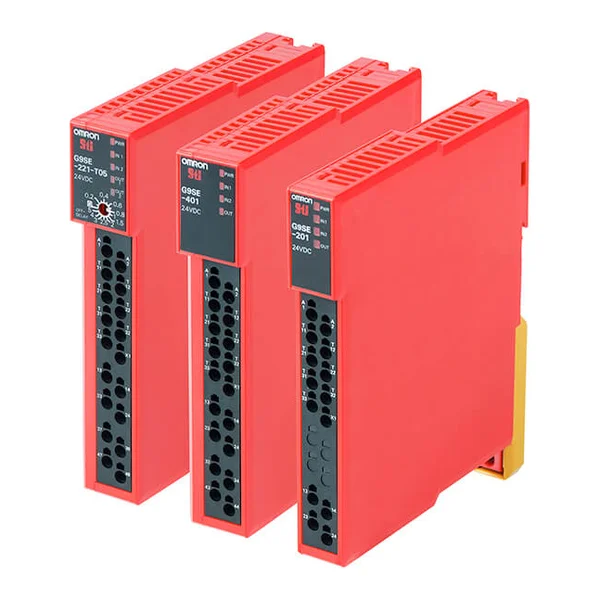
In the Cisel case study where OMRON safety solutions were applied, the electrical testing of automotive steering system boards was automated using an OMRON TM5 cobot, with an OS32C safety laser scanner placed in the cell slowing down the cobot’s movement when a person approaches within a 3 m distance and stopping the system completely when they enter 1 m or less. Thanks to this robotic test cell established by Cisel, test operations of up to 400 parts per hour can be performed across two consecutive 8-hour shift schedules. The OMRON quick start guide explains how to connect the OS32C safety laser scanner to OMRON TM cobot systems via the G9SE-221-T05 safety relay. According to the protective stop principle stated by OMRON, the robot must be stopped before entering the cobot area or a safety device such as an area scanner must initiate a stop as soon as it detects the operator, whereas light curtains and safety switches can be used in more hazardous or high-speed applications.
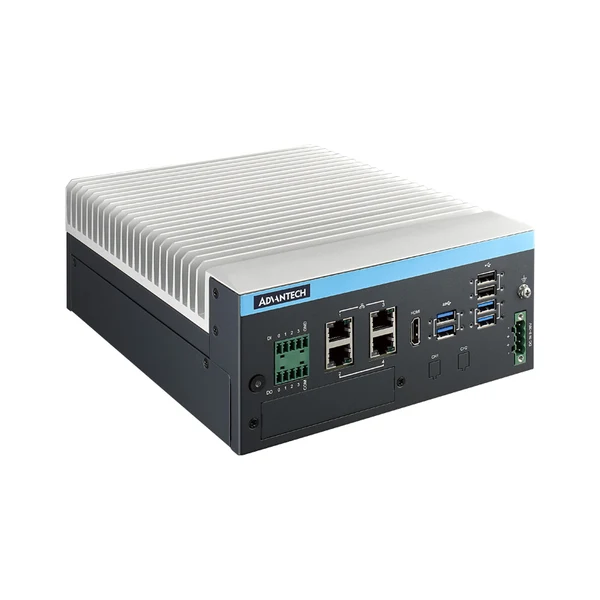
The hardware core of the AI Accelerator solution, which adds artificial intelligence and machine vision to UNIVERSAL ROBOTS UR Series and e-Series cobots, is formed by the Jetson AGX Orin-based ADVANTECH MIC-733-AO; the two companies jointly exhibited this solution at the iREX 2025 trade show in December 2025.
13. Robotic palletizing cell
According to the OMRON Robot Palletizer Solution Guide, the OS32C safety laser scanner provides a slowdown function via presence detection on a cobot palletizer by creating inclusive safe zones, while the D4SL door interlock switch requires a unique key for intentional reset, and the G9SX controller provides an ON→OFF response time of under 15 ms. The safety input list in the same guide includes the F3SG-SR light curtain, muting actuators with a junction box, D41L and D41D non-contact switches, D4SL-N door interlock switch, and G9SE safety relay. In Kerry Foods’ palletizing robot cell in Canada, six OMRON F3SG-RA light curtains with smart muting and Bluetooth programming features were installed in place of hard guards in accordance with CAN/CSA Z434 (ISO 10218-2), allowing the robot and operator to work together safely.
On the TELEMECANIQUE packaging application page, the palletizing robot area is defined as the zone that must remain safe for the operator while infeed and outfeed conveyors are monitored; the manufacturer recommends IEC 62061 SILCL3 certified light curtains for this area and advises using sensors with at least IP67 protection, noting that palletizing machines are situated in dusty and humid environments. The XUSL2E/XUSL4E manual also separately lists palletizers and robotic work cells among light curtain applications.
In the palletizer example provided in the PANASONIC packaging guide, essential safety measures, leading-edge detection, verification of box presence on robot arms, and detection of the lifting movement of the right-angle transfer module are listed. The PANASONIC SF4D light curtain used in the palletizing cell provides resistance to twisting, bending, vibration, and direct impacts with its slim yet robust metal body, adapting to harsh environmental conditions through IP67 protection and high-power emission. Meanwhile, the GX-F12A rectangular inductive sensor in the palletizer application fulfills detection duties in narrow locations that cannot be frequently cleaned, thanks to its compact structure and IP68G protection class.
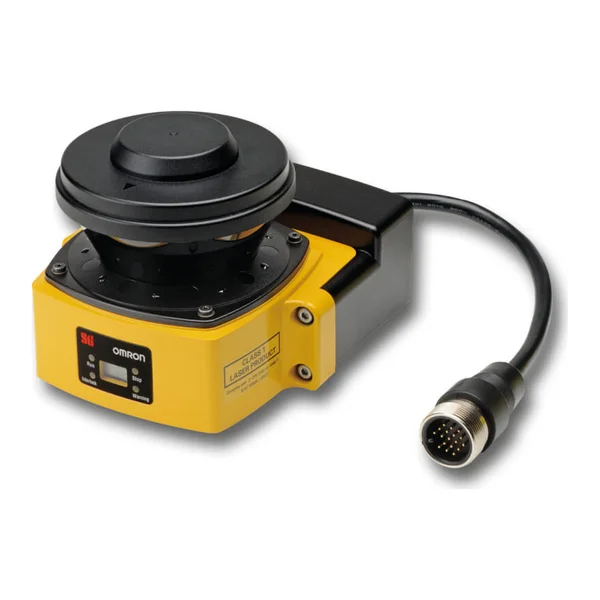 OMRONOS32CType 3 safety laser scanner, 270°
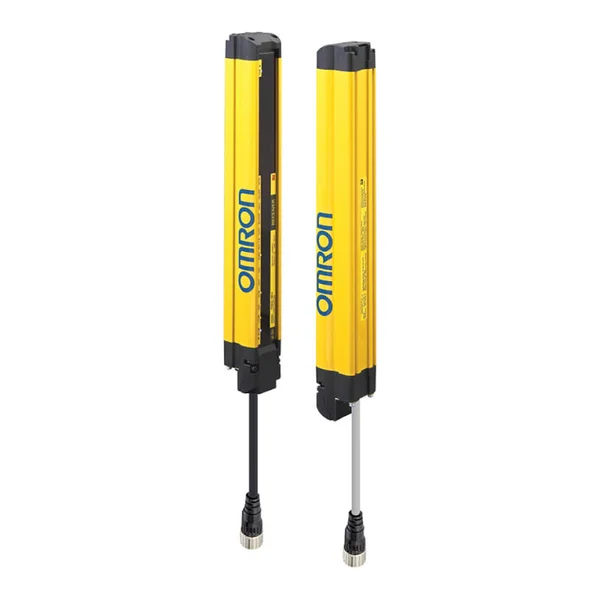 OMRONF3SG-4RAType 4 light curtain with muting mode
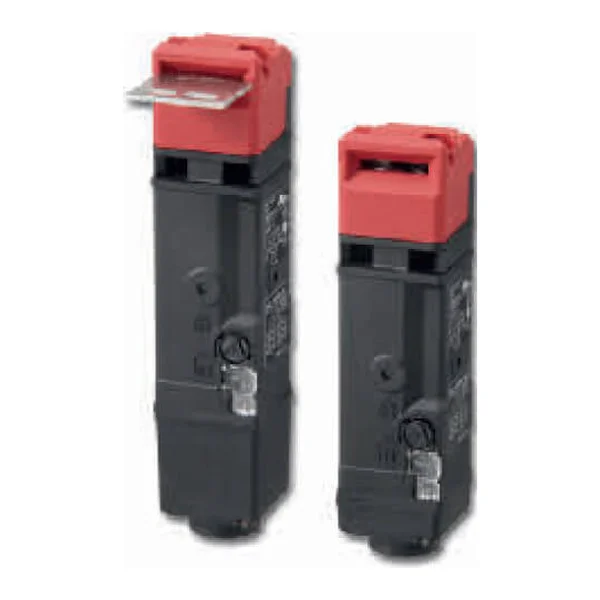 OMROND4SL-NInterlocking safety door switch
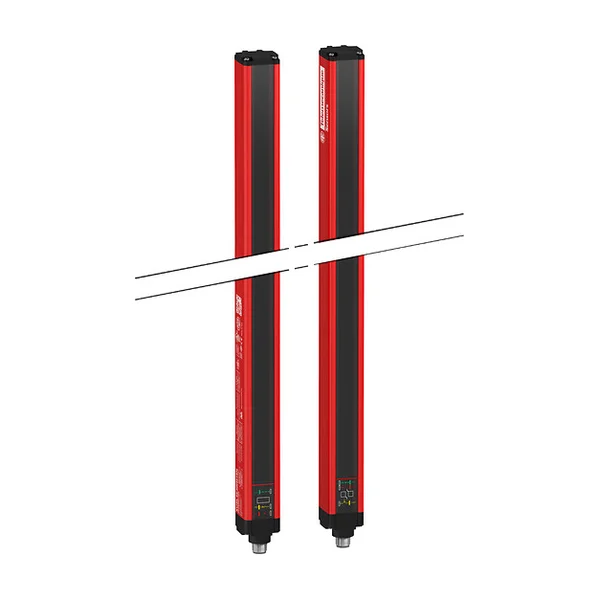 TELEMECANIQUEXUSL4E30HType 4 safety light curtain, 30 mm
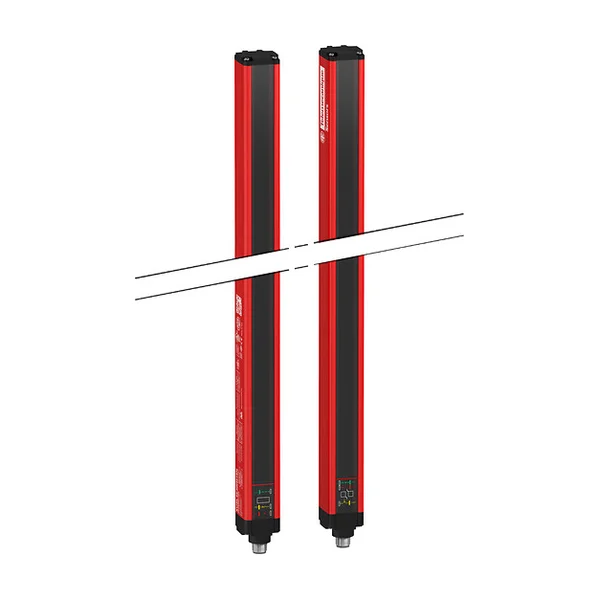 TELEMECANIQUEXUSL2E30H046NType 2 safety light curtain, 30 mm
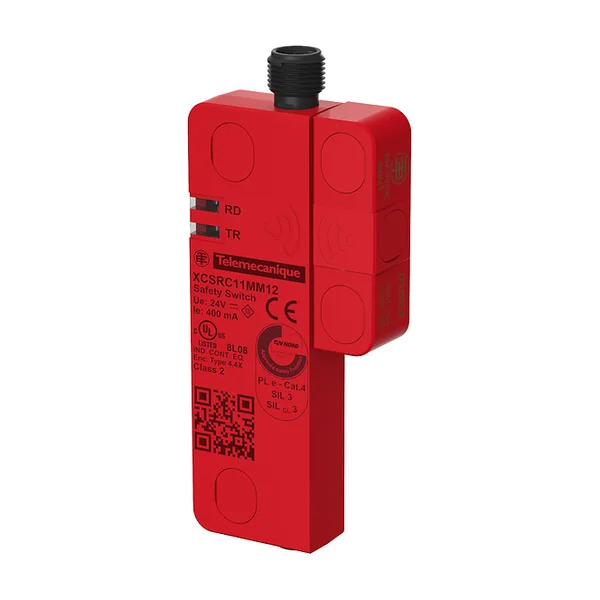 TELEMECANIQUEXCSRCRFID non-contact safety switch, PL e, SIL 3
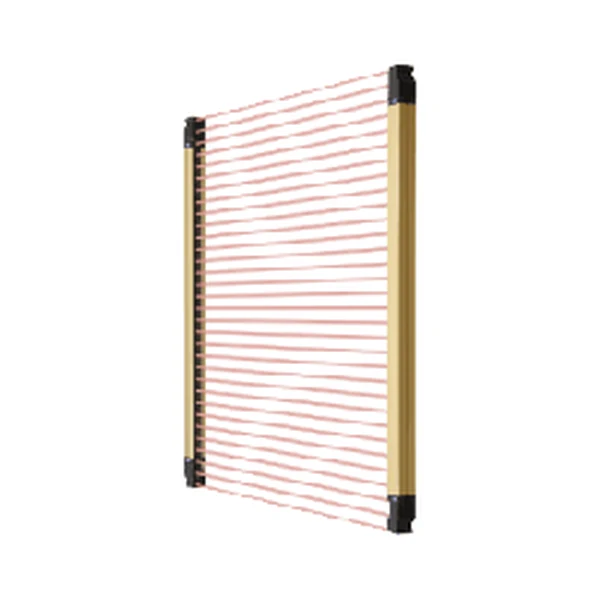 PANASONICSF4D-HType 4 safety light curtain, PL e / SIL 3
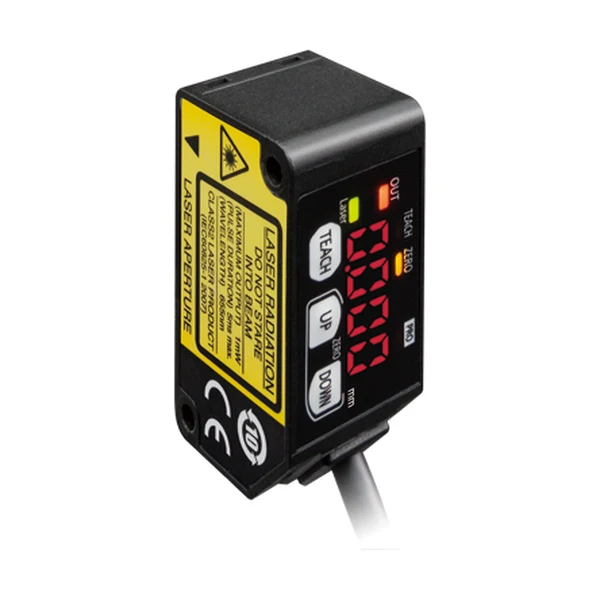 PANASONICHG-C1100CMOS laser distance sensor, ±35 mm
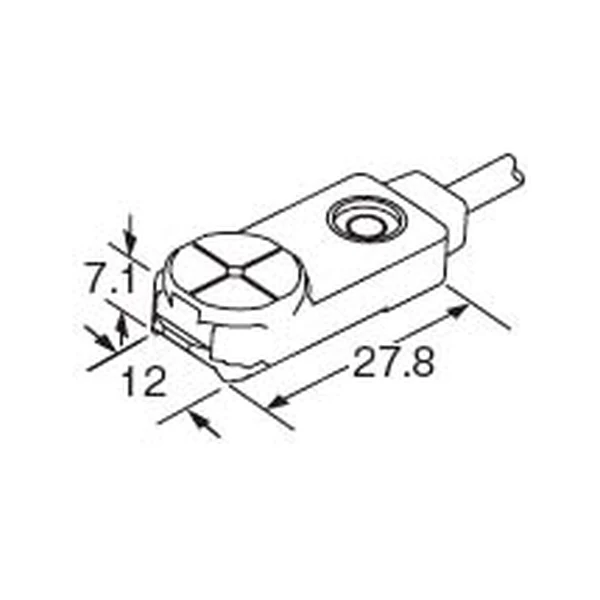 PANASONICGX-F12Rectangular inductive sensor, IP68G
14. Sensors on robot arm and end-effector
In OMRON photoelectric sensor application precautions, it is emphasized that bending-resistant cable models (robot cables) should be preferred when a sensor is mounted on continuously moving mechanical parts such as a robot hand. These manuals recommend that the bending radius for robot cables should be at least 5 times the cable outer diameter, reminding that standard or robot cables must not be bent at temperatures of 0 °C and below. Among the E3Z series photoelectric sensor accessories, M8 connector cables with model code XS3F-M421-402-R are offered with options for 2 m and 5 m lengths, straight and right-angle ’vibration-resistant robot cables’.
In the TELEMECANIQUE OsiSense XU photoelectric catalog, application areas for plastic fiber optic amplifiers include high-vibration environments such as robot arms, as well as part presence and color mark detection in assembly and packaging machines, while the XUYAFPCO946S model is listed as a reference with teach mode and M8 connector, and TELEMECANIQUE is also listed among primary robotic applications in inductive and capacitive sensor families.
Despite housing a built-in controller, the PANASONIC HL-G1 laser sensor is easily mounted on moving elements such as slides and robot arms thanks to its compact dimensions and resin body weighing approximately 70 g, supported by a standard flexible cable. The application areas of the PANASONIC HG-C sensor prominently feature height control of parallel link robots as well as height adjustments of dispenser and placement heads. The HG-C1000 model in the PANASONIC packaging sensor guide presents an ideal structure for mounting on robot arms with its small, lightweight body capable of detecting boxes regardless of object color. While the compact-bodied FX-250 fiber amplifier can be easily installed on robot hands and narrow-spaced equipment, the HG-F1 series performs workpiece delivery, stack count verification, and detection tasks from outside the operating area of the robot arm in transfer robot applications.
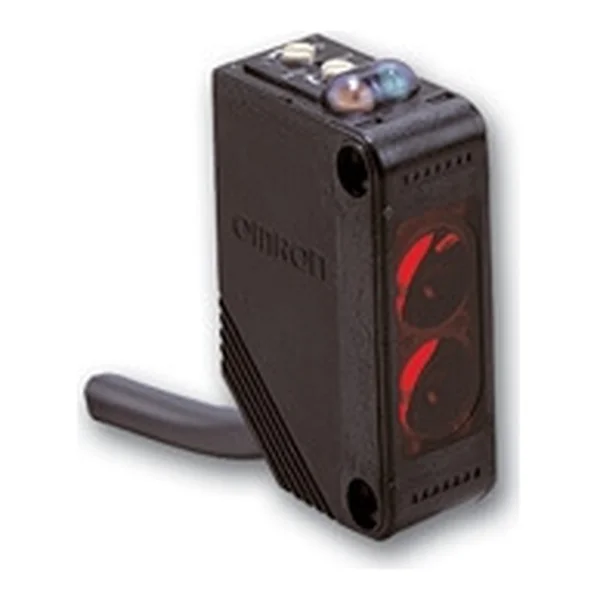 OMRONE3Z-T81-M1J-0-3ME3Z through-beam sensor, M12 pigtail
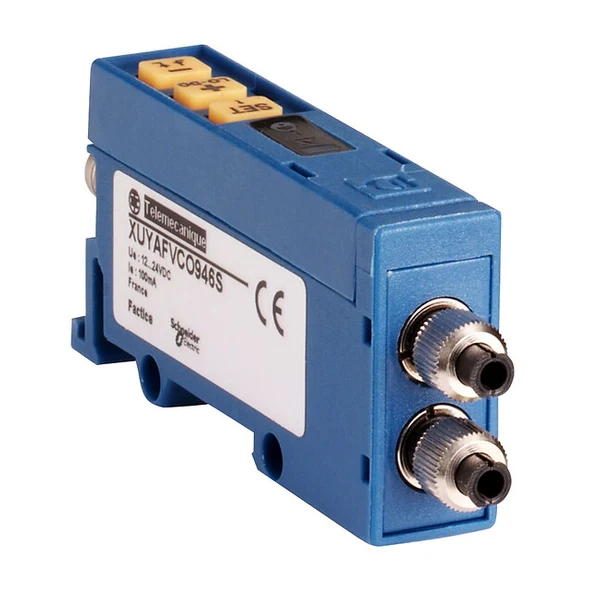 TELEMECANIQUEXUYPlastic fiber amplifier, M8
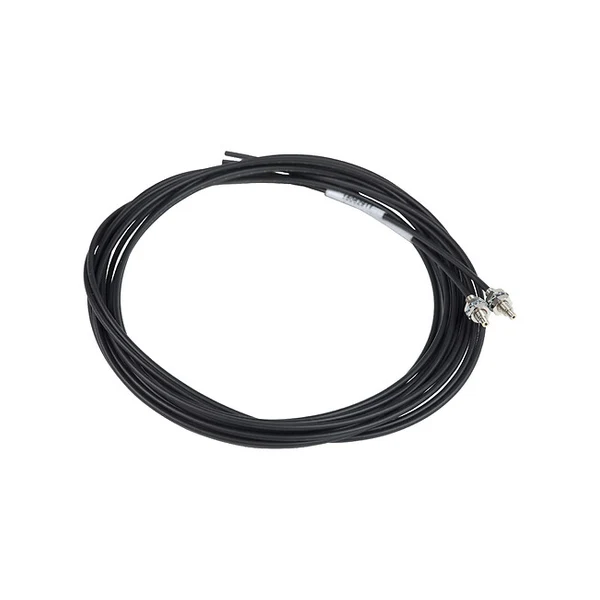 TELEMECANIQUEXUF through-beamThrough-beam plastic fiber
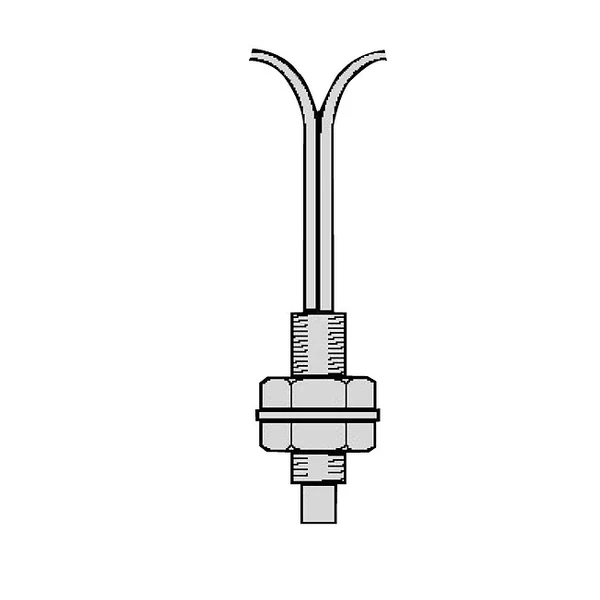 TELEMECANIQUEXUF diffuse-reflectiveDiffuse-reflective plastic fiber
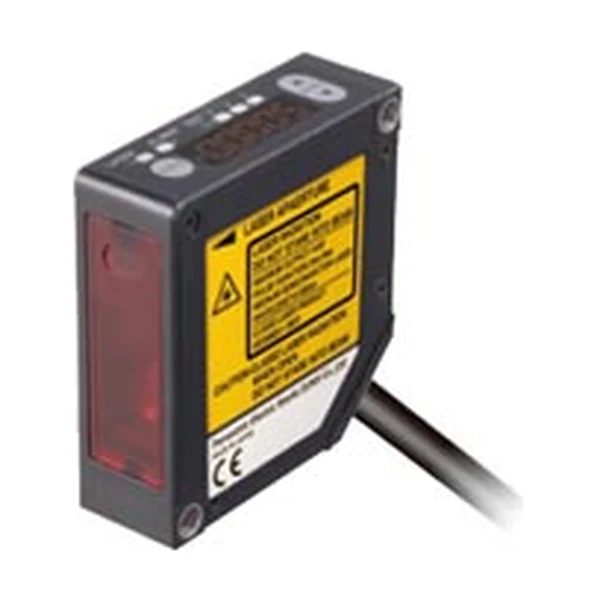 PANASONICHL-G105Laser distance sensor with built-in controllerPANASONICHG-C1030CMOS laser distance sensor, ±5 mm
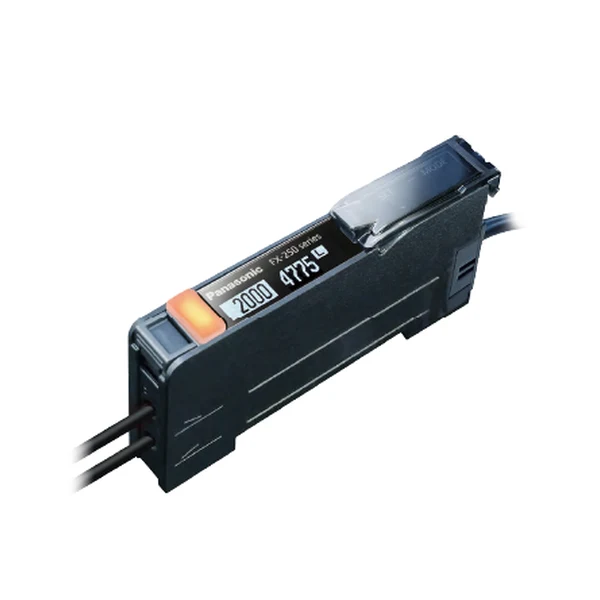 PANASONICFX-250Compact fiber amplifier
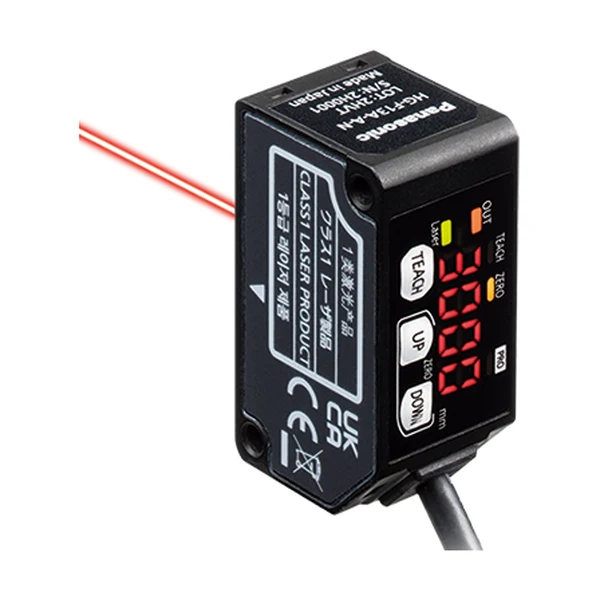 PANASONICHG-F13A-AHG-F1 series position sensor
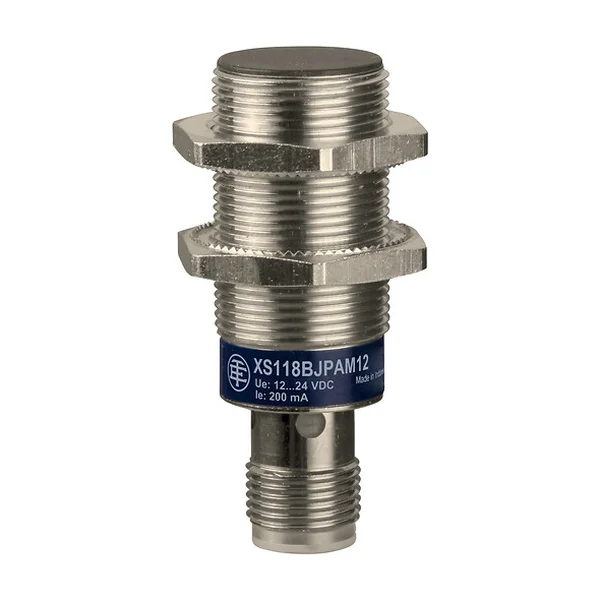 TELEMECANIQUEXS618B1PAM12Inductive proximity sensor, M18, flush mountable, Sn 8 mm
15. Spatter protection in welding cell
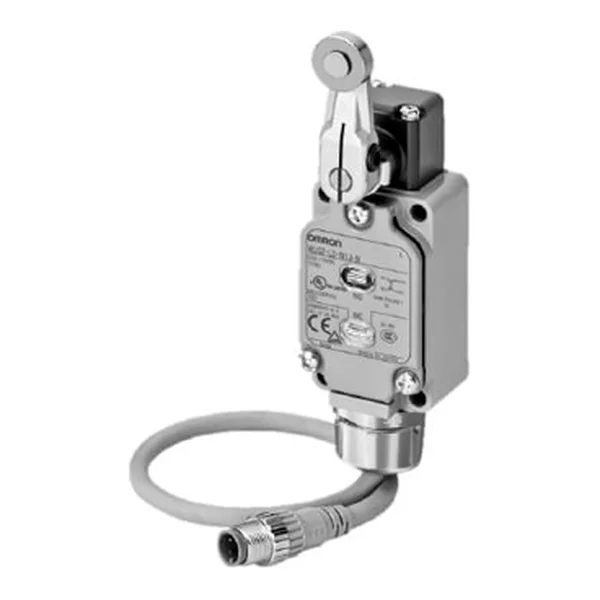
Spatter-prevention models such as WLCA2-LDS-N in the OMRON WL-N limit switch family are recommended for providing sensing in arc welding lines with heavy spatter exposure. The spatter-resistant material construction used in these models prevents failures that zinc dust released during the welding process could cause in mechanical components.
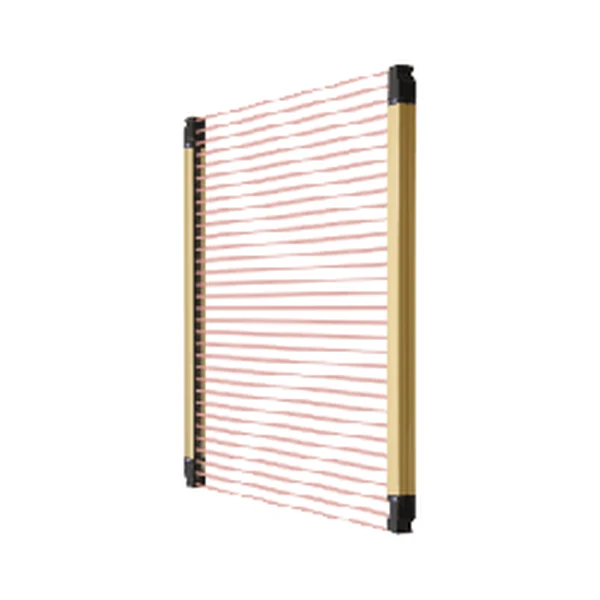
On the PANASONIC side, the SF4D safety light curtain is offered, meeting Type 4, PL e, and SIL 3 safety standards, and capable of being connected in series up to 5 units (1 main and 4 sub-units). The front protection cover developed for the SF4D series protects the light curtain’s sensing surface from flying objects such as welding spatter, while the use of the cover reduces the operating distance of the system.
16. AGV, AMR and mobile robots
The OMRON OS32C safety laser scanner scans the travel path of AGV systems, ensuring that an audible warning is given upon violation of the 1st warning zone, the vehicle slows down in the 2nd warning zone, and two safety outputs bring the vehicle to a complete stop when entering the safety zone. Up to 70 zone combinations, each consisting of one safety zone and two warning zones, can be defined in the OS32C model; with a 270° scanning angle, the safety zone radius can be set up to 4 m and the warning zones up to a distance of 15 m. In a typical AGV installation, 4 zone sets are used—fast and slow for forward motion, and one each for left and right turns; when two OS32C units are placed at corner points, three or four directions can be protected. According to OMRON Europe, the small dimensions, lightweight structure, and low power consumption of the OS32C device contribute to extending the operating time of battery-powered mobile systems, whereas PANASONIC states that its own safety light curtains should not be used on mobile equipment such as AGVs.
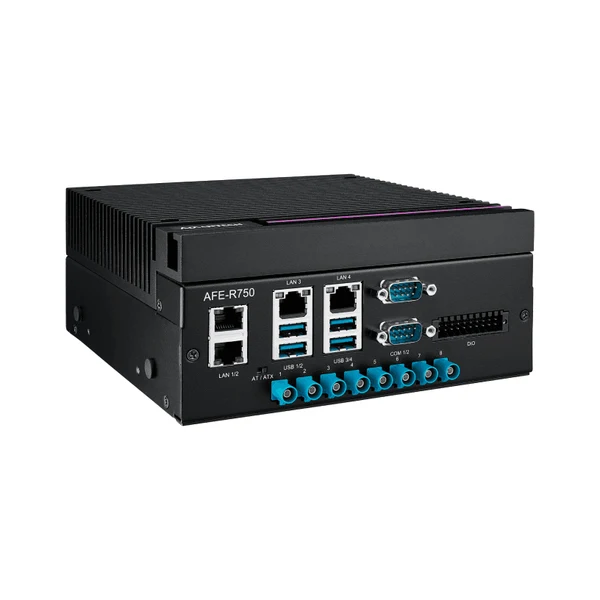
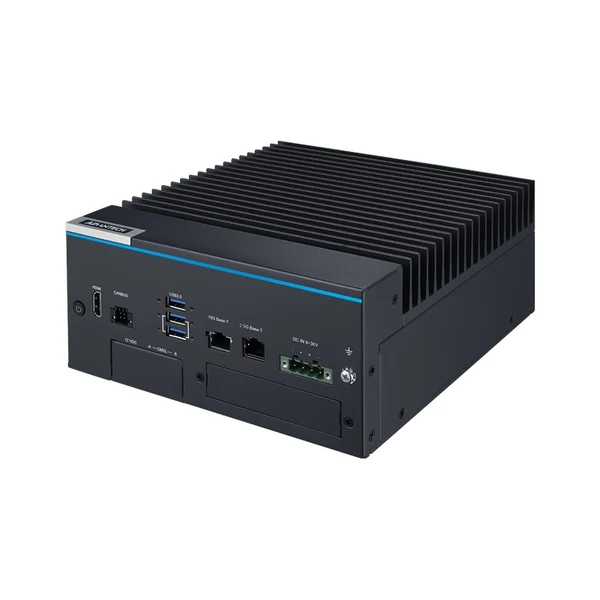
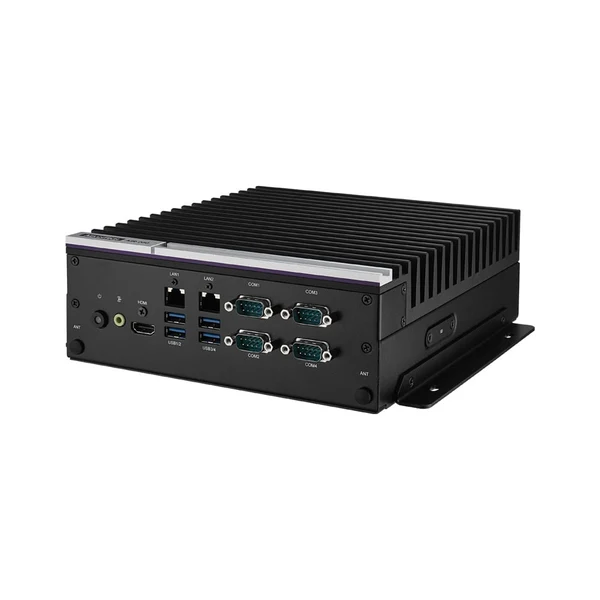
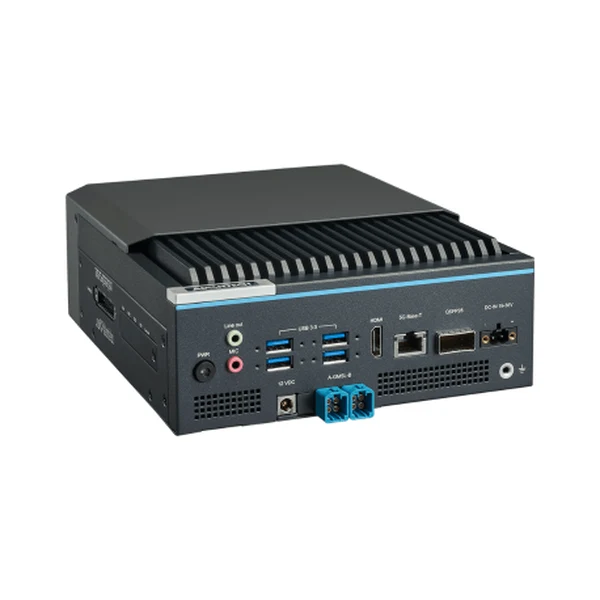
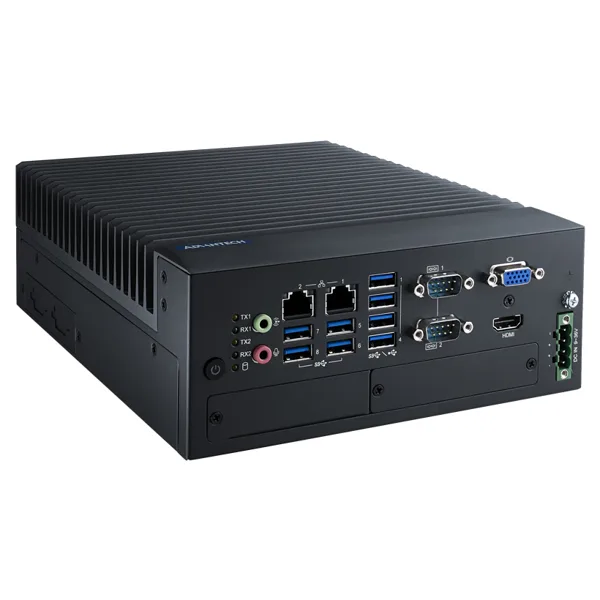
In its LogiMAT 2026 announcement, ADVANTECH states that it offers computing infrastructure platforms rather than producing end machines for AGVs, AMRs, autonomous forklifts, and mobile manipulator robots (MMRs). Offered by the company as an AMR control system, the AFE-R750 supports the Advantech Robotic Suite software with up to 275 TOPS of AI power and AMR-specific 4 × GbE, 2 × COM, DIO, and CAN FD interfaces. While the NVIDIA Nova Orin integrated MIC-732-AO system aims at transitioning from AGV to AMR architecture by providing 360° vision and 3D LiDAR support with 8 GMSL FAKRA camera inputs, the MIC-733-AO model delivers a GMSL camera solution for mobile robots in warehouses in collaboration with e-con Systems. Used in delivery robots distributing packages in Singapore, the ADVANTECH AIR-030 edge AI system features a Jetson AGX Orin processor, 15–50 W adjustable power consumption, connections for cameras, 3D LiDAR, and motion control sensors, and operates between −10 and 60 °C.
17. Humanoid robots, Jetson Thor, and ROS2 software
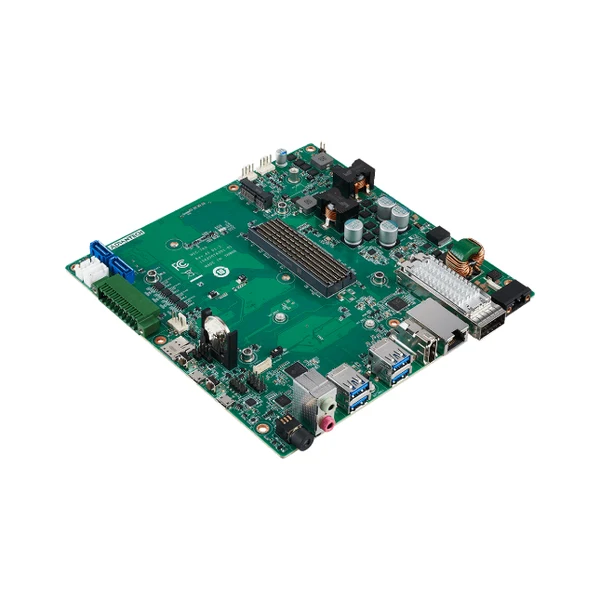
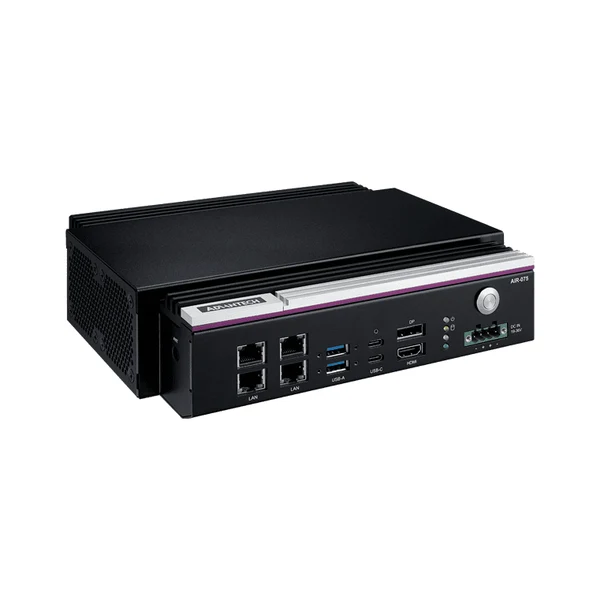
Based on Jetson Thor, the ADVANTECH MIC-742-AT Robotic Development Kit is positioned in humanoid robots, AMR systems, and surgical robotics with AI performance reaching 2,070 FP4 TFLOPS, 128 GB LPDDR5X memory, 150 W system power, and an 8-channel GMSL 2.0 connector. In the demonstration showcased in collaboration with Orbbec at the iREX 2025 exhibition, an accelerated humanoid robot application was introduced using the MIC-742-AT unit and an Orbbec Gemini 330 3D camera. Offered as a board-level AI brain, the MIB-742-AT model provides closed-loop control in humanoid and mobile manipulator robots, while the AIR-075 platform announced in July 2026 supports multimodal decision-making processes in robotics and factory automation with its 4 × 10GbE connectivity. Additionally, verified in collaboration with MOV.AI, the ADVANTECH MIC-770 V3 system functions in wafer box transport and robot arm operations through machine vision and autonomous navigation capabilities provided via an MXM GPU card.
Introduced in May 2026 by ADVANTECH and Aeolus Robotics, the humanoid service robot solution uses the AFE-R750 system as a central computing unit to combine NVIDIA Isaac ROS, Advantech Robotic Suite, and Aeolus software into a single structure. Targeting natural language interaction, robot arm control, and autonomous operation at the edge, the Robotic Suite package offered in this system shortens software integration times by providing ROS2 and Autoware toolsets, optimized AI inference SDKs, and GMSL camera ROS nodes. With the integration of Basler ace 2 GMSL cameras into the AFE-R750 platform, developers can access camera data directly via ROS nodes; similarly, the MIC-732-AO model provides NVIDIA Isaac ROS2 support. The ADVANTECH Robotics Business Unit delivers computing, sensor connectivity, and software components to the industry in pre-validated packages for autonomous robots, AMRs, robot arms, and commercial drones.
Which product for which requirement?
| Requirement | Product group |
|---|---|
| 3D robot guidance, bin picking, feeding | HIKROBOT RoboScan, RoboScan Ultra |
| Depalletizing, palletizing, parcel feeding | HIKROBOT MV-RS-Base-L, MV-DB1300A V2.0, MV-DB500S-S |
| On-robot inspection, 2D positioning | HIKROBOT SC3000, CS cameras, VisionMaster (VM) |
| Robot cell perimeter and entry | OMRON OS32C / F3SG-SR, TELEMECANIQUE XUSL4 |
| Robot gate and zone monitoring | OMRON G9SX / D40A / D41G, TELEMECANIQUE XCSRC |
| Robot teaching and maintenance | OMRON A4EG, PANASONIC SG-C1 |
| Cobot and palletizing cell | OMRON OS32C / G9SE / F3SG-RA, TELEMECANIQUE XUSL4, PANASONIC SF4D |
| Sensing and measurement on robot arm and end-effector | PANASONIC HL-G1 / HG-C / FX-250, TELEMECANIQUE XUY fiber |
| AGV / AMR safety and control | OMRON OS32C, ADVANTECH AFE-R750 / MIC-732-AO |
| Humanoid and next-generation robot computer | ADVANTECH MIC-742-AT / MIB-742-AT |
Source: HIKROBOT product data, case studies, and news; OMRON safety component selection guide, G9SX brochure, A4EG datasheet, OS32C manual, and robot palletizer solution guide; TELEMECANIQUE XCSR and XUSL user manuals, XU and XS catalogs; PANASONIC product pages and packaging sensor guide; ADVANTECH product pages and announcements. Images belong to HIKROBOT; the robots in the images are not in the FST product range. Risk assessment and the design of safety functions in robot safety are conducted on a project-specific basis.
Tell us about your application
Share the part type and rack layout, robot brand, cycle time, cell layout, and safety requirements; let’s select the 3D camera, guidance software, safety, and control components together. In projects in this industry, FST Teknoloji delivers turnkey machine vision and system integration solutions with HIKROBOT hardware.