
Energy & Process Plants
HIKROBOT line scan and area scan cameras, 3D laser profile sensors, SWIR cameras, and code readers are used for the inspection, 3D measurement, and traceability of production steps ranging from lithium battery electrode foil to top cover welding, and from micro-cracks in solar cells to module string welding. OMRON, PANASONIC, TELEMECANIQUE, and ADVANTECH products for switchboard and transformer temperature, sensing in hot and chemical environments, position and level monitoring under harsh conditions, rotating equipment in refineries, and energy storage (BESS) in energy, water, and process plants are also explained on this page with the manufacturers’ own examples.
What do machine vision and sensors solve in energy and process plants?
In lithium battery and solar panel manufacturing, the value of the product increases at every step from electrode foil to module welding; therefore, the defect must be caught at the step where it occurs, measurements must be repeatable, and every cell or wafer must be traceable. HIKROBOT states that it offers machine vision solutions covering the process from raw material inspection to electrode production, cell assembly, and module and PACK stages for lithium batteries, as well as camera, code reader, and 3D profile sensor solutions covering wafer, cell, and module string welding steps for solar panels. In energy, water, and process plants, however, the challenge is mostly in the field: switchboard/switchgear and transformer temperatures, tank/storage levels, sensors operating in hot and chemical environments, switches in harsh conditions, and vibration of rotating equipment; the second section of this page explains OMRON, PANASONIC, TELEMECANIQUE, and ADVANTECH products from this perspective through the manufacturers’ own examples.
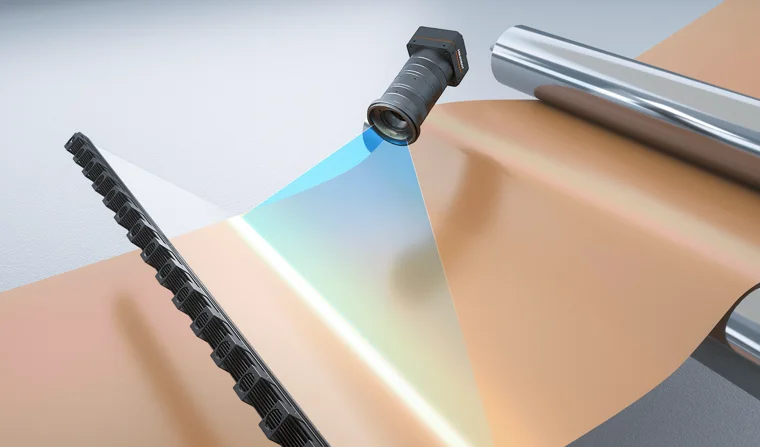
1. Lithium battery electrode and foil inspection
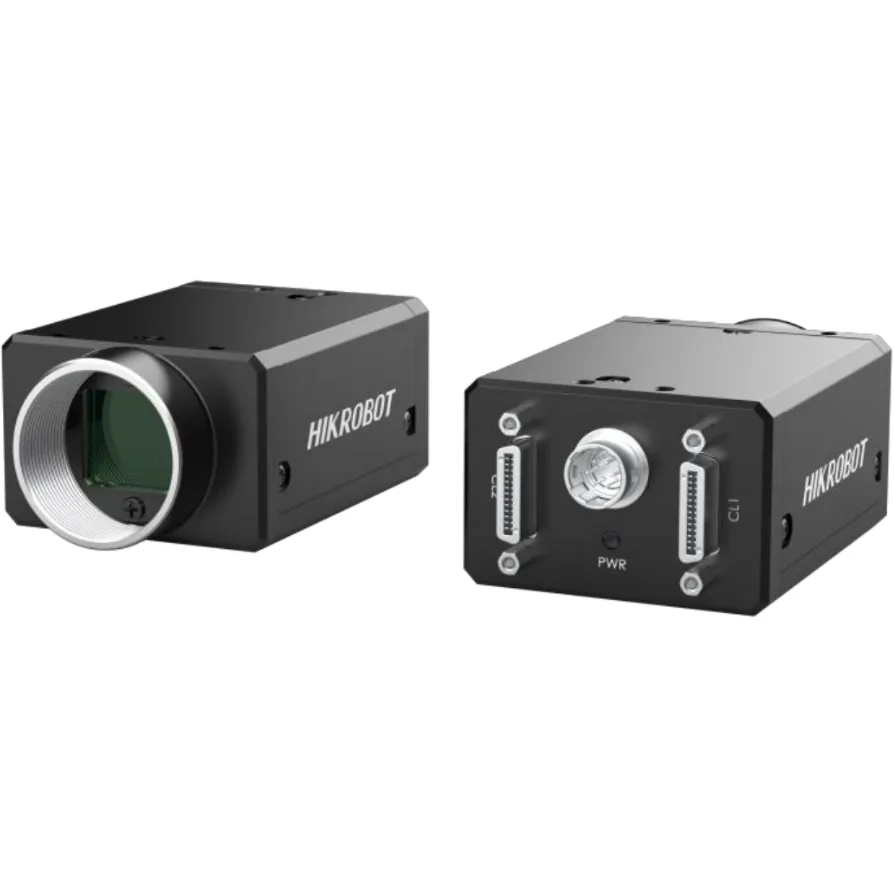
In copper foil manufacturing and slitting machines, HIKROBOT catches defects on the foil surface online—such as bumps/pits, wrinkles, black/white spots, and fish scale patterns—using a color line scan camera and specialized long light, generating a defect map; the solution also includes reporting and uploading to MES. In the subsequent coating machine solution, coating width, uncoated edge width, A/B side alignment offset, and surface defects are inspected with a monochrome line scan camera, with HIKROBOT specifying inspection at a speed of 240 m/min for this process. Following the slitting operation, aluminum electrode burrs are inspected at a speed of 2,500 mm/s, where HIKROBOT deploys the 21 MP specialized camera from the case study, which operates above 400 fps and catches burrs over 7 µm with a 2.25 µm pixel value.
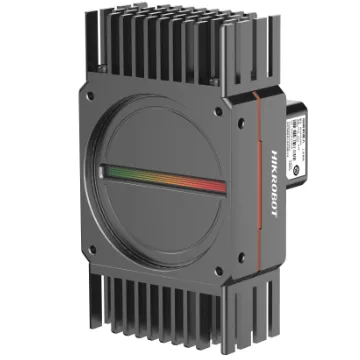
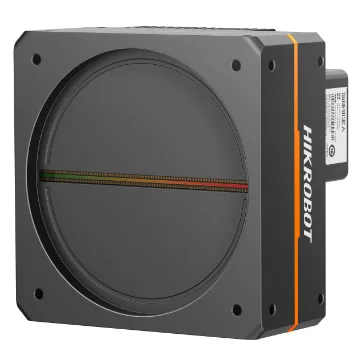
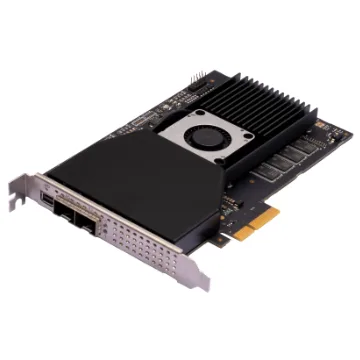
For thin film and lithium battery inspection, HIKROBOT introduces 8K monochrome and 16K true color X over Fiber line scan cameras alongside the MV-GS1002F card as solutions providing bandwidth up to 20 Gbps. The MV-CL162-91F2M(2.0) model in this product family features a 16384 × 2 resolution and 3.5 µm pixel structure, as well as dual XoF fiber connectors offering 20 GB bandwidth. The camera reaches line speeds of up to 120 kHz in 2-link mode.
2. Cell winding and stacking alignment
During the power battery cell manufacturing phase, HIKROBOT offers standard vision solutions for cutting-stacking, winding, electrolyte filling, and cell insertion machines, while developing 10 standard solutions for Z-type and thermal composite stacking processes. At the alignment station of the winding machine operating on the production line, the single-flow processing time is completed within 30 ms, and the system operates to meet winding speeds of 2.5 m/s and above. In order to ensure proper positioning during winding steps, HIKROBOT offers four-camera and two-camera alignment options tailored to different line requirements.
While an 8K or 16K line scan camera is used for electrode defects in the slitting-stacking machine, the smallest defect detected is 0.2 mm² in size; cutting positioning and dimensional measurement are achieved at ≤ ±0.05 mm, while the stacking correction positioning value is ±0.1 mm. In the appearance inspection stage before and after cell PET film coating, the 8K 2.5D system (0.028 mm pixel) and 20 MP area camera (0.03 mm pixel) in the case study function together. In this case study, HIKROBOT reports a missed detection rate of 0% and a false alarm rate below 0.5%.
| HIKROBOT case study value | Value |
|---|---|
| Winding alignment: single-stream processing time | Within 30 ms; winding speed of 2.5 m/s and above |
| Cutting-stacking: smallest defect | 0.2 mm² |
| Cutting positioning and dimension measurement | ≤ ±0.05 mm |
| Stack correction positioning | ±0.1 mm |
Values are from case study and product data published by HIKROBOT; some cameras in the case studies are custom models. Selection for your own line is made on a project basis.
3. Cell top cover welding and 3D measurement
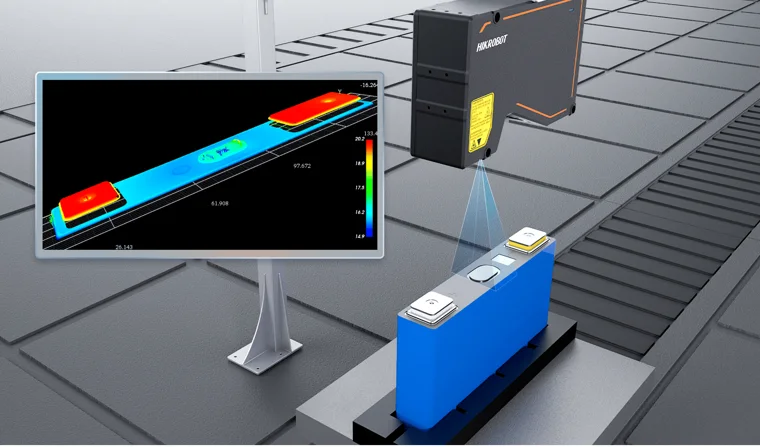
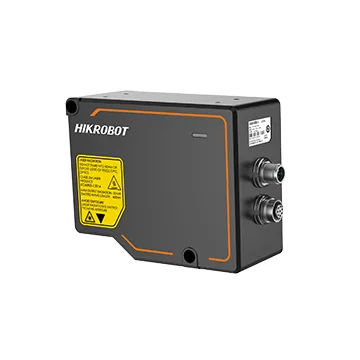
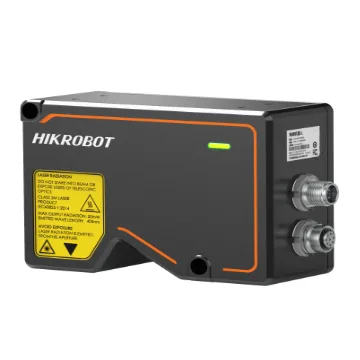
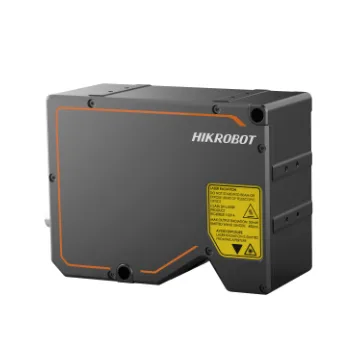
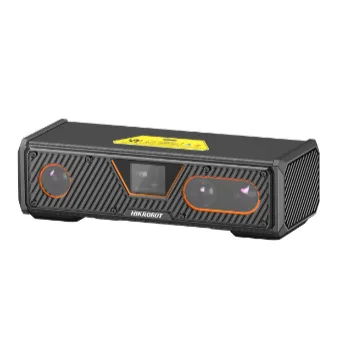
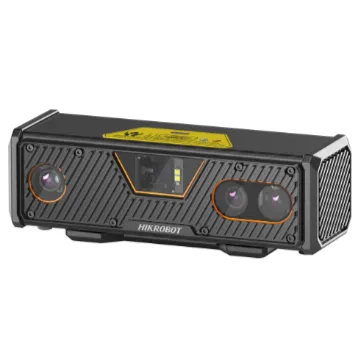
In prismatic cell top cover perimeter weld inspection, HIKROBOT inspects four edges within 2.5 s using the 3D laser profile sensor in the case study to catch protrusions/pits over 0.5 mm and continuous streak defects over 0.2 mm. Cell top cover flatness and pole height are measured with repeatability of < 0.01 mm, and positive/negative pole coplanarity with repeatability of < 1°, while a single profile sensor is mounted vertically in the case study and images are processed with VM software. In the lithium battery demonstration, HIKROBOT inspects top cover flatness as well as blowout points, pits, and broken welds on the perimeter weld using two DP3060 units, while inspecting sealing nail defects with one DP3020 unit. Furthermore, in the three-camera 3D solution showcased at CIBF 2026, an anti-reflection algorithm is used where the DP4020 images the sealing nail and the DP4060 images top cover flatness.
The MV-DP3060-01P V2.0 at FST offers a 27 mm Z measurement range, 0.56 µm Z repeatability, a 405 nm laser component, and a 46.7 kHz scan speed. The MV-DP4060-01P reaches a speed of 49 kHz in ROI mode alongside a 21 mm Z range and 0.36 µm repeatability value.
| Model | Z measurement range | Z repeatability | Scanning |
|---|---|---|---|
| MV-DP3060-01P V2.0 | 27 mm | 0.56 µm | 46.7 kHz, 405 nm laser |
| MV-DP4060-01P | 21 mm | 0.36 µm | 49 kHz in ROI mode |
4. 3D feeding and welding guidance in module and pack lines
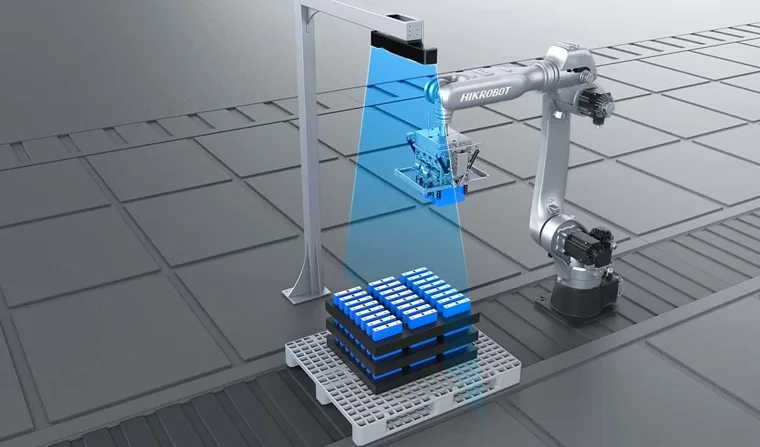
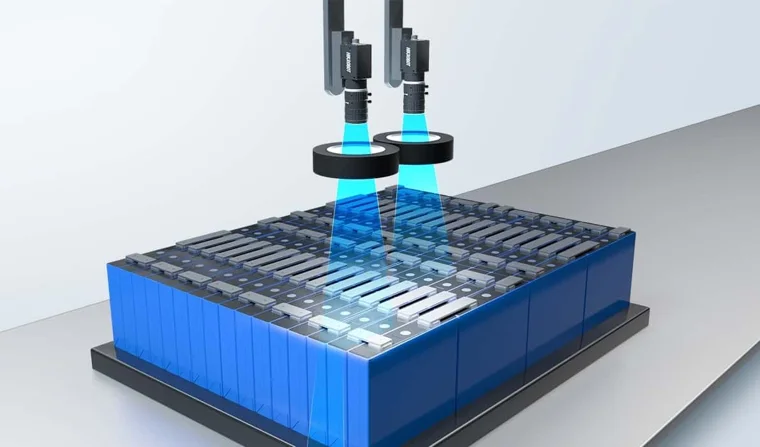
In module and PACK assembly processes, HIKROBOT offers solutions for cell 3D feeding, appearance, gluing, end plate measurement, module handling, glue guiding, pole addressing, pole laser cleaning, BSB/CCS welding guiding, and post-weld inspection. In the cell feeding case study, the 3D camera above the pallet places the cell with a positioning accuracy of ±1.5 mm and recognizes the pole direction while detecting missing or tipped-over cells, targeting a robot cycle time of < 2 s per cell. At the CIBF 2026 exhibition, HIKROBOT introduces an anti-reflection galvanometer (laser scanning) 3D camera and the no-code RobotPilot software for PACK cell feeding operations.
In the BSB/CCS welding guidance system, positioning of ±0.05 mm is achieved while two 20 MP monochrome area scan cameras are used for addressing and a single one for welding, and the structure supports gantry XYZ and 6-axis robot systems. In the 2D/3D inspection performed after the welding step is completed, the profile sensor and area scan camera are installed side by side to detect missing welds, disconnected welds, burn-throughs, collapses, and displacement defects, and weld diameter and width are measured.
5. Solar cell and silicon wafer inspection
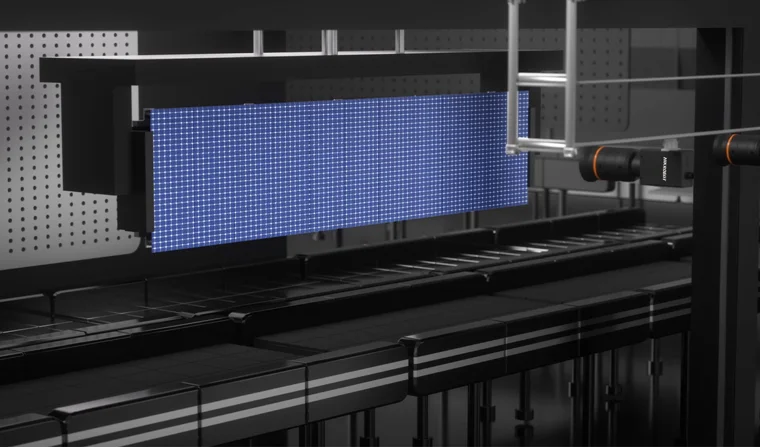
For hidden micro-crack inspection in solar cell manufacturing, HIKROBOT achieves detection down to ≥ 0.5 mm for cracks, edge breakages, and missing corner defects using a 4K line scan camera, infrared lens, and backlighting with a near-infrared laser, recording the crack location of each wafer. In post-coating and finished cell PL inspection, a 50 W 808 nm laser distinguishes approximately 35 defect types, while software processing time is measured at ≤ 200 ms and field of view reaches up to 270 mm. In the final AOI stage, a monochrome camera captures 3 images under red/green/blue light and converts them into a color image; through color classification, a detection level of ≥ 0.05 mm is specified for defects such as broken fingers. In wafer thickness measurement, six DP3020 units operate opposingly to maintain average thickness repeatability at ≤ 0.5 µm, TTV value at ≤ 1.5 µm, and wire mark measurement at ≤ 2 µm.
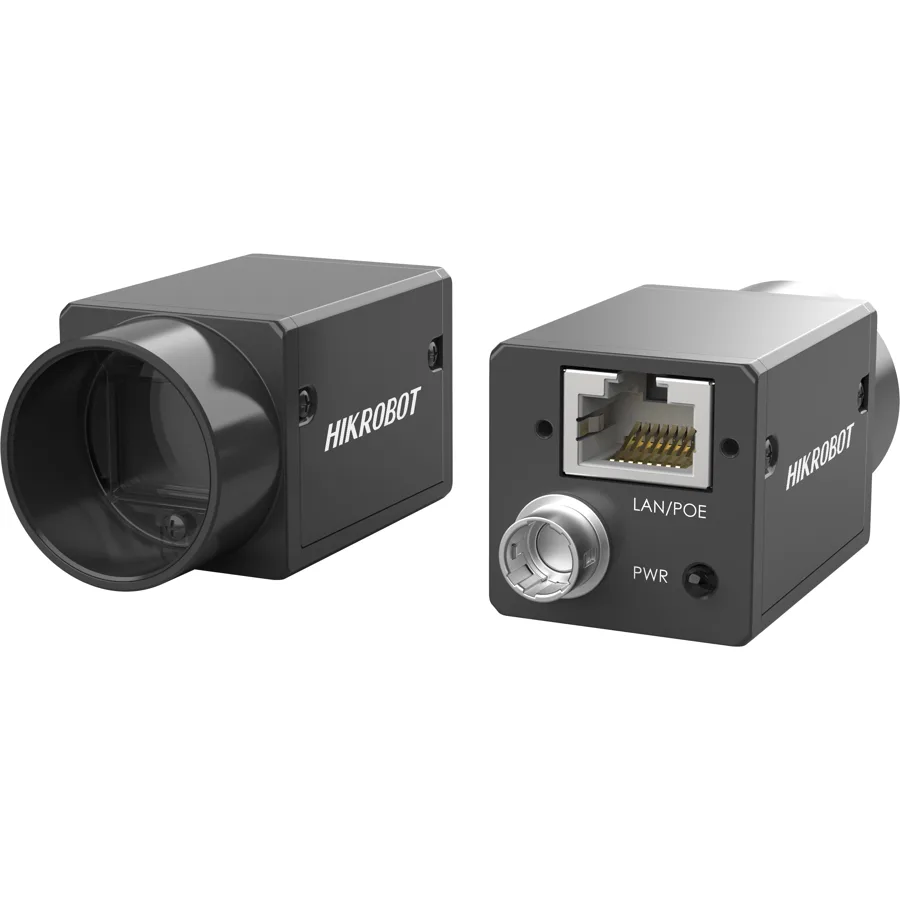
HIKROBOT recommends SWIR cameras with InGaAs sensors and TEC active cooling for micro-cracks in silicon wafers, stating that these cameras are suitable for silicon wafer and photovoltaic cell inspection, material sorting, and moisture content detection. The MV-CI013-GS-TF model from this series features a Sony IMX990 sensor with 1280 × 1024 resolution, 5 µm pixels, 0.4–1.7 µm spectral imaging range, TEC and fan cooling components, and a GigE interface. The MV-CI050-Y1S-NN model offers a Sony IMX992 InGaAs global shutter sensor with 2592 × 2056 resolution, a 3.45 µm pixel structure, and a CXP-12 connection standard.
| HIKROBOT case study value | Value |
|---|---|
| Hidden crack, edge chipping, missing corner | ≥ 0.5 mm |
| PL inspection | 50 W 808 nm laser, approximately 35 defect types, ≤ 200 ms |
| Final AOI color classification | ≥ 0.05 mm on broken finger |
| Wafer thickness (six DP3020) | Repeatability ≤ 0.5 µm, TTV ≤ 1.5 µm |
Values are from case study and product data published by HIKROBOT; some cameras in the case studies are custom models. Selection for your own line is made on a project basis.
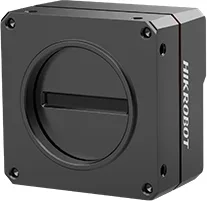 HIKROBOTCL Series Line Scan CameraCL line scan cameras (2K–16K)
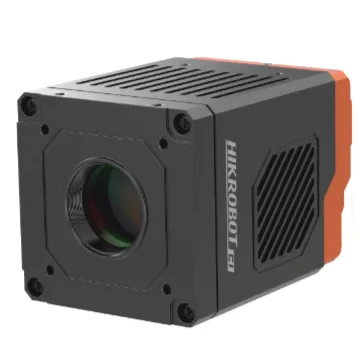 HIKROBOTMV-CI013-GS-TF1.3 MP InGaAs SWIR, TEC cooled
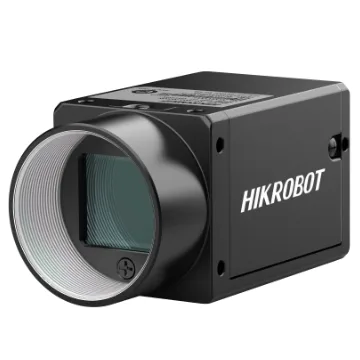 HIKROBOTMV-CI050-Y1S-NN5 MP InGaAs SWIR, CXP-12
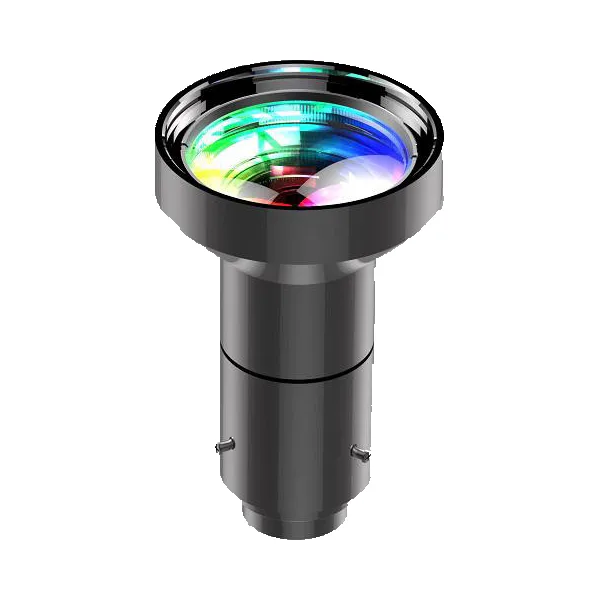 HIKROBOTSWIR LensSWIR/NIR lenses (900–1700 nm)
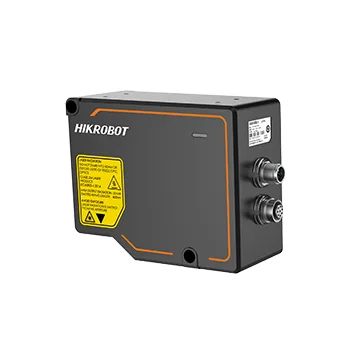 HIKROBOTMV-DP3020-01P V2.0Short-range 3D profile sensor
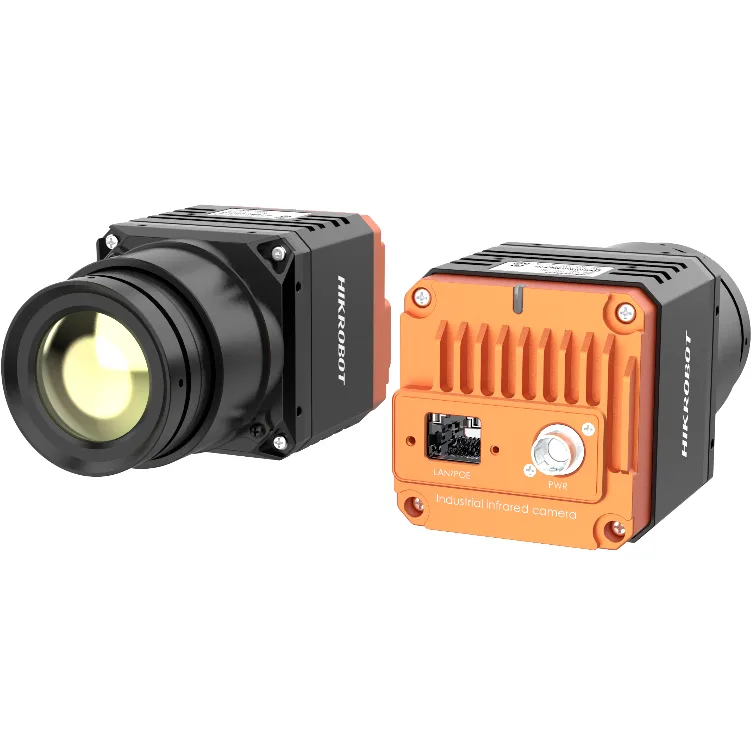 HIKROBOTCI Series SWIR and Thermal CameraCI series SWIR and thermal cameras
6. Solar panel module line: string welding, EL, and junction box
In visual inspection after string welding, defects such as displaced welding, missing ribbon, short circuit, edge breakage, and spacing errors are detected, with deep learning accuracy specified above 99.5% using a 4K GigE color camera on the front side, a 4K GigE monochrome camera on the back side, and LF large-format FA lenses. In electroluminescence (EL) inspection, hidden micro-cracks, fractures, dark spots, short circuits, broken fingers, and dead cell conditions in strings are detected from brightness contrast, where HIKROBOT deploys the 2.3 MP specialized infrared-sensitive area camera featured in the case study at this stage. In TOPCon module manufacturing, 4 units of 8K color and 3 units of 4K color line scan cameras combine in a single station for general inspection and busbar inspection, measuring creepage distance and string/cell spacing.
In pre- and post-welding inspection of junction boxes, 12 MP and 20 MP GigE color cameras and KF series vibration-resistant lenses are used while the software interface displays the final process, result, and PLC signal interaction. On the SNEC 2025 platform, HIKROBOT states that a cycle time of under 500 ms is achieved for the mentioned junction box inspection step. In the junction box random picking operation, the galvanometer laser 3D camera keeps the vision processing time for the robot at ≤ 3 s/piece and delivers a picking success rate of ≥ 98%.
7. Code reading for cell, wafer, and module traceability
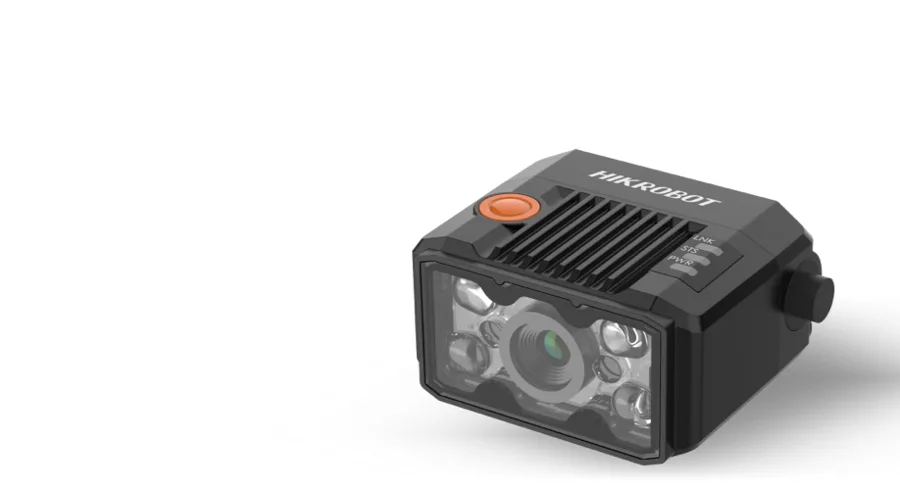
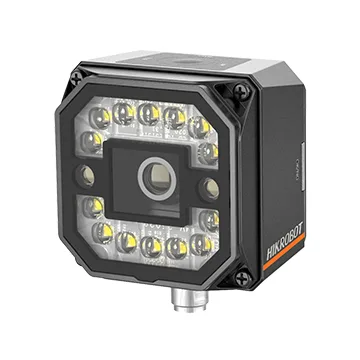
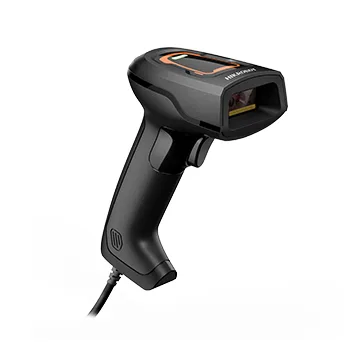
For tracking DM codes with 0.6 mm sides laser-etched onto solar cell silicon wafers, HIKROBOT offers a compact code accessory solution that fits into tight spaces without requiring a telecentric lens or external lighting. In the photovoltaic, 3C, and LCD panel sectors, 8 µm codes and degraded label codes behind the busbar on the PV module line are read unaffected by frosted glass patterns or EVA film variations using the small code accessory from the case study and deep learning algorithms. HIKROBOT recommends the ID3016XM for high-speed lithium battery readings; the 260 g handheld reader showcased at CIBF 2026 also reads battery top cover and blue film codes using tricolor light and an AI algorithm.
Battery line sensors and plant monitoring
Apart from battery and solar panel lines, the daily operation of energy and process plants relies on temperature, level, position, and vibration data; sensors must be correctly selected for hot, chemical, dusty, or hazardous (Ex) areas. OMRON examples are taken from E3X-ZV, ES1B/ES1C, E32, WL-N, and encoder resources and the battery module assembly page; PANASONIC examples are taken from Grid-EYE, HG-S, and fiber catalogs; TELEMECANIQUE examples are taken from the water pumping brochure and XX, XS, and Ex product documents; ADVANTECH examples are taken from refinery, petrochemical, water management, energy storage (BESS), and energy meter case studies.
8. Sensors and cell traceability in battery lines
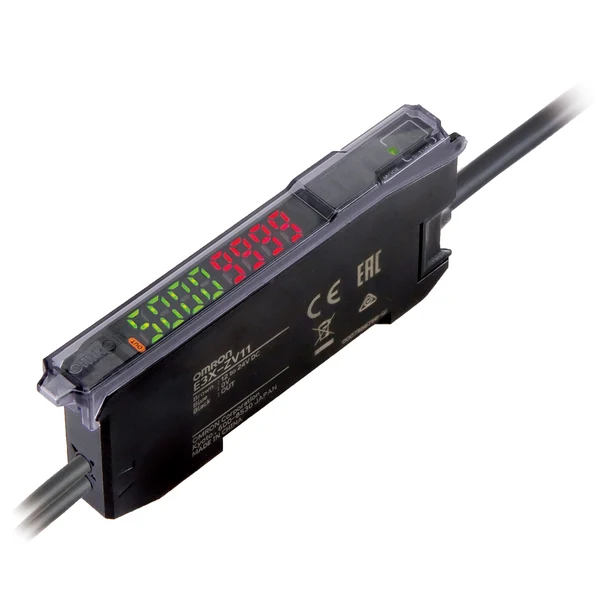
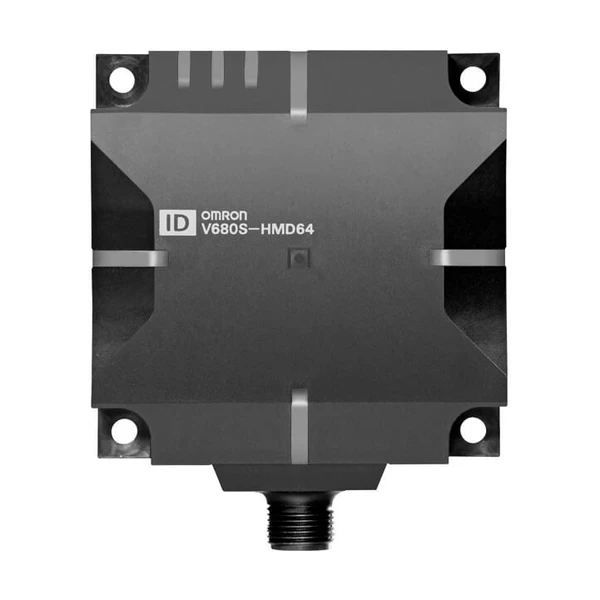
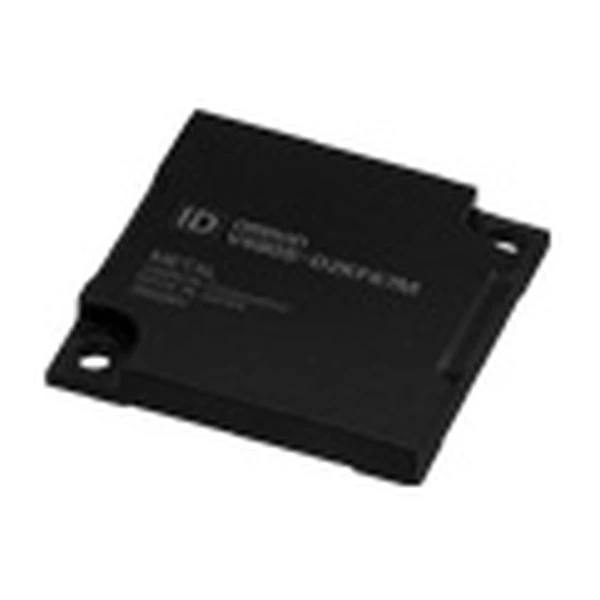
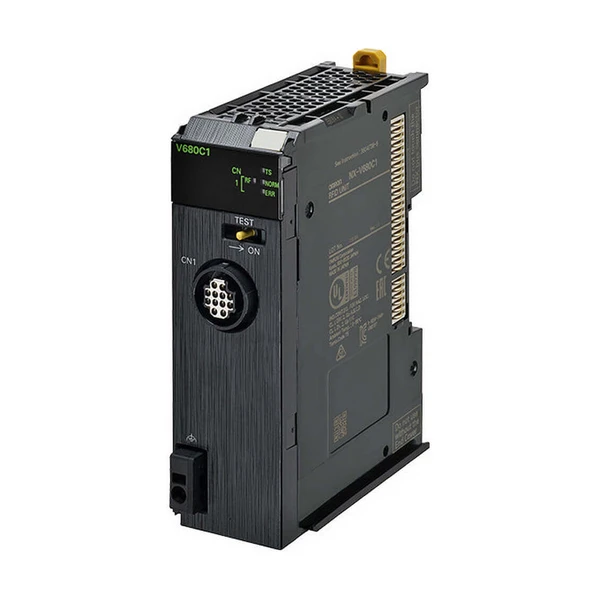
In secondary rechargeable battery manufacturing, fiber optic sensors are extensively used for workpiece presence detection in roller press lines according to OMRON; the E3X-ZV catches sheet splices with a response time of 50 μs in high-speed mode, and according to the manufacturer, splices can theoretically be detected even on a sheet advancing at a speed of 200 m/s with a 10 mm wide electrode. In battery module and pack assembly processes, since capacity differences among cells pose risks of overcharging, overdischarging, and overcurrent in the pack structure, matching cell capacities to align with the protection circuit becomes a critical requirement. OMRON deploys V680/V680S RFID systems to build battery packs from cells with matching capacity; the solution reads and writes cell capacity and characteristic data during production to enable individual product traceability, and according to OMRON’s EV brochure, time and cell capacity are managed via RFID while packs are manufactured from cells of identical capacity using 2D codes.
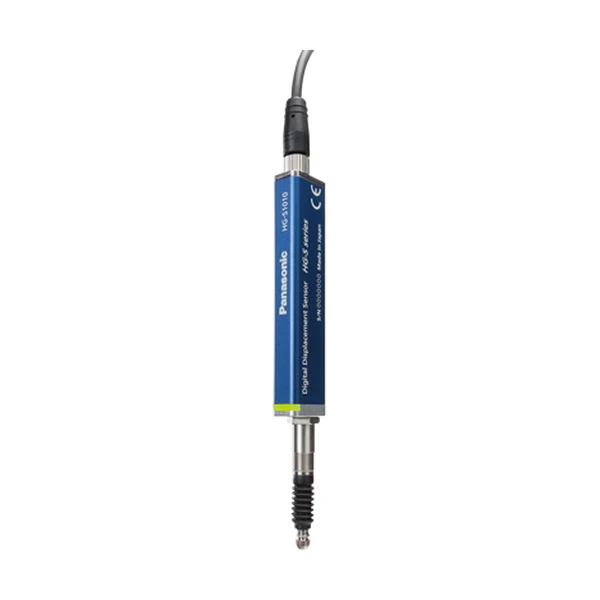
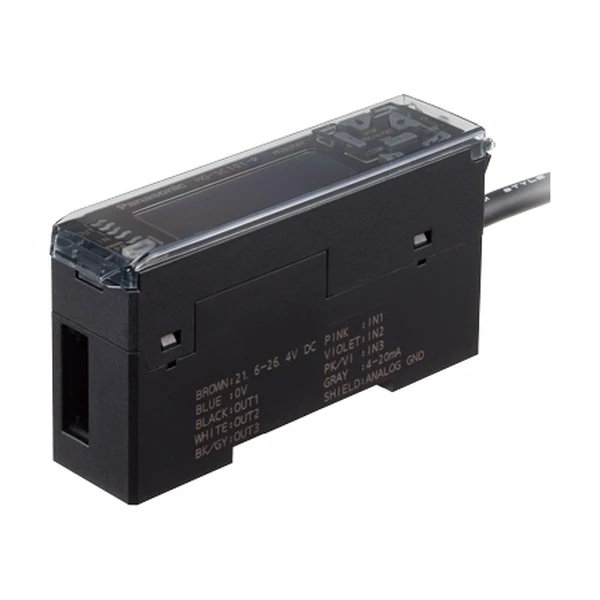
PANASONIC, on the other hand, lists lithium-ion battery flatness measurement as the primary application for the HG-S contact digital displacement sensor; FST offers HG-S1010, HG-S1032, and HG-S1050 heads and the HG-SC controller.
9. Overheating monitoring in switchgear/switchboards, transformers, and circuit breakers
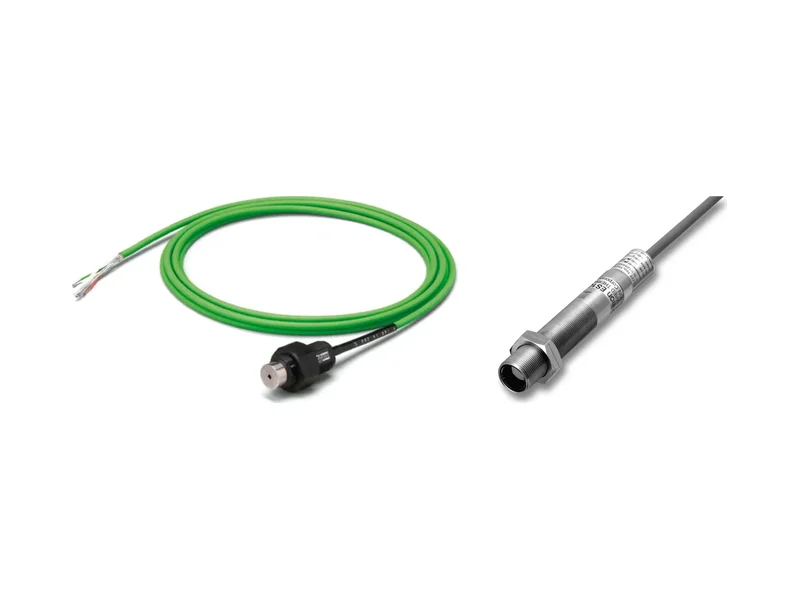
For detecting excessive heat dissipation in high-voltage switchboards, transformers, and bearing lines, OMRON offers the ES1B non-contact temperature sensor model; by detecting temperature changes, the device helps locate faults in the system; according to OMRON, this allows further damage and costs to be prevented. Exhibiting standard K-type thermocouple behavior, the ES1B can operate integrated with external temperature controllers or alarm units, while the OMRON ES1C transfers data to PLCs with a 0–400 °C measurement range, a response time of 100 ms/90%, and a noise-resistant 4–20 mA output. Featuring a stainless steel body and a silicon lens, the ES1C offers IP67-equivalent protection at ambient temperatures up to 70 °C.
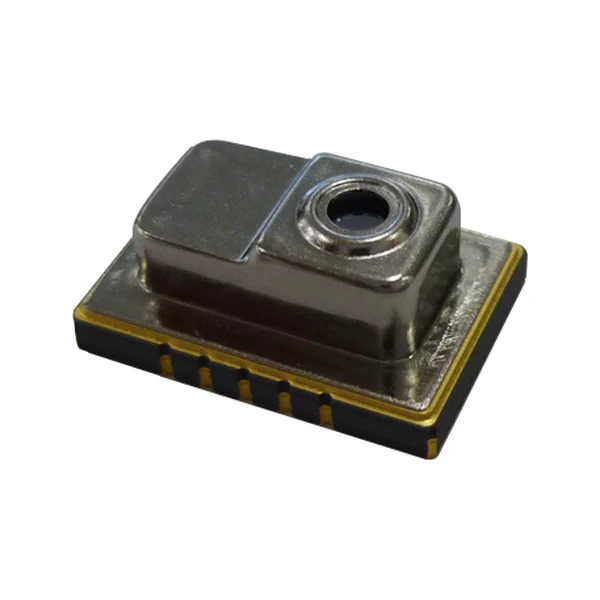
Within the scope of critical temperature monitoring in electrical distribution equipment, the Grid-EYE sensor developed by PANASONIC processes temperature data to trigger alarms in catastrophic events such as overheating circuit breakers. Stating that single-element thermopiles or thermistors are insufficient when temperature monitoring of multiple zones in an area is required, PANASONIC highlights that the Grid-EYE solution provides regional temperature data. The manufacturer notes that the high-performance AMG88xx Grid-EYE series offers sufficient resolution with 64 pixels without generating excessive data, and is recommended for failure prevention in factory automation.
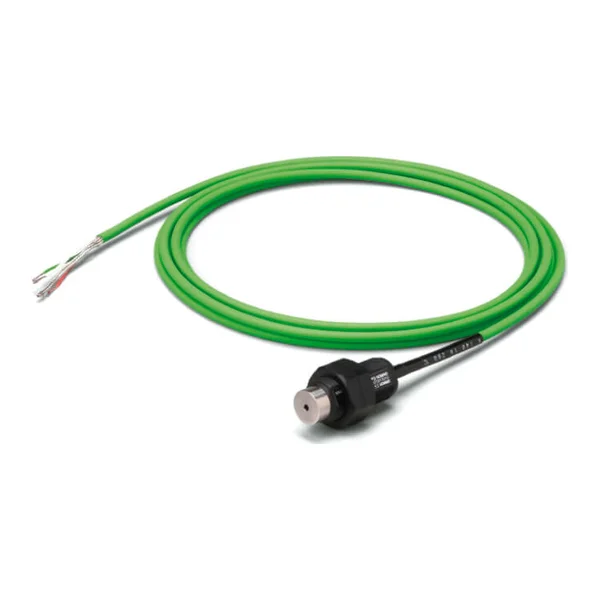 OMRONES1B-60-120CInfrared thermosensor, 60–120 °COMRONES1B-140-260CInfrared thermosensor, 140–260 °C
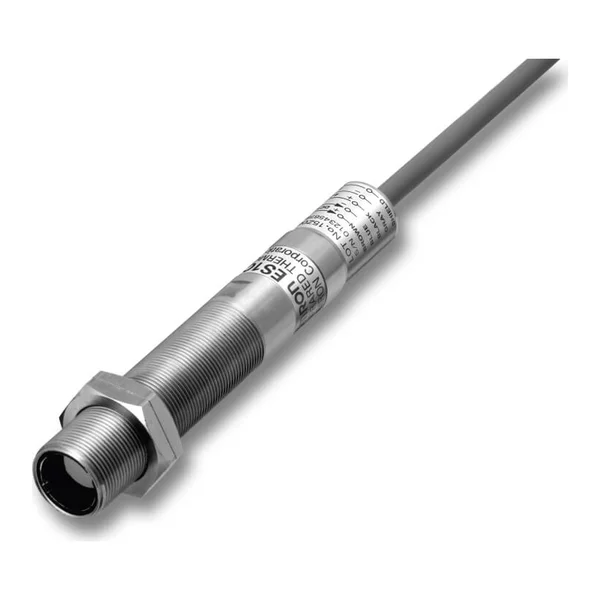 OMRONES1C-A40Infrared thermosensor, 0–400 °C, 4–20 mA
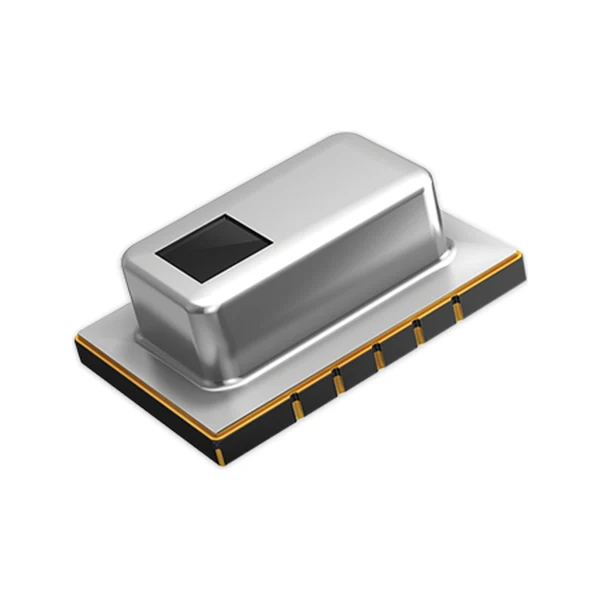 PANASONICAMG8833Grid-EYE thermal array, 8 × 8 pixels
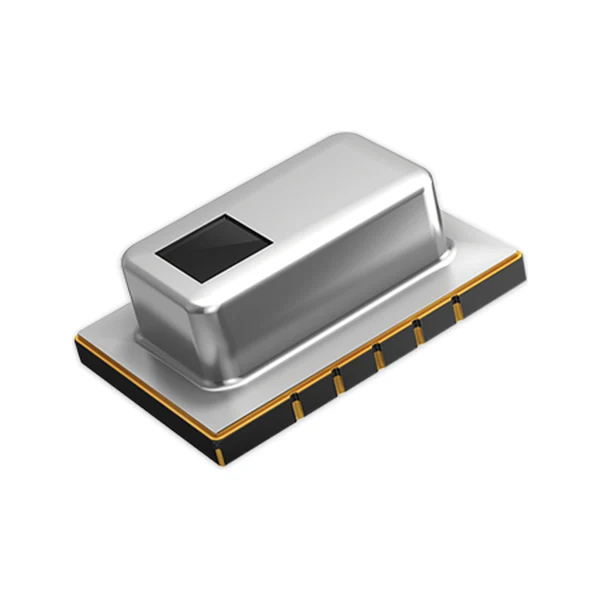 PANASONICAMG8834Grid-EYE, 8 × 8, low gain
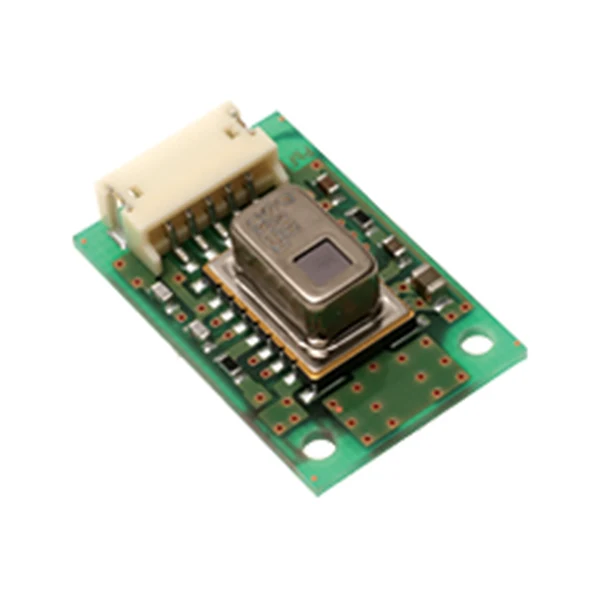 PANASONICAMG8854M01Grid-EYE narrow type, board with connector
10. Temperature-based energy savings at drying points and in building energy
Determining at which point material dries on paper, printing, and textile manufacturing lines is important for consistent product quality and keeping energy costs under control; OMRON manufacturer documents state that the ES1B non-contact temperature sensor is used to determine this drying point. Unlike contact thermocouple structures, the ES1B does not suffer from physical wear and offers four distinct measurement ranges: 10–70 °C, 60–120 °C, 115–165 °C, and 140–260 °C. When paired with system temperature controllers and proximity sensors, the measurement timing of objects moving on the line is determined, enabling temperature tracking of moving parts.
On the building and facility automation side, PANASONIC’s recommended applications for high-performance AMG88xx type PANASONIC Grid-EYE sensors—which sense two-dimensional area temperature in an 8 × 8 (64 pixels) structure and output digital temperature values—also include people counting and air conditioning control. According to manufacturer data, the wide-angle AMG88x543 type is targeted at automatic door and elevator systems as well as energy savings in offices via air conditioning and lighting control. Similarly, the board-mounted AMG8854M01 model with connector is positioned for HVAC control and failure prevention scenarios in factory automation.
11. Sensing at high-temperature and chemical process points
In harsh operating conditions featuring high temperatures and aggressive chemicals, OMRON offers E32 series fiber optic sensor heads with resistance limits of 100, 150, 200, 300, 350 °C depending on the model, and up to 400 °C in the sleeved M4 diffuse-reflective model, while fluoroplastic-sheathed models provide long sensor lifespan during frequent cleaning and chemical contact according to OMRON. Liquid level fibers in the E32 family consist of direct-contact types that attach to transparent pipes and resist chemicals via fluororesin coating; a thru-beam model operates up to temperatures of 150 °C. On the PANASONIC side, heat-resistant fibers operating in the range of -60 to +350 °C are offered; the thru-beam FT-H35-M2 and coaxial reflective FD-H35-M2 withstand 350 °C, FT-H20-M1 withstands 200 °C, FT-H13-FM2 withstands 130 °C, and convergent reflective FD-H30-L32 withstands 300 °C. While PANASONIC brand PFA-sleeved fibers are used in various chemical liquids, the metal-free FD-S60Y prevents metal contamination upon protective tube damage, FT-R44Y/FD-R61Y are utilized in oily environments with fluororesin tubing, and in the FT-R60Y model, the head, nut, and washer components are made of stainless SUS304 material.
In TELEMECANIQUE catalogs, the XS4P is defined as a plastic-body inductive sensor series for chemical processes and maritime applications. Offered in non-flush configurations in M8, M12, M18, and M30 sizes, the XS4P series includes models with sensing distances of 2.5 mm, 4 mm, 8 mm, and 15 mm. The XS4P18PA340, featuring a PPS body and face, IP68 double insulation, 1 NO PNP output, and CSA, UL, and Ecolab certifications, belongs to this group; while the catalog states that plastic-body sensors generally exhibit resistance to salts, aliphatic/aromatic oils, petroleum, acids, and dilute bases, the manufacturer catalog recommends pre-testing prior to use for environments containing alcohols, ketones, and phenols.
| Product | Environment | Manufacturer data |
|---|---|---|
| OMRON E32 heat-resistant | Hot spot | 100–350 °C depending on the model, 400 °C in the sheathed M4 model |
| OMRON E32 chemical-resistant | Chemical | Fluoroplastic sheath |
| PANASONIC FT/FD heat-resistant | Hot spot | −60…+350 °C |
| PANASONIC FT/FD chemical-resistant | Chemical liquid, oil | PFA body and sheath |
| TELEMECANIQUE XS4P | Chemical process | PPS plastic body, IP68 |
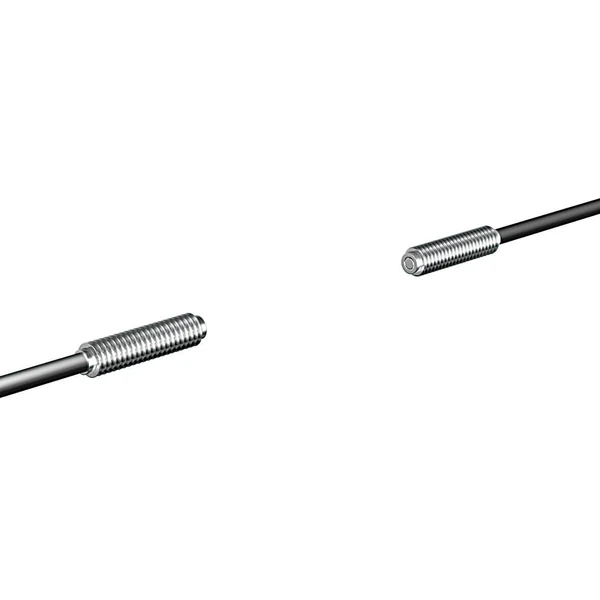 OMRONE32 Heat-Resistant FiberFiber heads up to 400 °C
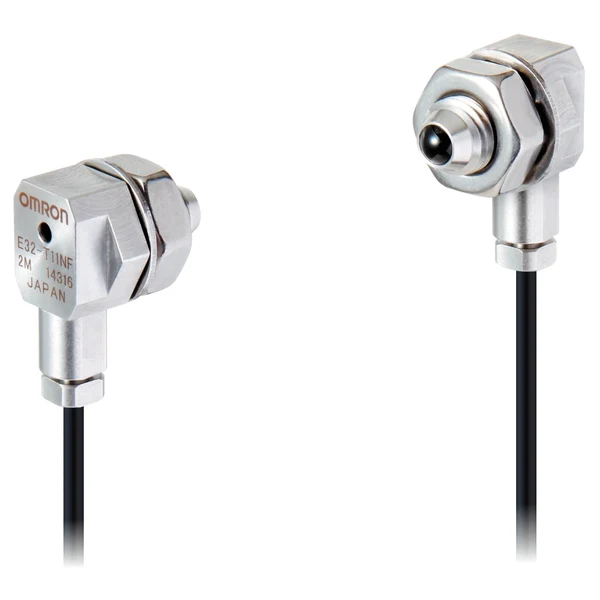 OMRONE32 Chemical-Resistant FiberFluoroplastic-sheathed fibers
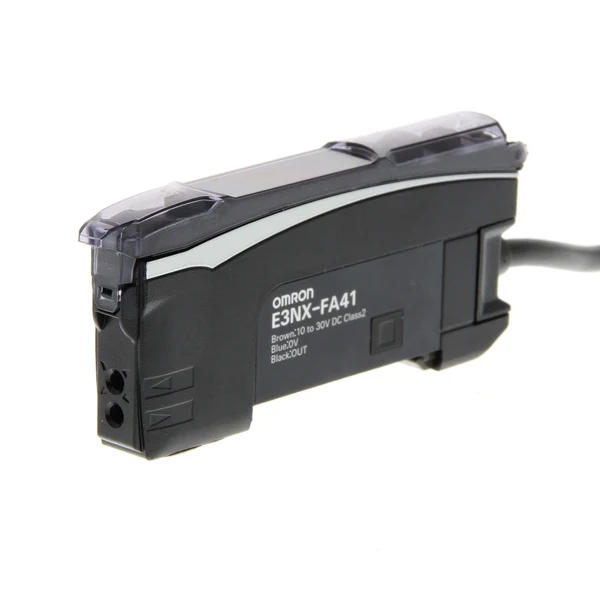 OMRONE3NX-FASmart fiber amplifier
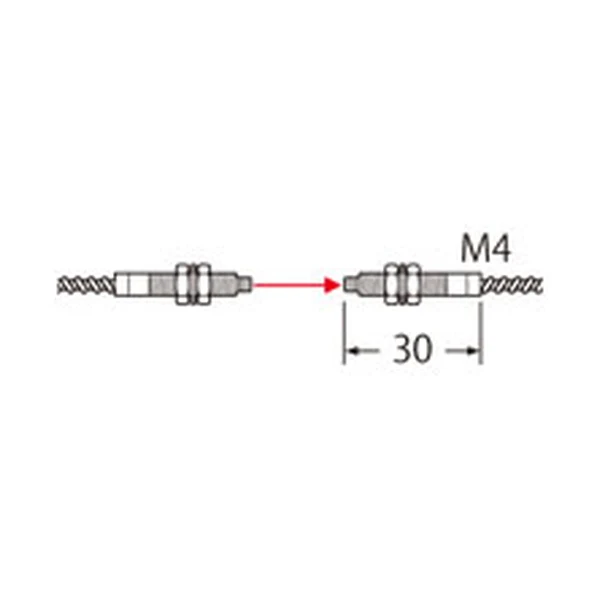 PANASONICFT/FD Heat-Resistant Fiber−60…+350 °C fibers
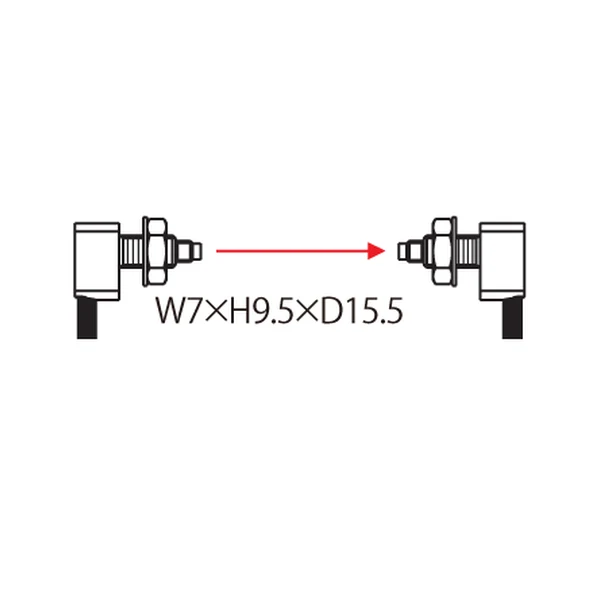 PANASONICFT/FD Chemical-Resistant FiberPFA-sheathed fibers
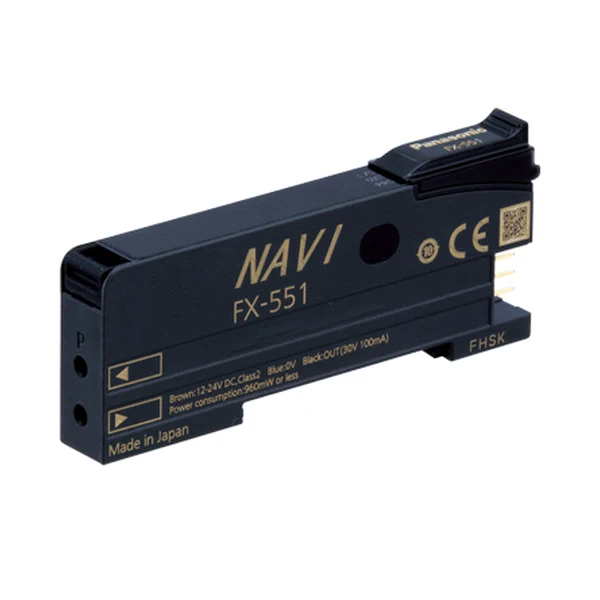 PANASONICFX-550Digital fiber amplifier
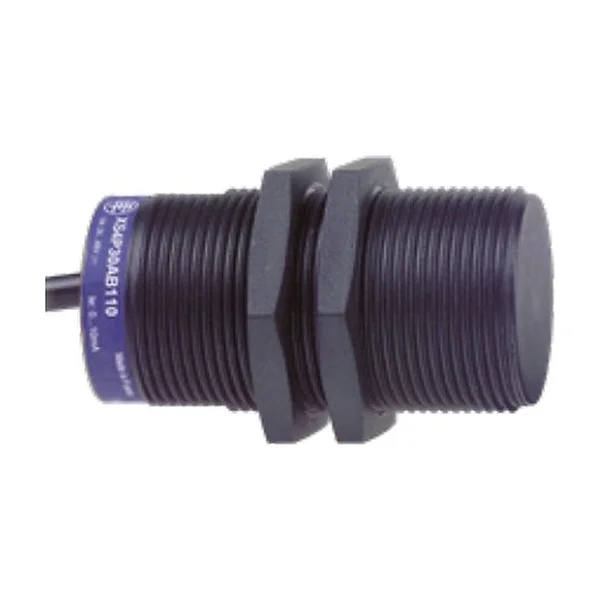 TELEMECANIQUEXS4P12PA340M12 plastic inductive, Sn 4 mm, PNP NO
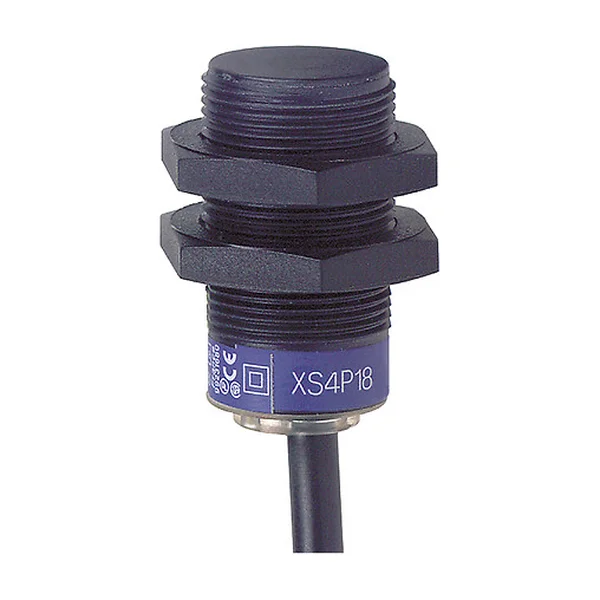 TELEMECANIQUEXS4P18PA340M18 plastic inductive, Sn 8 mm, PNP NO
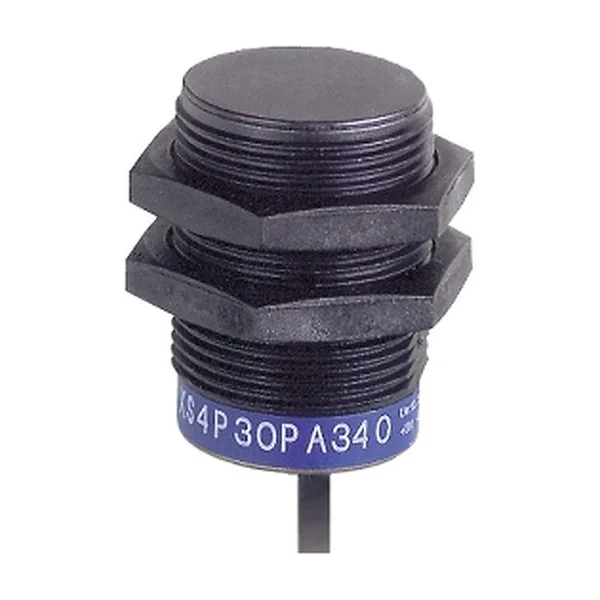 TELEMECANIQUEXS4P30PA340M30 plastic inductive, Sn 15 mm, PNP NO
12. Limit switches, valve position, and encoders in harsh environments
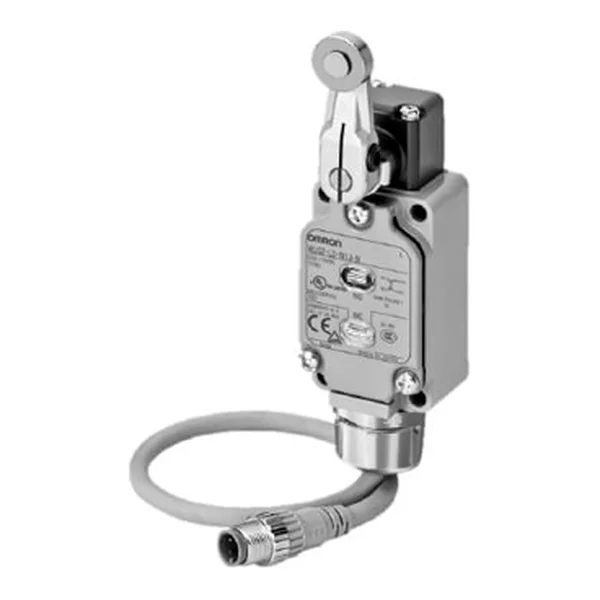
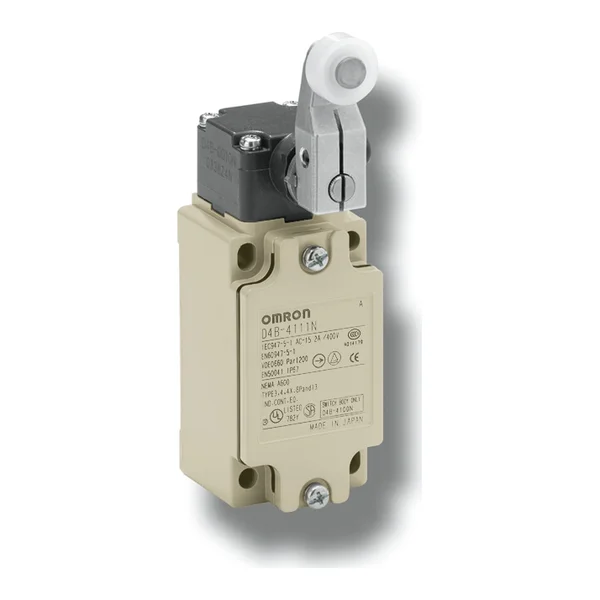
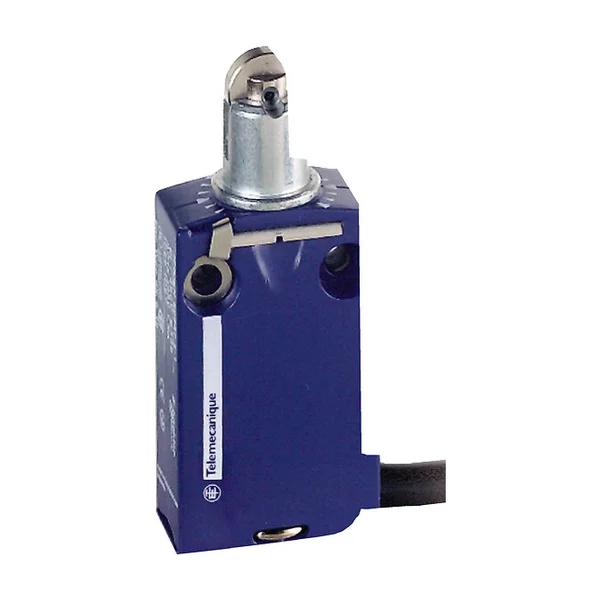
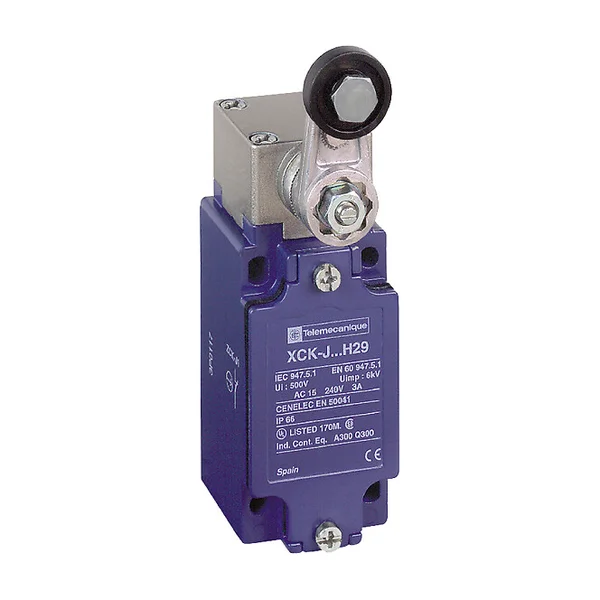
For position and limit detection in field mechanisms, WL-N two-circuit limit switches in OMRON manufacturer catalogs are offered in the 5–120 °C range for heat-resistant models and in the -40 to 40 °C range (without icing) for cold-resistant types, while weather-resistant P1 models promise a durability of at least 500,000 cycles; the series also includes corrosion-resistant RP and coolant-resistant RP60 options; heat-resistant THG models are listed on the FST page, while other types are on a project basis. While the metal-bodied OMRON D4B-□N model with direct opening mechanism and TÜV approval is utilized in safety applications, TELEMECANIQUE’s water pumping brochure shows the compact XCMD with integrated connector for motion control in irrigation applications, and the XCMD2102L1 reference with a Zamak body offers IP66/IP67/IP68 and IK06 protection levels. The XCKJ390541H29EX roller lever limit switch in the TELEMECANIQUE product line, certified with IECEx and ATEX for Zone 21 and Zone 22 areas subject to explosive dust atmospheres, functions in the IP66 protection class with its Zamak body structure; the XCKJ and XCKM pages on FST cover standard (non-Ex) families, while Ex versions are provided on a project basis.
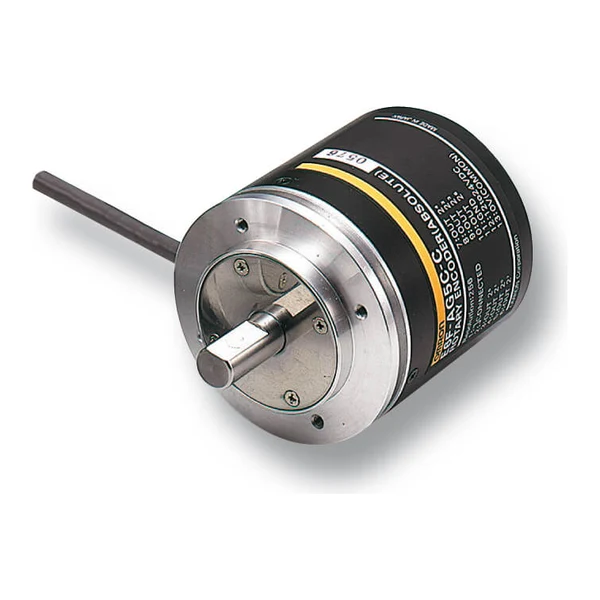
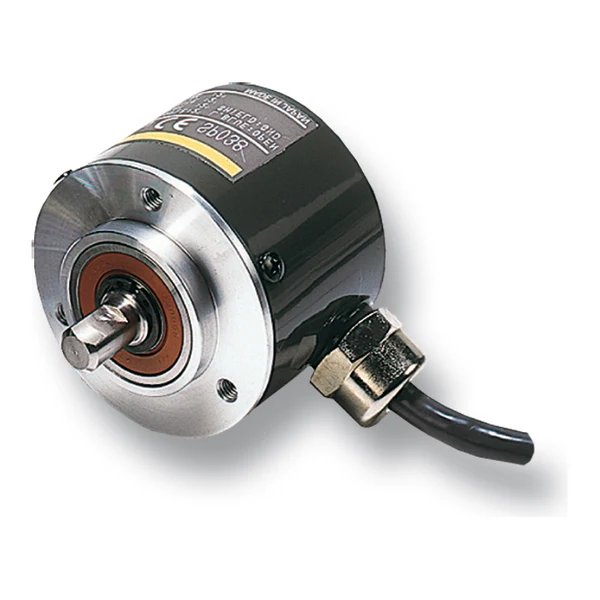
For converting mechanical movements into angular and speed data, rotary encoders that convert rotational motion into electrical signals and determine the direction of rotation are used according to OMRON technical documents. In the E6CP-A, E6C3-A, and E6F-A absolute encoder series, the requirement to return to the zero point upon system startup is eliminated; signals are unaffected by noise, and accurate position data is read when power is restored after an outage. While IP50 protection ratings are preferred in environments with dust only and IP52(f)/IP64(f) in the presence of water or oil, the E6F family with a Ø60 mm rugged housing offers a limit load capacity of 120 N in the radial direction and 50 N in the axial direction.
13. Water reservoirs, pumping stations, and treatment plants
For non-contact level monitoring in water storage and pumping stations, TELEMECANIQUE catalogs feature ultrasonic sensors that measure independently of material, color, and transparency; the XXS30 and XXA30 series stand out in long-distance liquid level control. The XXA30P2AM12 model with an M30 angled head offers a 2 m sensing distance with a 4–20 mA analog output, while the XXS18P1AM12 model with an M18 plastic housing features a 105 mm blind zone, a 1 m sensing distance, IP65/IP67 protection, and a synchronization input. On the facility security and access control side, TELEMECANIQUE recommends the XGCS RFID system featuring the IP65-rated XGCS850C201 smart antenna with Ethernet communication and the XGHB90E340 PVC card tag with dimensions of 54 x 85.5 x 1 mm.
In field monitoring and automation infrastructure, in ADVANTECH’s case study, the water utility of a coastal city in the USA modernized wastewater, stormwater, and drinking water treatment control across 10 treatment plants and over 40 pumping stations using ADVANTECH hardware. At the plants, water quality values such as pH and salinity were monitored using PPC-3211SW 21.5-inch fanless panel PCs with IP65 front panels, while FPM-7211 industrial touch monitors at pumping stations achieved approximately 67% cost savings per unit. The PPC-3211SW and FPM-7211 in the case study are not available at FST; current 21.5-inch models from the same series, the PPC-321SW RPL panel PC and FPM-721W industrial monitor, are available at FST.
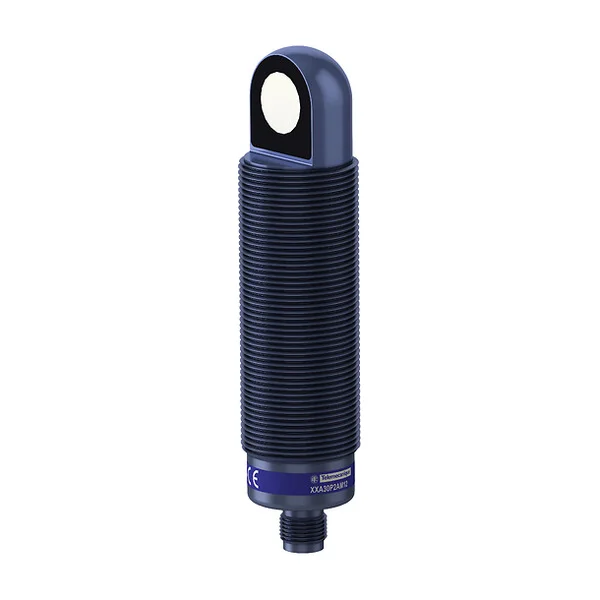 TELEMECANIQUEXXA30P2AM12M30 angled ultrasonic, 2 m, 4–20 mA
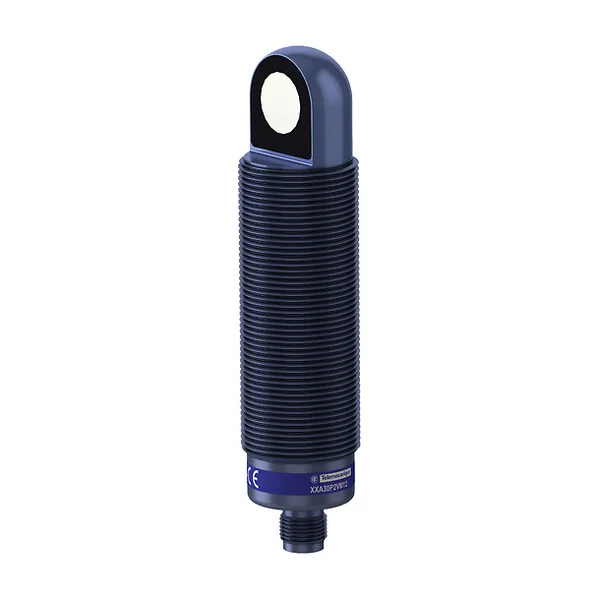 TELEMECANIQUEXXA30P2VM12M30 angled ultrasonic, 2 m, 0–10 V
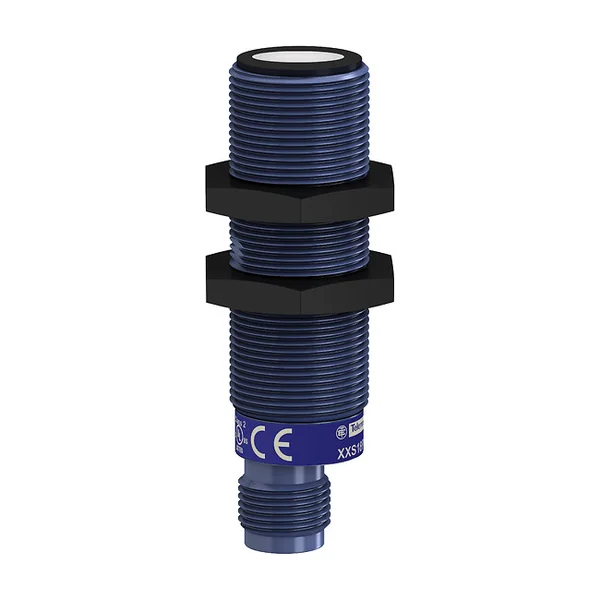 TELEMECANIQUEXXS18P1AM12M18 ultrasonic, 1 m, 4–20 mA
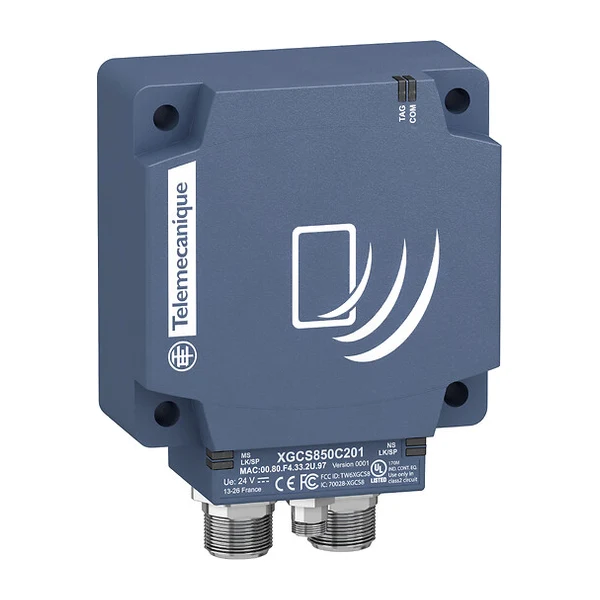 TELEMECANIQUEXGCS850C201Ethernet RFID smart antenna, IP65
 ADVANTECHPPC-321SW RPL21.5″ fanless panel PC
 ADVANTECHFPM-721W21.5″ industrial touchscreen
14. Rotating equipment monitoring in refineries and petrochemicals
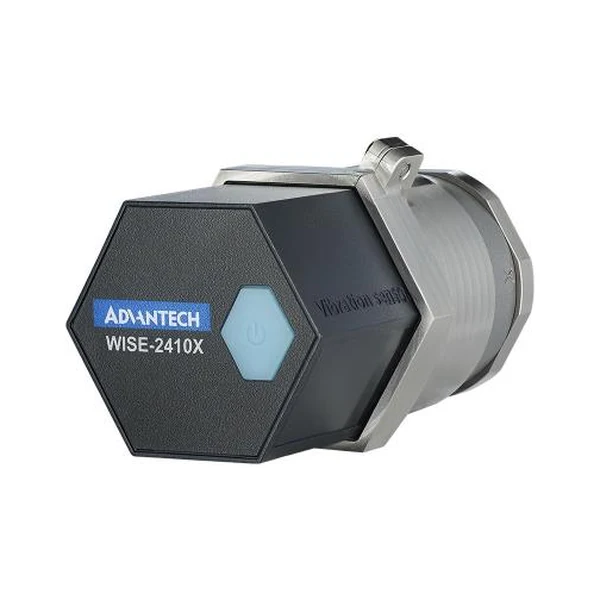
For tracking rotating equipment across crude oil and vacuum distillation units, heat exchangers, and cooling towers spread over wide and hazardous areas, the battery-powered, explosion-proof wireless vibration sensor WISE-2410X was installed on all rotating equipment in ADVANTECH’s refinery case study. Featuring IP65 protection and ATEX2, IECEx (Zone 2, Zone 21), C1D2, TS, and INMETRO certifications, the WISE-2410X is mounted on equipment without requiring wiring; it collects RMS velocity and characteristic data to enable condition assessment according to the ISO 10816-3 standard. Offering bi-directional communication up to 15 km between the sensor and gateways, LoRaWAN technology allows communication with fewer devices in the field; according to the case study, the refinery remotely monitors rotating equipment and has transitioned to centralized management.
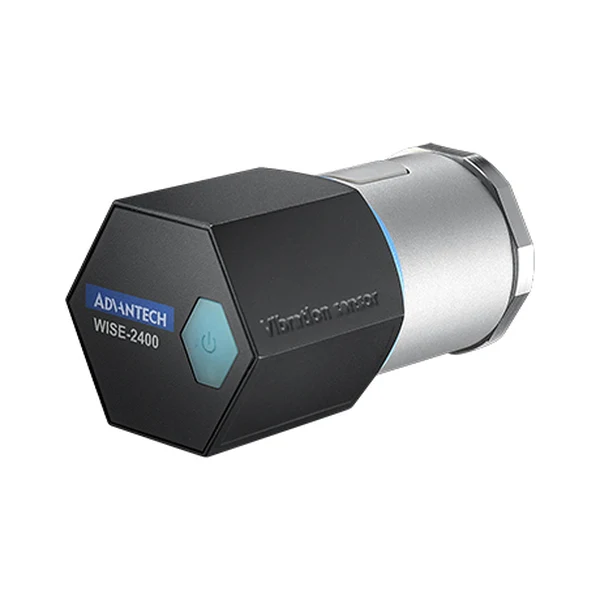
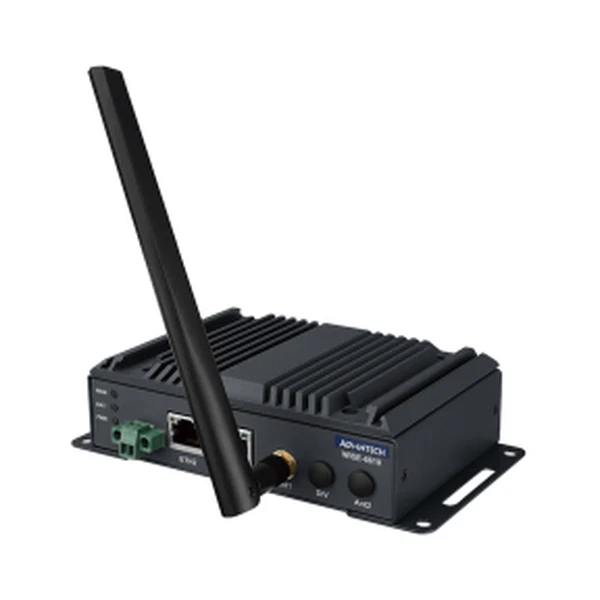
In a predictive maintenance project applied to motors, pumps, compressors, and blowers in petrochemical plants, ADVANTECH WISE-2410 LoRaWAN vibration sensors with IP66 housing and a WISE-6610 gateway were used. Following a 1–2 week data collection process conducted without stopping production, an AI health model detecting early signs of degradation was deployed; ADVANTECH’s Energy & Utilities solution page also introduces the WISE-2410 as a sensor that monitors motor vibration and operating status 24/7. The gateway in the case studies is the original WISE-6610; WISE-6610 V2 and outdoor-grade WISE-6610P are available at FST; Ex compliance evaluation is performed on a project-by-project basis.
15. Energy storage (BESS) and energy meter monitoring
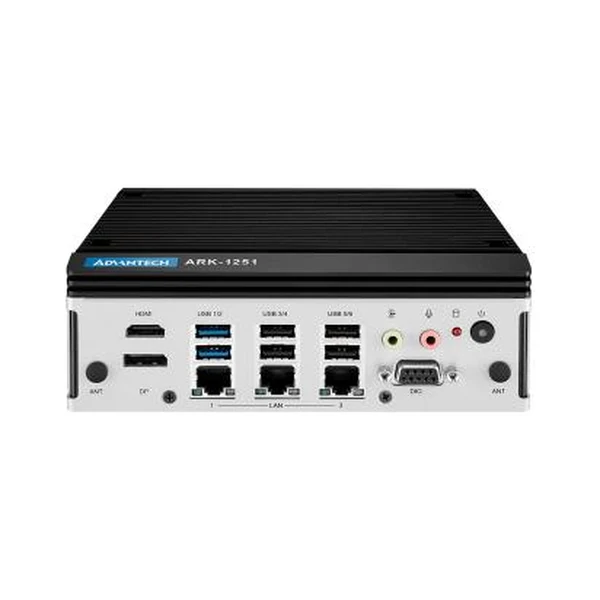
For the control and monitoring of Energy Storage Systems (ESS/BESS), DIN rail mountable ARK-1251 industrial computers within the ADVANTECH product portfolio are deployed. Featuring Intel Core Ultra 5/7 processor options, 12–28 VDC power input, three LAN ports, serial/CAN I/O interfaces, and TPM 2.0 hardware, the model offers IP40 protection class and an operating temperature range of -20…60 °C. In smart energy storage field applications, two ARK-1251 units are used in each outdoor cabinet, with one handling monitoring and the other performing data analytics; while the vertical I/O structure simplifies wiring, the Hailo AI module processes battery health data locally to carry out anomaly detection and predictive maintenance, and EdgeBMC and DeviceOn manage remote diagnostics and OTA updates.
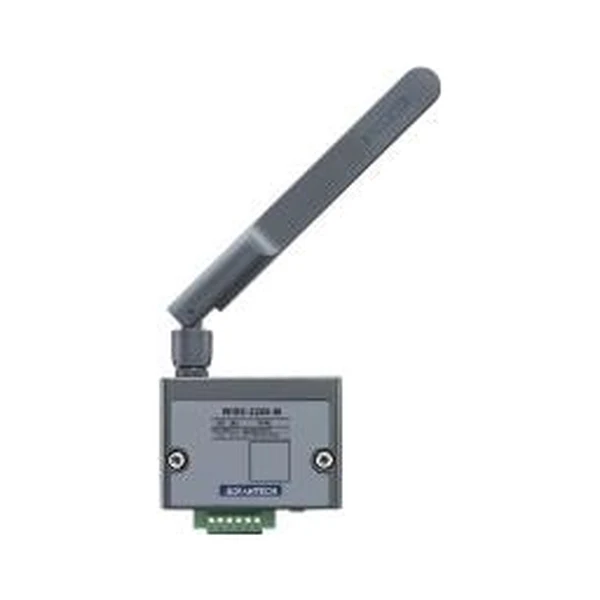
In a school Energy Management System (EMS) project aimed at remote monitoring of field energy meters, WISE-2200-M I/O modules and WISE-6610 gateways of the ADVANTECH brand were used. Data from 10,000 WISE-2200-M single-channel RS-485 devices operating in the -25…70 °C temperature range and connecting Modbus/RTU meters and sensors to the LoRaWAN network was collected via 500 WISE-6610 gateways and integrated into school, education bureau, and Taipower systems. The gateway in the case study is the original WISE-6610; WISE-6610 V2 at FST supports up to 500 nodes with an embedded LoRaWAN network server and communicates via Modbus/TCP and MQTT.
Which product for which requirement?
| Requirement | Product group |
|---|---|
| Electrode, foil, and film surface | HIKROBOT CL line scan, XoF frame grabber |
| Cell top cover, weld, and flatness | HIKROBOT DP 3D profile sensors |
| Module feeding and welding guidance | HIKROBOT RoboScan Ultra, CH cameras |
| Silicon wafer and solar cell | HIKROBOT CI SWIR, SWIR lens, line scan |
| Cell and wafer traceability | HIKROBOT ID3000, IDH; OMRON V680S RFID |
| Switchgear/switchboard, transformer, and drying temperature | OMRON ES1B / ES1C, PANASONIC Grid-EYE |
| Sensing in high-temperature and chemical environments | OMRON E32, PANASONIC FT/FD, TELEMECANIQUE XS4P |
| Position and valve | OMRON WL-N / E6F-A, TELEMECANIQUE XCMD |
| Tank level and plant access | TELEMECANIQUE XXA30, XG RFID |
| Rotating equipment, energy meter, BESS | ADVANTECH WISE-2410X, WISE-2200-M, ARK-1251 |
| Flow, pressure, level, and temperature transmitters | Process Automation product tree |
Source: HIKROBOT lithium battery and photovoltaic case studies, product data, and exhibition news; OMRON E3X-ZV, ES1B/ES1C, E32, WL-N, encoder documents, and battery module assembly page; PANASONIC Grid-EYE, HG-S, and fiber catalogs; TELEMECANIQUE water pumping brochure, XX and XS catalogs, and Ex product data; ADVANTECH refinery, petrochemical, water management, energy storage (BESS), and energy meter case studies. Images belong to HIKROBOT; the robots shown in the images are not included in the FST product lineup. Conformity assessment in hazardous (Ex) areas is performed on a project basis.
Tell us about your application
Share your line type (electrode, cell, module, solar panel) or plant requirement (temperature, level, position, vibration), ambient conditions, and speed and precision expectations; let us select the camera, sensor, and computer components together. In projects in this industry, FST Teknoloji delivers turnkey machine vision and system integration solutions with HIKROBOT hardware.